
Introduction
A bolted joint that passes inspection on Monday can rattle loose by Friday. Vibration doesn't need to be violent to cause trouble. Small, repeated sideways movements are often enough to strip away friction, relax preload, and let a nut walk itself off the thread.
NASA's own fastener-vibration research has documented this exact failure path. Lubricated, contacting surfaces slip under transverse motion until the nut unwinds, even when the joint looked properly torqued at assembly, according to NASA's preload-loss investigation on vibration-induced unwinding.
This guide breaks down why fasteners loosen, how mechanical and chemical locking methods differ, and why vibration-isolation mounts aren't the same as a locking fastener. It also covers how to build a selection process suited to US manufacturing environments, from stamping presses to steel mill equipment.
Key Takeaways
- Vibration resistance is a joint-design problem, not a single-component fix.
- Match the locking method to vibration direction, temperature, substrate, corrosion exposure, and reuse needs.
- Correct torque, clean surfaces, and consistent preload matter more than any single locking device.
- Test before you trust a solution wherever failure could threaten safety, uptime, or equipment performance.
Why Fasteners Loosen Under Vibration
Transverse Motion Is the Real Culprit
Axial vibration (along the bolt's length) rarely causes loosening on its own. Transverse vibration (side-to-side motion across the joint) is far more damaging. As the parts shift laterally, they can briefly overcome the friction at the threads and bearing surfaces, so the nut creeps a fraction of a degree at a time.
Contact-pressure relaxation at the interface often starts before any visible movement. A joint can lose clamp force long before anyone notices the nut has turned.
Preload Loss Has Several Causes
A high-grade bolt doesn't guarantee a secure joint. Preload (the clamping force holding parts together) erodes through:
- Embedment: microscopic high points on mating surfaces flatten under load
- Thermal cycling: dissimilar materials expand and contract at different rates
- Creep or gasket flow: softer materials such as aluminum or indium seals slowly yield
- Joint relaxation: clamp force drops over time even when the nut never turns
Design Variables That Change the Outcome
Several joint characteristics influence whether a fastener holds or fails, including:
- Thread fit and clearance: looser fits leave more room for micro-movement under load
- Clamped length and grip: short grip lengths lose preload faster when surfaces settle
- Friction at threads and bearing faces: lower friction makes self-loosening more likely
- Washer type and surface condition: hard, smooth, or wrong-spec washers change torque-to-tension behavior
- Bolt grade and hardness: mismatched hardness accelerates embedment and wear
- Torque-to-tension consistency: batch scatter means some joints start under-clamped
These issues get worse under:
- Resonance near the joint's natural frequency
- Cross-axis excitation from adjacent moving equipment
- Continuous loads from rotating machinery
- Operating conditions hotter or faster than the original design spec
Any of the above can push a previously stable joint past its holding threshold.

Types of Anti-Vibration and Vibration-Resistant Fasteners
Before comparing options, it helps to separate four categories that get lumped together but work very differently:
- Anti-vibration fasteners: nuts, bolts, or screws with a built-in locking feature
- Locking accessories: washers, pins, or wire added to an existing fastener
- Threadlocking compounds: liquid or pre-applied chemical bonds
- Vibration-isolation mounts: rubber or spring devices that absorb equipment vibration rather than lock a joint
Confusing these leads to mismatched solutions. A mount won't stop a nut from backing off, and a locknut won't isolate a motor from its base plate.
Prevailing-Torque and Nylon-Insert Locknuts
These nuts create resistance through friction as the fastener threads through an insert or deformed metal section, per ASME B18.16.6 for inch-series prevailing-torque locknuts. They're a common choice where periodic disassembly is expected.
- Nylon inserts typically top out around 250°F. Check the specific manufacturer's rating before specifying near heat sources
- All-metal prevailing-torque versions handle higher temperatures but may lose some locking force after repeated reuse
- Installation requires the fastener to run through the insert fully. Don't just snug it against the surface
Washers: Serrated, Spring, Wave, and Belleville
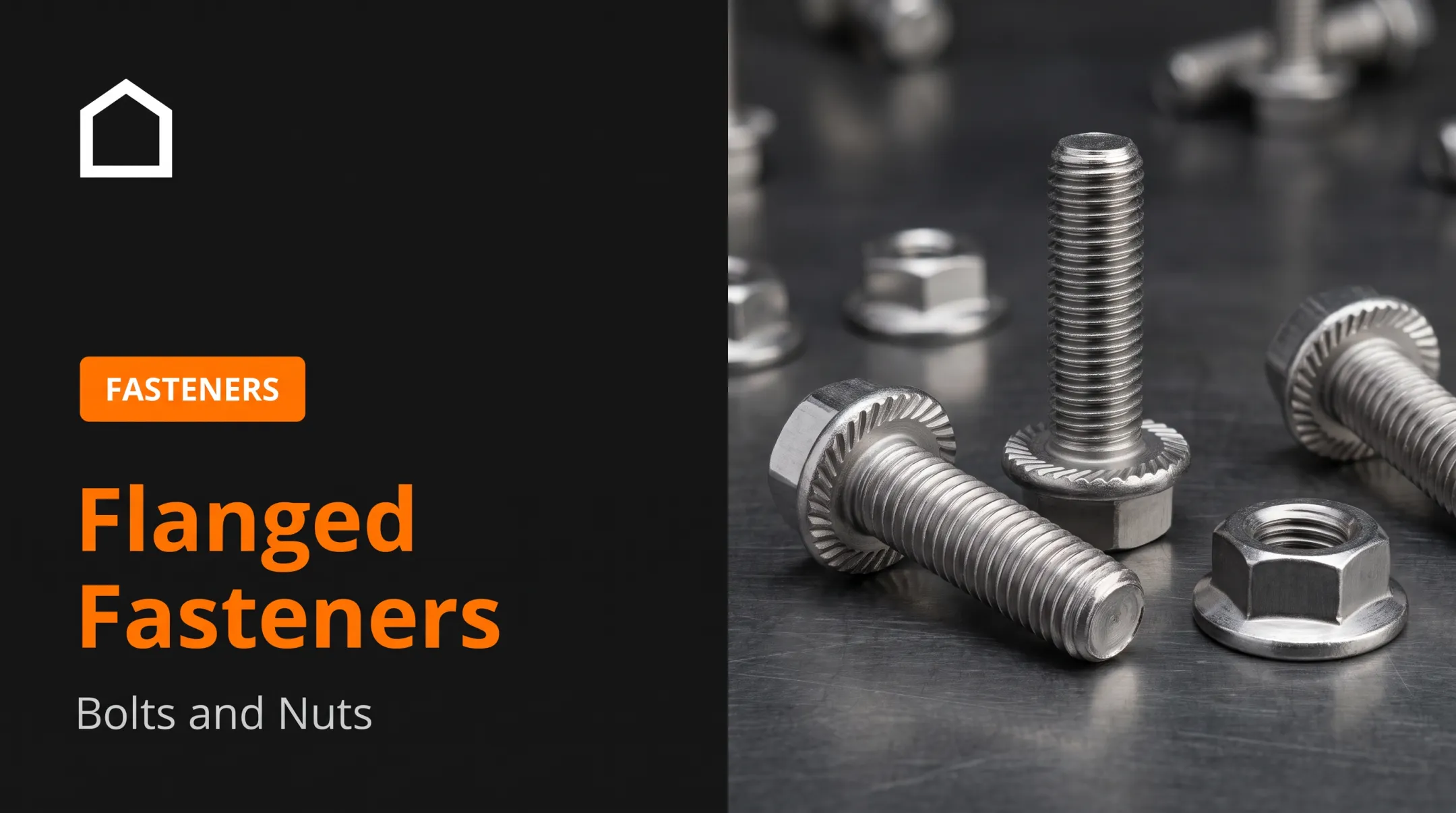
Serrated flange nuts and tooth lock washers bite into the mating surface for grip. That grip comes at a cost: NASA's fastener design documentation cautions that toothed surfaces can damage coatings or introduce corrosion points on softer or painted substrates.
Split lock washers are a common misconception. Once flattened during tightening, they provide little genuine spring force. Belleville (conical) washers, by contrast, can maintain joint compliance if they aren't fully compressed. That makes them useful for thermal expansion, though they shouldn't be mistaken for rotational locking.
Wedge-Locking Washer Systems
Wedge-locking washer pairs use opposed cam faces with an angle steeper than the thread pitch, combined with teeth that grip both contact surfaces. They're often specified for severe vibration because the wedging action resists loosening even when clamp force drops slightly.
Installation checks matter here:
- Confirm the mating surface isn't harder than the washer material
- Avoid pairing with very soft substrates like wood or unreinforced plastic
- Check that both washers in the pair are seated correctly (one under the bolt head, one under the nut for through-bolted joints)
Threadlockers and Pre-Applied Coatings
Liquid anaerobic threadlockers cure between metal threads once air is excluded, bonding the fastener in place chemically. According to Henkel's technical data sheet for LOCTITE 243, the product's service range runs from about -67°F to 356°F (-55°C to 180°C). It specifically warns against use on thermoplastics, which matters if your assembly includes plastic housings or brackets.

Pre-applied options come in two types:
- Mechanical patches (nylon pellets or strips) that compress into the mating threads as a physical wedge
- Dry-to-touch chemical coatings activated during assembly, which cure similarly to liquid threadlockers
Surface preparation, cure time, and chemical compatibility with plated or passive metals all vary by product. Treat these as substrate-specific decisions, not interchangeable coatings.
Application-Specific Hardware
Some joints call for mechanical restraint instead of friction or chemistry:
- Safety wire and cotter pins through castellated nuts physically block rotation, though they don't necessarily preserve preload
- Jam nuts stacked against a primary nut add resistance through opposing thread engagement
- Threaded inserts reinforce tapped holes in softer materials and, in screw-locking versions, add their own prevailing torque
These solutions often require extra clamp length, drilling, or machining. Factor that into space and cost planning early.
How to Choose the Right Solution
Start with the vibration environment itself, then work outward to material and service conditions.
Step 1: Characterize the vibration. Is the joint experiencing transverse, axial, rotational, shock, or resonance-driven loading? Field measurements or lab testing (such as a comparative transverse-vibration protocol like ISO 16130) can clarify this before you commit to a fix.
Step 2: Match to temperature and environment.
| Factor | Consideration |
|---|---|
| Heat/cold | Confirm the specific product's rated range, not a generic assumption |
| Chemical/oil exposure | Some adhesives and coatings degrade with solvent contact |
| Moisture/corrosion | Coated or stainless hardware may be needed |
| Galvanic contact | Dissimilar metals in contact can accelerate corrosion |
Step 3: Evaluate the joint and substrate. Steel, stainless, aluminum, castings, plastics, and composites all behave differently under clamping load. Softer substrates often need threaded inserts, larger bearing surfaces, or reinforced interfaces to prevent thread stripping or material creep over time.
Step 4: Account for service requirements.
- Will the joint be disassembled regularly, or is this a one-time assembly?
- Is access limited for future maintenance?
- Does the locking element need to be reusable, or is single-use acceptable?
Step 5: Specify fastener and preload together. Strength, size, thread form, coating, corrosion protection, and clamp length aren't independent choices — they interact. For torque and preload values, use the fastener manufacturer's published data rather than a generic chart. A torque number calculated for one friction condition can produce a very different clamp load under another.

Installation, Inspection, and Validation
Even the right fastener fails if installation is inconsistent. A controlled process looks like this:
- Verify compatible parts — confirm thread class, coating, and locking element match the specification
- Inspect threads and mating surfaces — remove debris, burrs, or old locking compound residue
- Apply the specified lubricant or threadlocker — follow the product's surface-prep instructions exactly
- Torque or tension to spec — using the method (torque wrench, tension indicator, or turn-of-nut) called for by the joint design
- Document assembly conditions — batch, torque value, and inspector for traceability
According to Fastenal's torque-tension reference for ASTM A193 B7 fasteners, the friction factor used in torque calculations can shift significantly between lubricated and dry conditions. Torque only indicates tension indirectly.
Common installation mistakes to avoid:
- Over-tightening, which can strip threads or overload the fastener
- Under-tightening, leaving inadequate clamp force from the start
- Mixing incompatible coatings or locking compounds on the same joint
- Reusing single-use locking elements like certain nylon-insert nuts
- Assuming one torque value produces identical preload across every batch
Building an Inspection Plan
Match inspection intensity to risk. Higher-risk joints (safety-critical, high-uptime equipment) warrant:
- Visual checks for washer seating, thread engagement, and coating condition
- Torque-retention or prevailing-torque checks against the qualified minimum
- Vibration testing that reflects actual service conditions rather than a generic benchmark
- Scheduled maintenance inspections at intervals tied to the equipment's duty cycle
Install and inspect procedures only hold if the fastener's threads, geometry, and locking features are consistent from the start. That consistency comes from the forming tooling upstream.
When shops need cold header dies, punches, feed rolls, or stamped and forged replacement parts, Quality FORM Tools builds to print for fastener-forming, stamping, and forging operations across the Midwest—from a single prototype to a full production run. Share drawings, material requirements, tolerances, and expected volume up front for the clearest path to an accurate quote.
Frequently Asked Questions
Which vibration-resistant fasteners prevent loosening due to vibration?
Prevailing-torque nuts, wedge-locking washers, threadlockers, and pre-applied locking patches all address loosening differently: through friction, cam-wedging, or chemical bonding. The right choice depends heavily on joint design, vibration direction, and installation quality.
What are the best anti-vibration nuts?
Nylon-insert, all-metal prevailing-torque, serrated flange, jam, and castellated nuts fit different operating conditions. Temperature limits, reuse frequency, and required disassembly access should guide the final selection.
Do anti-vibration mounts work?
Mounts isolate or absorb vibration transmitted through equipment. They don't lock a threaded joint. Effectiveness depends on supported load, excitation frequency, mount stiffness, environment, and correct installation.
What is an anti-vibration bolt?
There's no single universal design. The term usually refers to a bolt paired with a locking feature, pre-applied patch, or compatible washer and nut system rather than one standardized product.
What is the best material for anti-vibration mounts?
Rubber, elastomer, polyurethane, spring, and metal isolators behave differently under temperature, chemical exposure, load, and frequency. Durability needs and the operating environment should drive material selection.