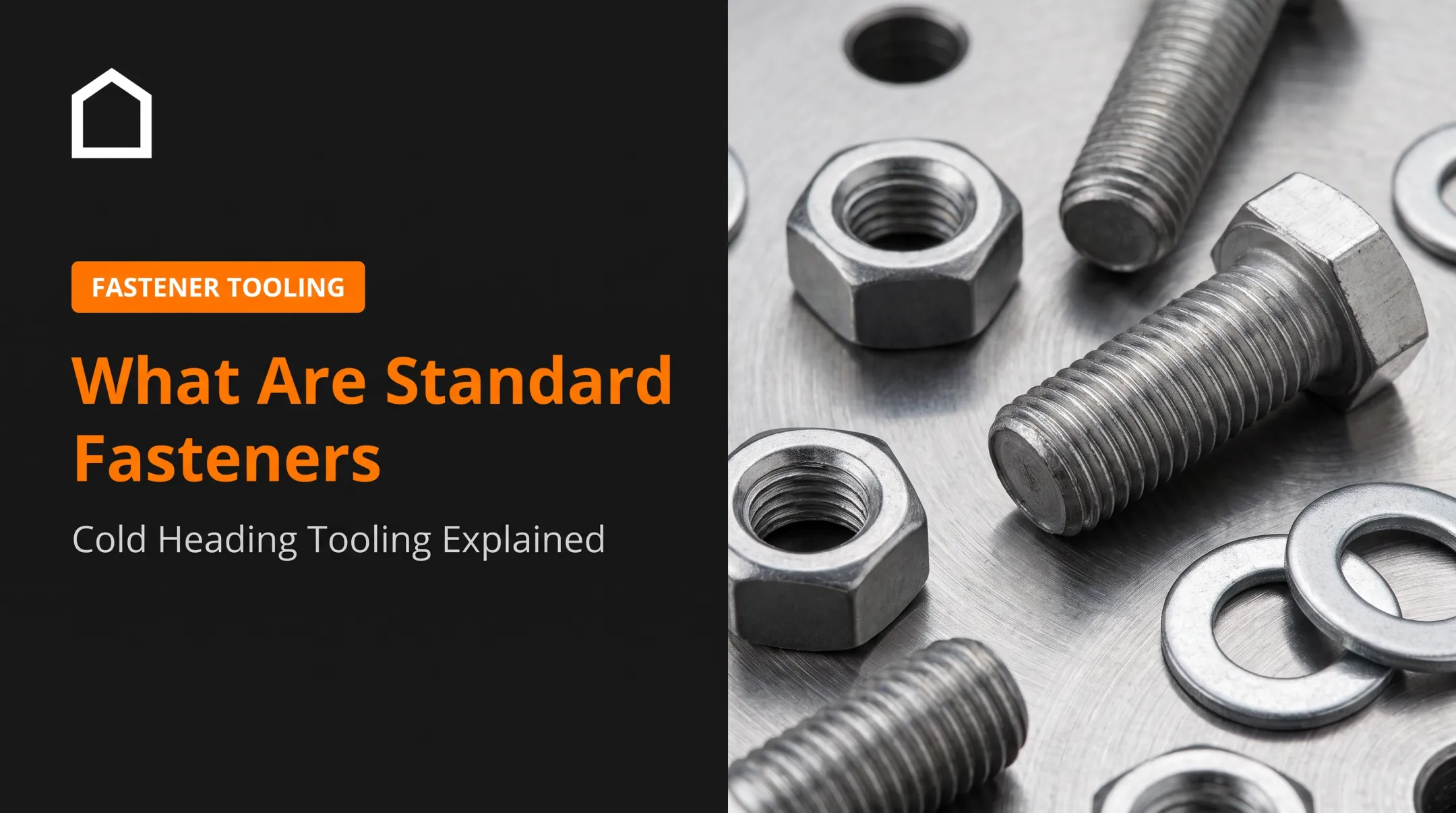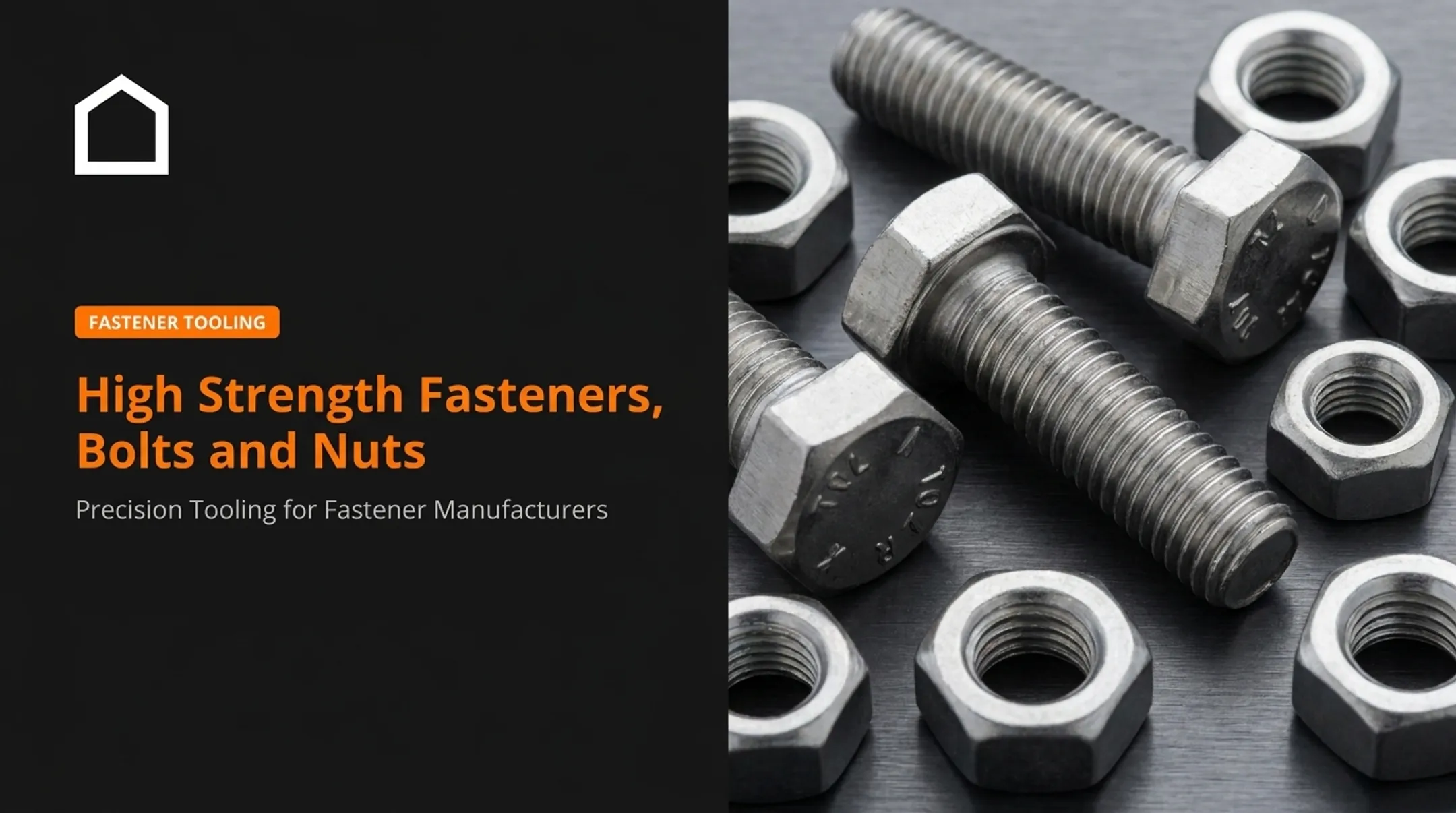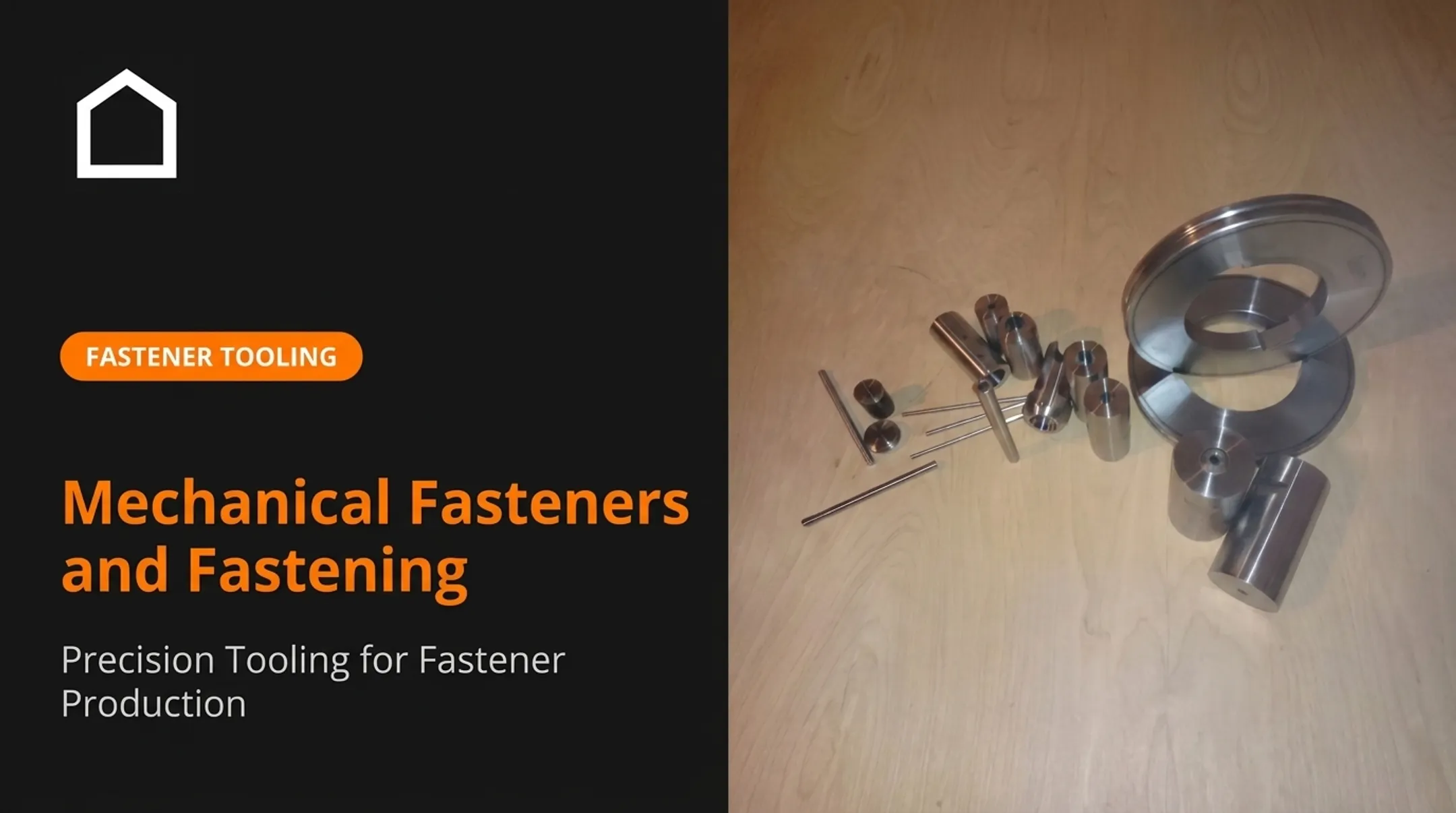

This guide is for the engineers, OEM purchasing teams, manufacturers, and assembly professionals who specify and use fasteners in industrial products. We will cover the essential knowledge needed to make informed decisions for equipment, machinery, vehicles, and other fabricated assemblies.
Key Takeaways
- Fastener selection must consider the entire joint, including loads, materials, environment, and assembly access—not just the fastener itself.
- Torque is an indirect measure of clamp force; friction, lubrication, and surface conditions significantly impact the final preload achieved.
- The choice between threaded, non-threaded, and specialty fasteners depends on requirements for serviceability, production speed, and joint constraints.
- Material and coating choices are critical for preventing corrosion and ensuring strength but must be specified precisely to avoid failure.
- For unique applications, custom-made fasteners or specialized tooling may be required when standard catalog parts are insufficient.
What Are Industrial Assembly Fasteners?
Industrial assembly fasteners are the components used to mechanically join, secure, align, or retain two or more parts in a manufactured product. The fastener is the physical part (a bolt, rivet, or screw). The fastening process is the full system of installation, tooling, and joint design.
Fasteners create different types of connections, each suited to specific applications:
- Removable joints: Threaded fasteners such as bolts and screws allow disassembly for maintenance, repair, or access—machine panels and engine components are common examples.
- Permanent joints: Rivets form joints not meant to come apart, typical in structural work such as airframes and bridge construction.
- Semi-permanent connections: Retaining rings and self-clinching hardware can come out with special tools, but they are not meant for frequent access.
A well-designed fastening system must withstand all the forces it will encounter in service. According to NASA's fastener design manual, those loads include tension, shear, vibration, impact, and thermal expansion. Joint selection has to account for the full assembly, including:
- Mating materials and their properties
- Hole quality and preparation
- Total joint thickness (grip length)
- Access for tools and operators
- Expected environmental exposure
- Service and maintenance requirements
From there, teams choose between standard fasteners (off-the-shelf catalog items) and application-specific fasteners built for a particular assembly, production line, or machine.
Common Types of Assembly Fasteners
Fasteners are available in thousands of configurations. Design and function separate them into a few broad categories.
Threaded Fasteners
These components use helical threads to create strong, clamp-loaded joints and are the foundation of removable assemblies.
- Bolts & Screws: The most common type. They thread into a tapped hole or pair with a nut to clamp parts together.
- Studs: Threaded rods that anchor one component permanently while a nut secures the removable side.
- Nuts: Internally threaded components that mate with bolts or studs to complete a joint.
- Threaded Inserts: Provide durable machine threads in weaker materials, such as plastics or soft metals.
Non-Threaded and Retention Fasteners
These fasteners rely on interference, friction, or positive locking features rather than threads. They suit rapid assembly, alignment, or permanent joining.
- Rivets: Permanent fasteners installed by deforming one end into a head that locks the components together.
- Pins: Align parts, secure them in a fixed position, or act as a pivot. Examples include dowel pins, cotter pins, and coiled spring pins.
- Retaining Rings: C-shaped fasteners that sit in a groove on a shaft or in a housing to provide an axial shoulder and retain components.
- Clips and Push-in Fasteners: Enable quick, low-force installation, often for attaching trim, wiring harnesses, or light-duty panels.
Specialty Fastening Options
When standard fasteners can't meet specific design constraints, specialty options provide targeted solutions.
- Self-Clinching Hardware: Nuts, studs, or standoffs that press into sheet metal, displacing material to lock themselves permanently in place.
- Weld Nuts: Pre-threaded nuts that weld to a metal surface, providing strong threads in thin materials.
- Captive Fasteners: Screws or hardware that stay attached to a panel even when unfastened, preventing lost hardware.
- Blind Fasteners: Rivets or threaded inserts that install from only one side of the workpiece, essential for enclosed or hard-to-reach assemblies.
- Quarter-Turn Fasteners: A quick-release system using a stud and receptacle, ideal for panels requiring frequent access.
Getting these details right at the tooling stage matters as much as the fastener choice itself. Cold header dies, wire-forming tools, and custom punches determine whether high-volume bolts, pins, or clips hold tolerance run after run.
How to Choose the Right Fastener for an Assembly
Choosing the right fastener takes a clear sequence of decisions. Work through these steps in order.
1. Define the Joint's Function
Start by identifying the primary purpose of the connection. Is it meant to:
- Carry a structural load?
- Prevent relative movement or provide precise alignment?
- Seal an interface against fluids or pressure?
- Allow for service access or frequent removal?
- Provide electrical continuity or isolation?
- Permanently join components at the lowest possible cost?
2. Determine Geometry and Size
Next, evaluate the physical constraints of the joint. This includes fastener diameter, length, head style, and thread form.
- Joint Thickness: The fastener must be long enough to achieve proper thread engagement without bottoming out.
- Hole Geometry: Consider clearance holes, tapped holes, and any countersink or counterbore requirements.
- Tool Access: Is there enough space for the required installation tool (such as a wrench, driver, or press)?
- Thread Engagement: Soft materials need longer engaged thread length to prevent stripping. Bossard guidance covers engagement when steel fasteners meet aluminum or plastic.
3. Evaluate Environmental and Material Compatibility
The operating environment dictates the fastener's material and coating.
- Corrosion: Will the assembly be exposed to moisture, chemicals, or salt? This is a primary driver for selecting stainless steel or fasteners with protective coatings.
- Galvanic Corrosion: Dissimilar metals plus moisture can drive preferential corrosion—match fastener, plating, and substrate for compatibility.
- Temperature: Extreme heat or cold can affect material strength, cause expansion/contraction that changes clamp load, or degrade polymer-based fasteners and locking features.
4. Address Vibration and Cyclic Loading
If the assembly is subject to vibration or repeated loads, fasteners can loosen over time. This requires specific anti-loosening strategies.
- Locking Features: Options include prevailing-torque nuts (such as nylon insert nuts), serrated flange heads, or patch-style thread-locking elements.
- Thread-locking Compounds: Anaerobic adhesives can be applied to threads before assembly to prevent loosening.
- Mechanical Retainers: In critical applications, options like safety wire, cotter pins, or captive assemblies provide positive mechanical locking.
5. Consider Design for Assembly (DFA)
Finally, think about the production process.
- Standardization: Can you reduce the total number of unique fastener types in the product to simplify purchasing and prevent assembly errors?
- Automation: Are the fasteners compatible with automated feeding and driving equipment?
- Operator Access & Ergonomics: Can an operator reach the joint and install the fastener without awkward positioning or cross-threading?
- Total Installed Cost: The cheapest fastener is not always the best. A slightly more expensive fastener that enables faster or more reliable assembly can lower the total cost.
A qualified engineer should always validate the design of safety-critical joints.

Fastening Methods and Installation Best Practices
The most carefully selected fastener can fail if it's not installed correctly. The fastening method—the combination of tools, process controls, and verification—is just as important as the fastener itself.
Torque and Preload
In threaded fasteners, tightening creates a clamping force (preload) that holds the joint together. Torque is the rotational force applied to achieve this, but it is only an indirect and often unreliable indicator of preload.
The relationship is often estimated as T = KDF (torque = friction factor × fastener diameter × preload), but K can swing hard with real joint conditions. A Fastenal guide on the topic notes that friction at the threads and underhead surfaces can consume up to 90% of applied torque.
Small changes in lubrication, surface finish, or thread condition can therefore shift final clamp load a lot—even when the torque wrench reads the same.
Installation Controls and Verification
Consistent joints depend on process controls you can repeat on the floor:
- Use calibrated torque wrenches, electric drivers, or other tools matched to volume and accuracy needs
- Fit sockets and bits to the fastener head so you avoid stripping or cam-out damage
- Keep joint surfaces free of dirt, debris, or thick paint that can relax and bleed off clamp load
- Follow specified multi-bolt patterns and confirm thread engagement before final torque
- Verify finished joints with visual checks, torque audits, dimensional inspection, or retention tests
Common Failure Modes
When a joint fails, the root cause is usually a design or process-control gap. Common modes include:
- Loosening from vibration, thermal cycling, or joint relaxation
- Stripped threads when load exceeds thread shear strength (over-torque or short engagement)
- Damaged heads from the wrong tool or a worn driver bit
- Inconsistent clamp load when friction is uncontrolled—some fasteners loose, others over-stressed
- Corrosion from the wrong material or coating for the service environment
Fastener Materials, Coatings, and Quality Considerations
The material a fastener is made from determines its fundamental properties, while coatings are added to enhance performance.
Common Fastener Materials
- Carbon & Alloy Steel: Most common choice—high strength at low cost across multiple grades. Requires a protective coating to resist corrosion.
- Stainless Steel: Excellent corrosion resistance without a coating. Series such as 304 and 316 offer different protection and strength levels.
- Aluminum: Lightweight and corrosion-resistant, but much lower in strength than steel.
- Brass: Good electrical conductivity and corrosion resistance, though relatively soft.
- Engineered Polymers: Nylon or PEEK for light weight, electrical insulation, and chemical resistance in low-load applications.
Coatings and Surface Treatments
Coatings are applied to fasteners for several reasons:
- Corrosion Protection: Zinc plating, phosphate, or organic coatings protect steel fasteners from rust.
- Friction Control: Some coatings include integral lubricants for more consistent torque-tension during assembly.
- Appearance: Black oxide or chrome plating for cosmetic purposes.
Warning: Never select a fastener based on appearance or unit price alone. Confirm material grade, coating specifications, and hardness against the engineering drawing and applicable standards (ASTM or ISO).
Quality documentation is essential so the parts you receive match what you specified:
- Material certifications
- Dimensional inspection reports
- Lot traceability
Sourcing Assembly Fasteners and Related Components
Procuring the right components requires clear communication with your supplier. Whether you're buying a standard bolt or a custom-made part, your purchase order should be precise.
A typical purchasing checklist includes:
- Part number and drawing revision
- Material, grade, and hardness
- Coating or finish specifications
- All critical dimensions and tolerances
- Required certifications and inspection documents
- Packaging and delivery requirements
For standard, off-the-shelf fasteners, a general fastener distributor is often the right choice. However, when your application has unique challenges, you may need a specialty supplier. This is common when:
- Geometry, load, or material specs that standard parts cannot meet
- Custom tooling, dies, or punches for the assembly process
- Replacement parts for existing production machinery
- Precision-machined components unique to your product
In these situations, you need a supplier that can handle made-to-print and custom manufacturing work. Quality FORM Tools focuses on that gap.
For manufacturers in fastener forming, stamping, and processing, we supply custom components and tooling standard distributors don't carry—cold header tooling, wire-form tooling, and precision-machined replacement parts built to your specifications.

When comparing suppliers for custom work, look beyond price. Evaluate their technical communication, ability to review drawings, production capabilities, and inspection practices. A good partner works with you to ensure you get the right part, tooling, or component for the job.
Frequently Asked Questions
What are industrial assembly fasteners?
They are the physical components, such as bolts, screws, rivets, pins, and clips, used to join, secure, align, or retain parts in a manufactured product.
What is the difference between a fastener and a fastening method?
The fastener is the physical part itself. The fastening method is the complete system used to create the joint, including the installation process, tooling, and joint design.
How do I choose the right fastener for an industrial assembly?
Evaluate the joint's function, loads, mating materials, operating environment, vibration, serviceability, and production method. Those factors determine the right fastener.
Are threaded or non-threaded fasteners better for manufacturing?
Neither is universally better. Threaded fasteners are ideal for serviceability, while non-threaded options like rivets and clips can be faster for permanent joining or offer unique retention benefits.
How can fasteners be prevented from loosening?
Use proper joint design with adequate clamp load, mechanical locking features, prevailing-torque hardware, or thread-locking compounds. Match the method to the application's vibration and service needs.
When should a manufacturer use custom fastening components or tooling?
Custom solutions are needed when standard parts can't meet an assembly's unique geometry, load, access, or material requirements. This often involves sourcing specialty tooling or precision components.