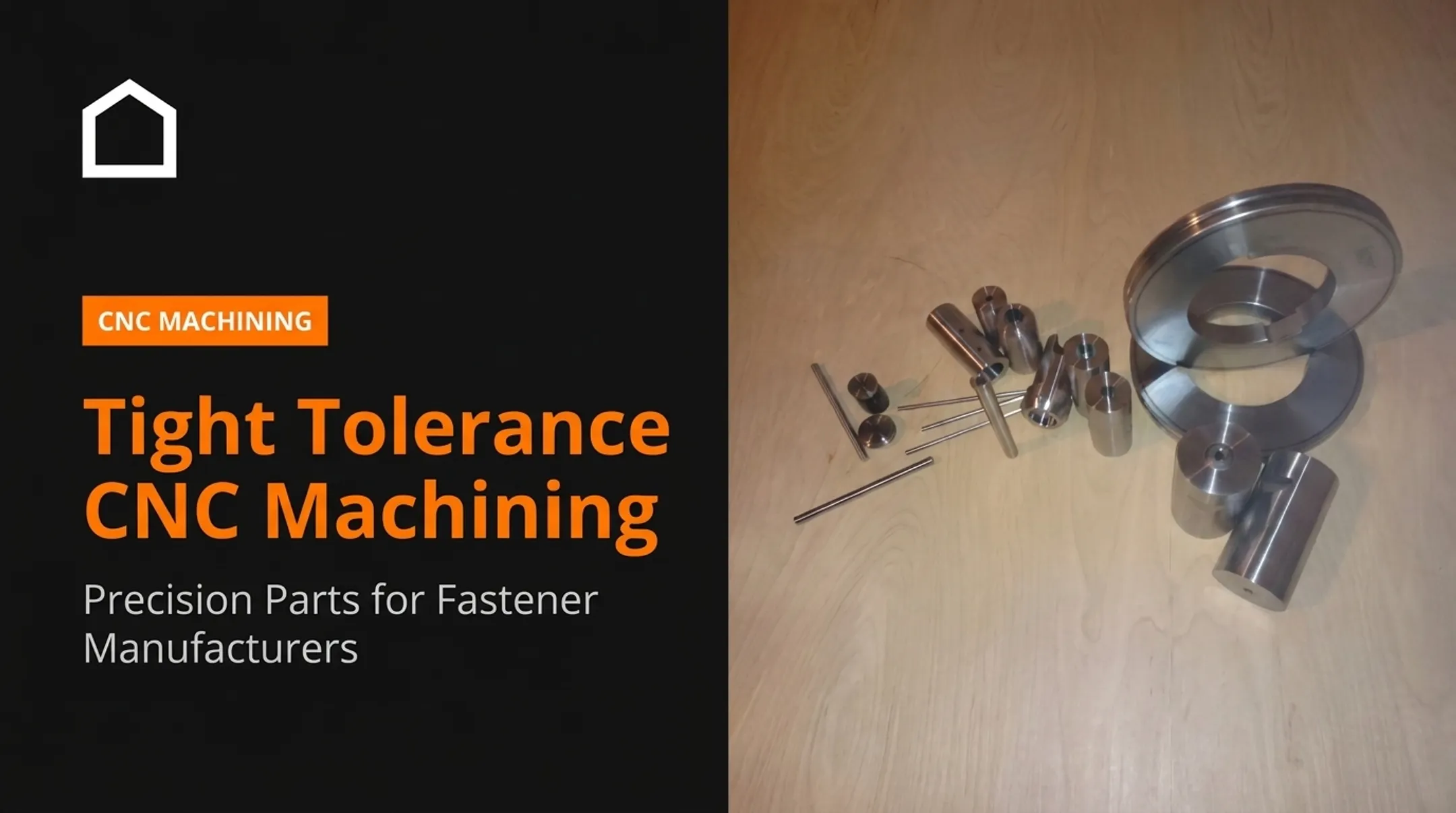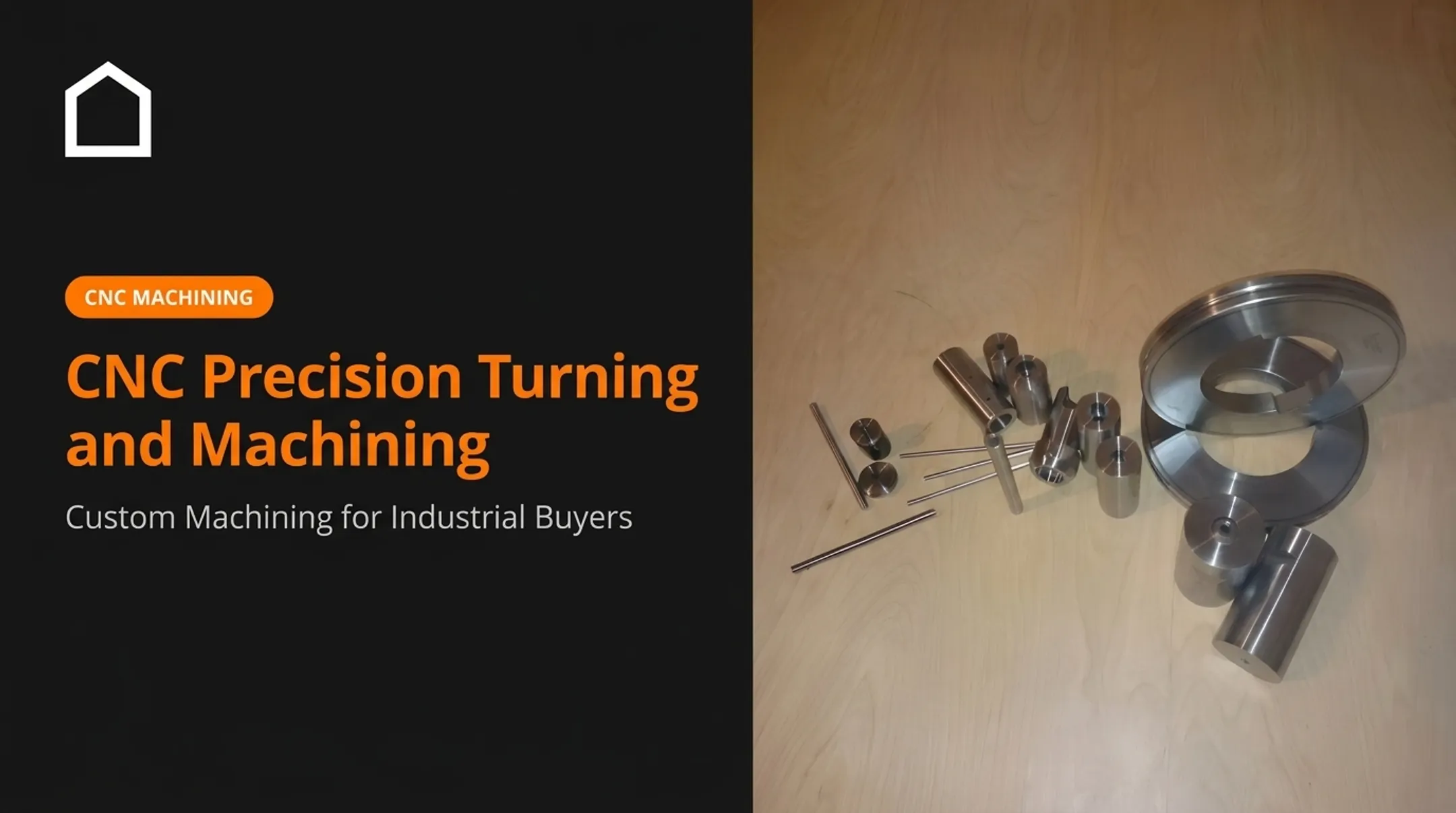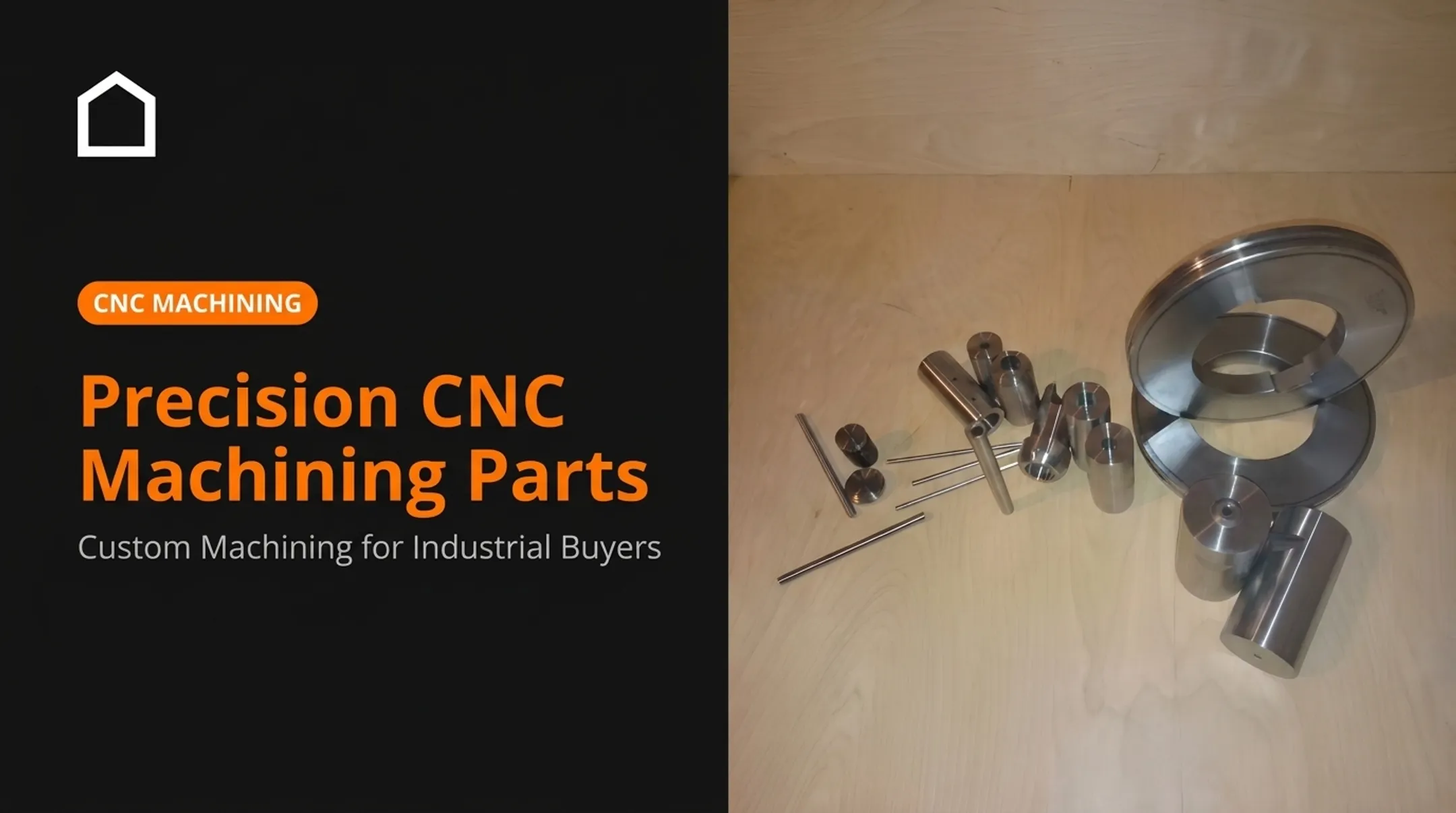

High-precision machining is really a family of processes, not one operation. Grinding is one piece of that family, and it's typically used as a controlled finishing step after a part has already been shaped, forged, stamped, or heat-treated. This guide breaks down what these processes actually do, walks through the typical workflow, compares the main grinder types, and covers what to send a supplier when requesting a quote.
Key Takeaways
- Grinding refines dimensions, geometry, and finish by removing small amounts of material with abrasive grains
- Hardened tool steels, precision bores, and flat reference surfaces are common candidates for grinding
- Match the process to geometry, material hardness, tolerance, finish spec, and volume
- Require documented process capability, inspection methods, and material experience before production starts
What Is High-Precision Grinding and Machining?
High-precision machining refers to producing parts or features to demanding dimensional, geometric, and surface-finish requirements. Those are three separate things, and mixing them up on a drawing causes real problems downstream.
Common geometric controls include:
- Tolerance controls size
- Flatness controls how much a surface departs from a true plane
- Roundness describes a single circular cross-section
- Cylindricity covers the form of an entire cylindrical surface, not just one slice
Concentricity historically described how well two features share a center. The 2018 edition of ASME Y14.5 removed it in favor of position and runout controls. Confirm which drawing standard edition a supplier works from before assuming everyone means the same thing. ASME's dimensioning and tolerancing standard governs these distinctions. Surface roughness gets its own separate standard entirely.
Grinding vs. Other Machining Processes
Milling, turning, and drilling remove material with a cutting tool that has defined edges. Grinding is different: a grinding wheel is made up of thousands of individual abrasive grains, each acting as a tiny cutting point. EDM (electrical discharge machining) is different again, removing conductive material through controlled spark erosion rather than any physical cutting action.
That abrasive action is exactly why grinding excels at:
- Hardened steels that would dull or chip a conventional cutting edge
- Tight flatness and roundness requirements
- Surface finishes smoother than milling or turning typically leaves
Why Grinding Comes Last
Grinding usually shows up near the end of a manufacturing sequence. A part gets rough-machined close to final size, sent through heat treatment if hardness is required, then ground to remove the small amount of material needed to hit final specifications.
That order matters: heat treatment distorts parts slightly, and grinding corrects that distortion without restarting the whole process.
What Is the Process of High-Precision Machining?
The path from drawing to finished part follows a fairly consistent sequence, even though the specific operations vary by part.
- Drawing and material review - Identify critical datums, tolerance zones, surface-finish callouts, material condition, and inspection requirements before cutting anything
- Process planning - Determine which operations (milling, turning, grinding, EDM) address each feature
- Rough machining - Bring the part close to final dimensions, leaving stock for finishing operations
- Heat treatment (when required) - Harden the material to the specified condition
- Grinding or finishing - Remove the remaining stock to hit final tolerance and finish
- Inspection and documentation - Verify the part against the drawing and record results

At Quality FORM Tools, this typically plays out as CNC machining followed by hard turning and grinding after heat treat, particularly on tooling components where hardness and finish both matter.
Grinding is where final tolerance and surface finish get locked in. Three setup choices decide whether that step holds: the wheel, the workholding, and heat control.
Selecting the Right Grinding Wheel
Wheel selection isn't guesswork. According to Norton Abrasives, the factors used to determine a grinding wheel specification include:
- Work material and operation severity
- Required finish and form
- Contact area, wheel speed, and coolant
- Available machine power
A supplier who asks detailed questions about your material and finish requirements before quoting a wheel type is doing this correctly. One who just names a wheel designation without asking anything probably isn't.
Workholding and Setup
Movement during grinding ruins accuracy. Depending on the part, workholding might involve:
- Magnetic chucks for flat, ferrous parts on a surface grinder
- Collets or fixtures for repeatable cylindrical work
- Between-centers setups for shafts and long cylindrical features
- Regulating wheels and workrest blades for centerless operations
Protecting Against Thermal Damage
Grinding generates heat, and heat damages hardened steel. UNITED GRINDING notes that grinding burn can alter the surface properties of hardened steel when heat isn't managed through coolant delivery, wheel condition, and process parameters.
A shop working with hardened tool steels should explain how it detects and prevents burn on critical features, not just assume it away.
What Are the Main Types of Grinding Machines?
Different geometries call for different machines. Matching the grinder to the actual feature being finished, rather than requesting "precision grinding" as a generic service, is the difference between a good quote and a wasted conversation.
| Machine Type | Best For | How It Works |
|---|---|---|
| Surface grinding | Flat, parallel, or reference surfaces (die plates, fixtures, tooling faces) | Table movement passes the workpiece under a rotating wheel |
| Cylindrical grinding | External diameters, shoulders, tapers, shafts, pins | Workpiece rotates, supported between centers or in a chuck |
| Centerless grinding | High-volume repeatable cylindrical parts | Grinding wheel and regulating wheel work together with a workrest blade, no center holes needed |
| Internal grinding | Bores, sleeves, bushings, bearing-related components | Smaller wheel works inside the bore; limited by bore size and depth |
Specialized Grinding Operations
Profile, tool, and vertical grinders handle situations the four categories above don't cover well. They come into play when the job falls outside standard flat or round work:
- Complex contours and non-standard profiles
- Cutting tool geometry, inserts, punches, and dies
- Large workpieces that need a custom setup
A thread-rolling die, for example, often needs surface grinding on its tooling faces. That application finishes the die itself—not every stamped or forged part the die later produces.
Where Are High-Precision Grinding and Machining Used?
Tooling and forming applications lean heavily on precision grinding because dimensional accuracy directly affects tool life, fit, and repeatability. A cold header punch that's out of round wears unevenly and shortens run life. A stamping die with an uneven surface transfers defects into thousands of parts before anyone notices.
Common applications include:
- Cold header tooling: dies, punches, cut-offs, quills, feed rolls, and wire draw dies
- Stamping and forging dies, including guide bushings machined to specific diameter and finish requirements
- Wire-form components and replacement parts for stamping press rebuilds
- Fixtures and machine parts that need repeatable, precise reference surfaces
Beyond fastener and tooling work, precision grinding supports automotive, aerospace, medical, energy, electronics, and general industrial machinery manufacturing. Shops rely on it for hardened components and tight-tolerance bores.
Material Considerations for Tool Steels
Those tooling applications often run on hardened tool steels, and grade selection affects how a part grinds. Common grades include:
- M2 (high-speed steel): Used for cutting tools like drills and taps; typically double-tempered
- D2 (cold-work steel): Common for punches and dies; can reach roughly 62-64 HRC depending on tempering temperature
- H13 (hot-work steel): Used in forging dies; typically achieves 42-52 HRC under standard vacuum heat treatment
- S5 (shock-resisting steel): Suited to heavy-duty punches and stamping dies; can harden to around 62 HRC
Quality FORM Tools works with M2, D2, H13, and S5 across its cold heading and tooling work. These hardness figures describe attainable conditions under specific heat treatments, not a guaranteed spec for every part. Confirming the actual required condition on the drawing matters more than quoting a grade name alone.

How to Choose a Precision Machining and Grinding Supplier
Choosing a precision machining and grinding supplier starts with clear requirements, proof of capability, and a realistic match to your volume. A strong RFQ gives a supplier everything needed to quote accurately the first time. At minimum, include:
- Current drawing revision
- Material grade and condition (as-rolled, annealed, hardened)
- Heat-treatment status and target hardness
- Critical dimensions, datums, and tolerances
- Surface-finish requirements
- Quantity and expected repeat orders
- Inspection documentation needs
- Delivery requirements
Verifying Technical Capability
Before committing, ask about:
- Machine types and grinding diameter or travel limits
- Wheel and dressing capability for your material
- Workholding methods appropriate to your geometry
- In-process gauging, CMM access, or other inspection equipment
- Direct experience with comparable materials and part geometries
Grinding Isn't Always the Answer
Not every tight-tolerance feature needs grinding. Milling, turning, honing, EDM, or lapping can deliver an acceptable result at lower cost on some features.
Use supplier input to apply tight tolerances only where function demands them, and leave less critical dimensions with looser, cheaper-to-produce tolerances. That scope check separates a capable partner from one that only grinds what the print shows.
Matching Volume to Capability
Production volume shapes both the process and the supplier. Different volumes favor different setups:
- One-off prototypes
- Low-to-medium volume replacement parts
- Larger production runs
A quoted capability is not the same as guaranteed performance across a full run, so ask how consistency is held past the first few hundred pieces.
Quality FORM Tools works across these ranges—prototype and one-off machining through production—on specialty tooling, stamped and forged components, and replacement parts for presses and forming equipment. Send a drawing, material spec, quantity, and tolerances so fit can be checked against the actual part.
Before you award the work, confirm "precision" claims with sample parts, inspection reports, first-article requirements, or references—not general marketing language.

Frequently Asked Questions
What is the process of high precision machining?
High-precision machining typically runs from drawing and material review through process planning, rough machining, heat treatment (if required), grinding or finishing, and final inspection. The exact sequence depends on the part’s geometry and material.
What are the four types of grinding machines?
Surface, cylindrical, centerless, and internal grinding are the four commonly discussed categories. Profile, tool, vertical, and other specialized grinders also exist for specific geometries.
What is the difference between precision machining and precision grinding?
Precision machining is the broader category covering multiple material-removal processes. Grinding is one abrasive finishing process within it, typically used when a part needs refined dimensions, geometry, or surface finish.
When should a manufacturer choose grinding instead of milling or turning?
Choose grinding when the material is hardened, when tolerance or finish needs exceed what milling or turning can practically hold, or when flatness, roundness, or bore accuracy must be tightly controlled.
What information should I provide when requesting a precision grinding quote?
Share the drawing revision, material grade and hardness, critical tolerances, surface-finish specs, quantity, heat-treatment status, inspection needs, and delivery schedule. Complete details cut back-and-forth and speed up an accurate quote.