
This guide provides a detailed look at the aluminum stamping process. We'll cover everything from the initial material decisions and process stages to common applications and defect prevention, giving your team the insights needed to ensure dimensional accuracy, surface quality, and production reliability.
Key Takeaways
- Core Operations: Aluminum stamping converts sheet or coil into finished parts using operations like blanking, piercing, bending, drawing, and coining.
- Critical Factors: Success depends on controlling variables like alloy, temper, thickness, grain direction, die design, lubrication, and press settings.
- Material Trade-Offs: Aluminum provides low weight, corrosion resistance, and conductivity, but you must manage challenges like springback, galling, and surface damage.
- Process Selection: The right stamping method—whether progressive, transfer, or deep-draw—is determined by part geometry, tolerances, material, and production volume.
What Is Aluminum Metal Stamping and Why Is It Used?
Industrial aluminum stamping is a manufacturing process that uses a press to apply force to a punch-and-die set, shaping flat aluminum stock into a predetermined form. The material, typically in sheet or coil form, is fed into the press, where the tooling cuts, bends, or forms it. The goal is to create parts with repeatable geometry, consistent edges, and controlled features at a rate and cost suitable for production.
This industrial method is distinct from the hand stamping used for crafts or jewelry. It also differs from other metalworking processes:
- Machining: Removes material to create a shape.
- Casting: Pours molten metal into a mold.
- Forging: Shapes metal using compressive force, often when hot.
- Sheet-metal fabrication: Often involves more manual or semi-automated steps like braking and welding.
Manufacturers choose aluminum for stamping for its material properties. With a density of approximately 2.7 g/cm³, it is about one-third the weight of steel, which suits automotive, aerospace, and other weight-sensitive applications.
Other advantages include:
- Strong corrosion resistance in many service environments
- High electrical and thermal conductivity
- Good formability for complex part geometries
- High recyclability with limited property loss
Those gains come with trade-offs versus steel:
- Lower stiffness (elastic modulus) and more springback after forming
- Greater sensitivity to surface damage
- Galling risk, when aluminum particles adhere to tooling
Because of these differences, replacing a steel part with an aluminum one requires careful engineering validation. It is not a simple material swap.

How the Aluminum Stamping Process Works
Producing a reliable aluminum stamped part is a multi-stage process that requires precision from start to finish. It begins with engineering and ends with inspection and finishing.
Step 1: Review the Part Design and Engineer the Tooling
Before any metal is cut, engineers analyze the part's CAD design. They evaluate its geometry, draw depth, bend radii, and tolerances to plan the manufacturing strategy. For aluminum, this analysis must account for its tendency to spring back and its sensitivity to material flow.
Tooling design is then adapted to aluminum's unique properties. This often involves:
- Adjusting Die Clearances: Proper clearance between the punch and die is crucial to prevent excessive burrs or premature tool wear.
- Optimizing Punch and Die Geometry: Radii on punches and dies are carefully selected to allow the material to flow without cracking or wrinkling.
- Polishing Contact Surfaces: Highly polished tooling surfaces reduce friction and minimize the risk of galling and scratches on the finished part.
- Designing for Springback Compensation: The die is often over-bent or shaped to compensate for the amount the aluminum will spring back after the forming pressure is released.
Step 2: Select and Prepare the Aluminum
Alloy and temper selection drives formability and final part performance. There is no single "best" grade; the choice depends on required strength, ductility, corrosion resistance, and surface finish.
Common wrought alloy families used in stamping include:
- 1xxx Series: Commercially pure aluminum, offering excellent formability and high conductivity.
- 3xxx Series: Alloyed with manganese for moderate strength and good workability, often used in heat exchangers.
- 5xxx Series: Alloyed with magnesium, providing good corrosion resistance and moderate-to-high strength. 5052 is a popular choice for bent and drawn parts.
- 6xxx Series: Contains magnesium and silicon, making it heat-treatable, highly formable, and weldable.
- 7xxx Series: High-strength, heat-treatable alloys often used in aerospace, but their formability can be limited.
Temper designations, such as O (annealed), H (strain-hardened), or T (heat-treated), matter as much as the alloy. They set the material's starting strength and ductility.
Once selected, the raw material (sheet or coil) is inspected for correct thickness, flatness, and surface condition before it enters the press.
Step 3: Feed and Locate the Material
Consistent part quality relies on precise material positioning. Automated feeders, guides, and pilot pins in the die ensure the aluminum strip or blank is accurately located at each station. Any error in feeding or registration can lead to cumulative dimensional variations, creating scrap even if the die itself is perfectly made.
Step 4: Perform the Stamping Operations
Inside the press, a series of operations transforms the flat stock into a finished part.
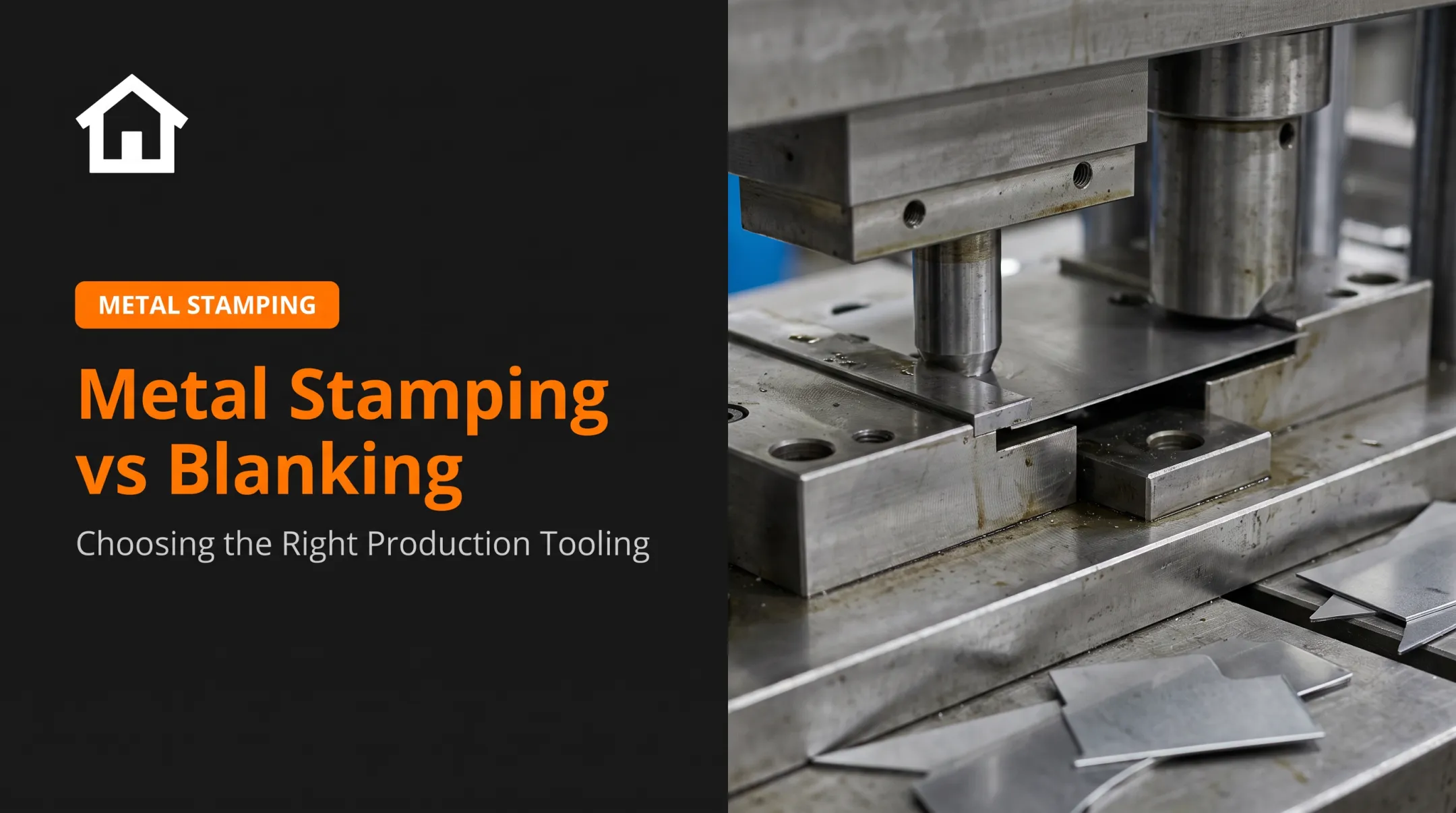
- Blanking & Piercing: Blanking cuts the outer contour of the part from the sheet, while piercing creates internal holes or features.
- Bending & Forming: Bending creates simple angles, while forming shapes the material into more complex geometries without intentionally thinning it.
- Deep Drawing: Forms cup- or box-shaped parts by drawing material into a die cavity. Blank-holder control regulates material flow to prevent wrinkles and fractures.
- Coining & Embossing: These operations add fine details like logos, lettering, or stiffening ribs by applying localized pressure.
- Flanging: An edge is bent over to add strength or prepare the part for assembly.
According to The Fabricator, aluminum’s greater springback compared with steel makes die compensation especially critical in drawing and forming.
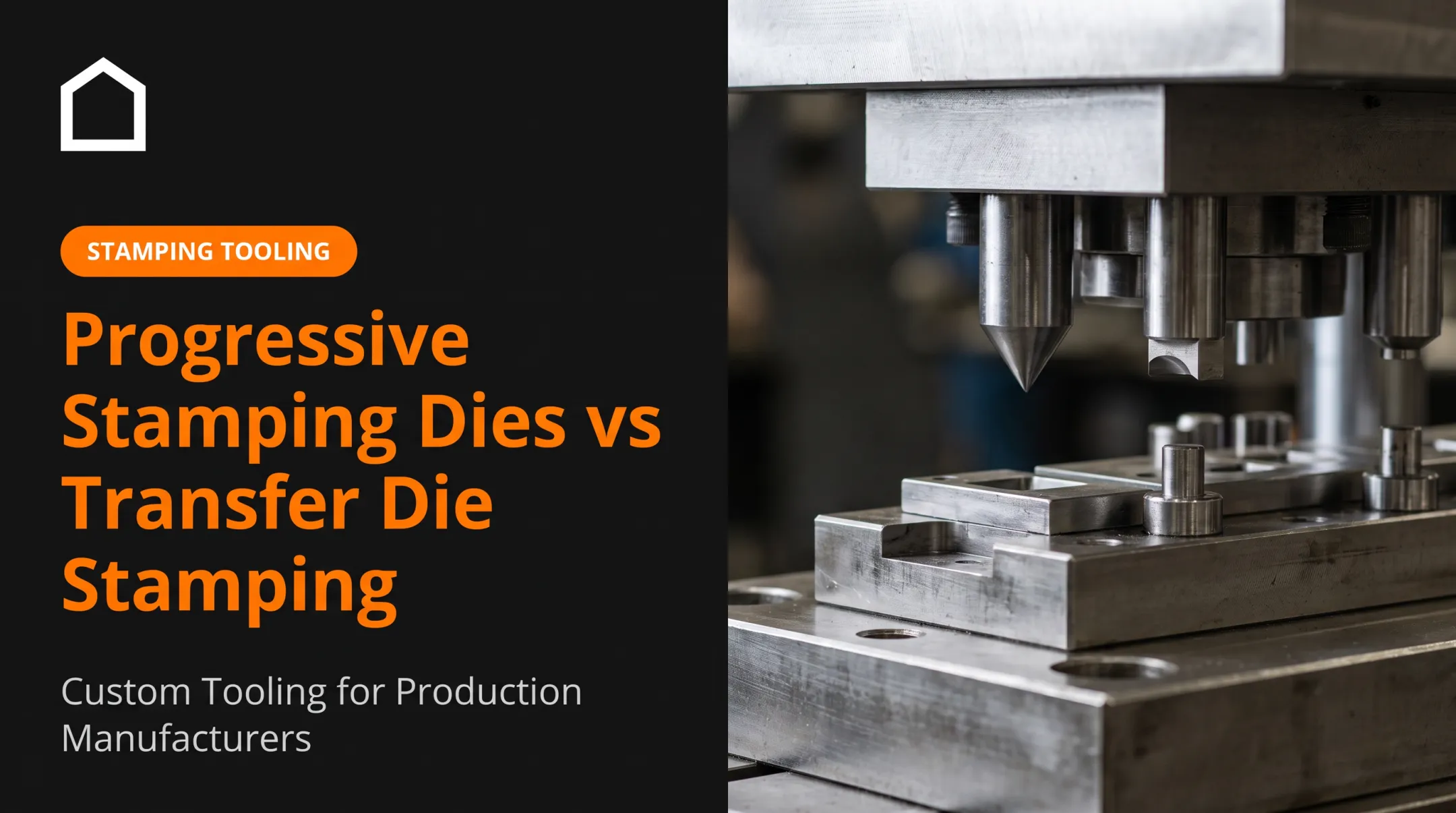
These operations can be combined in different die setups, such as progressive dies, where the part remains attached to a carrier strip as it moves through stations, or transfer dies, which move individual blanks between operations.
Step 5: Inspect, Finish, and Prepare the Parts
Quality control is ongoing. In-process checks use gauges, fixtures, and optical systems to verify dimensions, hole positions, and surface condition. After stamping, parts may undergo secondary processes like deburring, cleaning, or finishing.
Common finishing options for aluminum include:
- Anodizing: Creates a durable, corrosion-resistant oxide layer.
- Powder Coating or Painting: Adds color and environmental protection.
- Polishing or Brushing: Achieves a specific cosmetic appearance.

Where Aluminum Stamping Is Applied and What Affects Results
Manufacturers use aluminum stamping across numerous industries to produce components that are both strong and lightweight. Key applications include:
- Automotive: Heat sinks for electronics, structural components, and body panels.
- Aerospace: Aircraft fittings, brackets, and structural parts.
- Electrical: Connectors, enclosures, and busbars.
- HVAC: Fins for heat exchangers and internal components.
- Appliances: Panels, brackets, and decorative hardware.
- Packaging: The initial cup-forming for beverage cans is a classic deep-drawing application.
Selecting the right method for these applications depends on part complexity, volume, and budget. A simple bracket might be made in a single-operation die, while a complex enclosure could require a multi-stage progressive or transfer die.
Several factors influence the outcome of aluminum stamping:
- Material Inputs: Alloy, temper, thickness consistency, grain direction, and surface condition all play a role.
- Tooling and Equipment: Operators must optimize press tonnage, speed, die clearance, punch radii, and tool coatings for aluminum.
- Operating Conditions: Manufacturers must tightly control forming speed, lubrication type and coverage, and blank-holding pressure to prevent defects.
- Scale and Throughput: Prototypes may use flexible tooling, while high-volume production justifies dedicated progressive dies and automation.
For manufacturers sourcing stamped parts, replacement components for presses, or specialty tooling, partnering with an experienced supplier is critical. A knowledgeable partner like Quality FORM Tools can help review part designs and production requirements to ensure the chosen process is right for the job. During the RFQ process, that review confirms factors like aluminum-specific tooling, achievable tolerances, and volume feasibility.
Common Issues and When Aluminum Stamping May Not Be Appropriate
Even with a well-designed process, certain defects can arise when stamping aluminum. Understanding their causes is the first step toward prevention.
Common Defects and Their Causes
- Springback: The elastic recovery of the material after forming. Manage it by over-bending the part in the die.
- Galling: Friction transfers aluminum particles onto the die, which then scratch and split later parts. Lubrication and tool coatings are the main defense.
- Burrs: Sharp, rough edges left after blanking or piercing. They are typically caused by worn tooling or incorrect die clearance.
- Cracks or Tearing: Occurs when the material is stretched beyond its forming limit. This can result from an unsuitable temper, excessive blank-holder pressure, or sharp radii.
- Wrinkling: Uncontrolled material flow during drawing can cause the flange or wall to buckle. This is often due to insufficient blank-holder force.
- Scratches: Surface marks caused by contamination, rough handling, or damaged die surfaces.
Material choice drives several of these failures. A softer, more formable alloy is not always better. The right grade balances formability with the strength, corrosion resistance, and service conditions the finished part needs.

When to Consider Other Processes
Aluminum stamping is highly efficient for the right applications, but it's not always the best fit. Consider alternatives if your project involves:
- Very Low Quantities: The cost of dedicated tooling may be prohibitive for one-off parts or very small runs.
- Complex 3D Geometries: Parts requiring extensive multi-axis contouring are often better suited for CNC machining.
- Extremely Thick Sections: Stamping is generally used for sheet metal; very thick plate may require forging or machining.
- Highly Variable Designs: If designs change frequently, the investment in hard tooling may not be practical.
Before committing to stamping, run through this practical checklist:
- Required Quantity: Is it high enough to justify tooling costs?
- Part Geometry: Is it achievable with stamping operations?
- Material & Temper: Does the chosen aluminum meet both forming and final-use requirements?
- Tolerances: Can stamping hold the required dimensional accuracy?
- Tooling Budget & Lead Time: Are they aligned with the project timeline?
- Supplier Capability: Can your chosen partner support the design review, tooling, and production?
Get Your Aluminum Parts Right the First Time
Successful aluminum stamping is a controlled sequence of material preparation, die-based forming, and quality verification. Consistent, defect-free parts come from matching alloy and temper, tooling design, press conditions, and production volume to the part's requirements.
Before full production, validate that setup with a tooling and manufacturing partner who can support the full path—from prototype through volume. Quality FORM Tools helps manufacturers with:
- Stamped aluminum parts held to tight tolerances
- Forged components and replacement press tooling
- Custom dies, punches, and specialty tooling packages
- Low-volume runs through 100,000+ piece production
Share your print or requirements with the team to get the right process locked in before you commit the press.
Frequently Asked Questions
What are the steps in the metal stamping process?
The core steps include part design and tooling engineering, material selection and preparation, feeding the material into the press, performing the stamping operations (like blanking and forming), and finally, inspection and finishing.
Can aluminum be stamped?
Yes, aluminum is widely stamped. However, success requires careful control over factors like alloy and temper selection, die design, lubrication, and compensation for springback to prevent defects like galling and cracking.
What is the best aluminum grade for stamping?
There is no universal "best" grade. Choose based on formability, final strength, corrosion resistance, and surface finish. Common options include 3003, 5052, and 6061 series alloys.
What metal is best for stamping?
The best metal depends on the part's requirements for strength, weight, corrosion resistance, and cost. Aluminum is excellent for lightweight applications, while various steels (carbon, stainless) are chosen for their strength, durability, and lower cost.
Where can I find aluminum stamping blanks?
Source industrial blanks from aluminum service centers or metal distributors. Specify alloy, temper, thickness, dimensions, grain direction, required certifications, and quantity when you order.
What is metal stamping called?
Metal stamping is also known as pressworking, sheet-metal stamping, or die stamping. The individual operations within the process have their own names, such as blanking, piercing, bending, drawing, and coining.