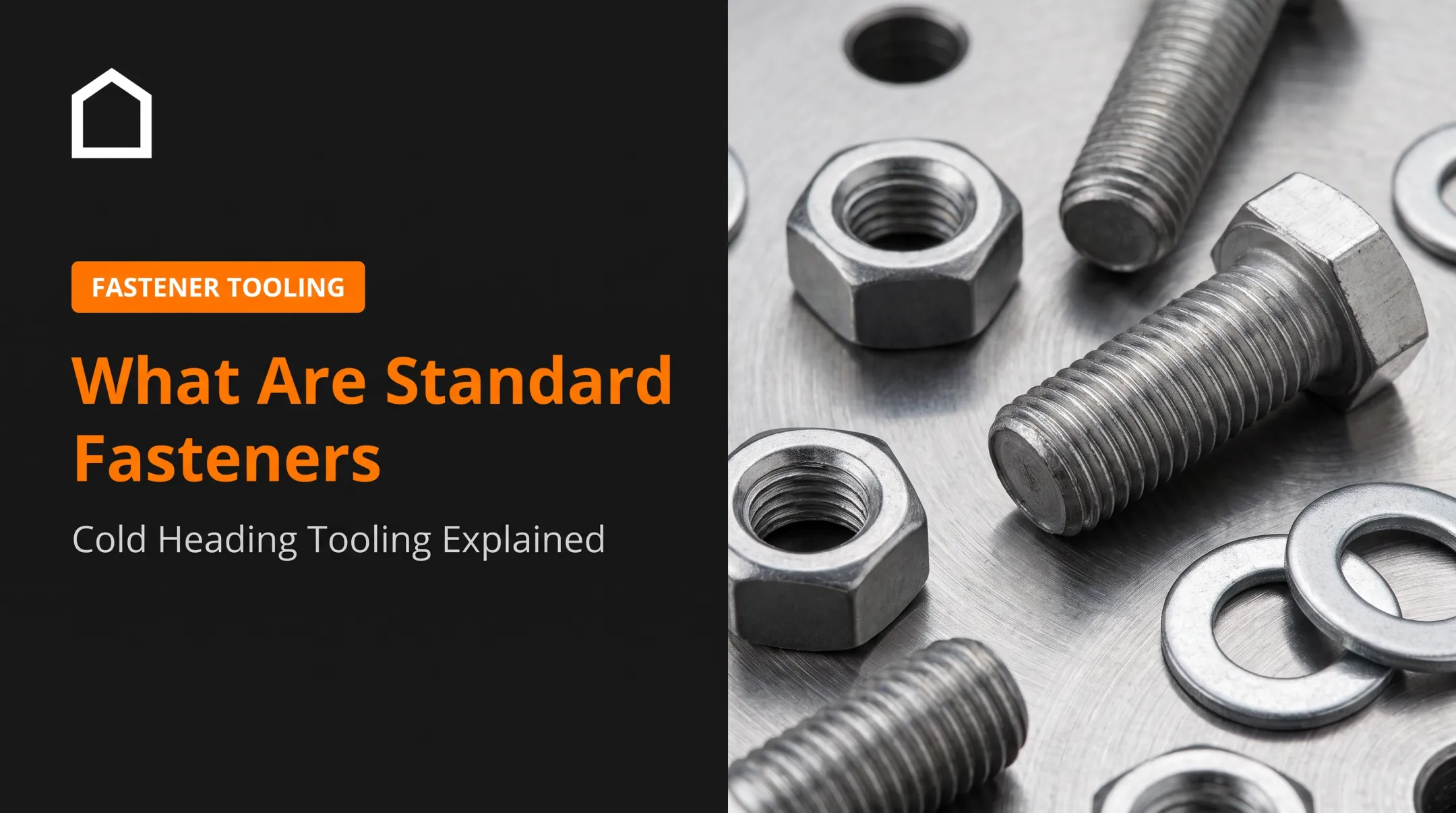

That creates a real selection problem. Engineers, purchasing teams, and manufacturers often default to "the strongest option available." But strength alone doesn't solve every application. A high-tensile alloy bolt with no corrosion protection will fail faster outdoors than a properly coated mid-strength fastener. Vibration, chemical exposure, heat, repeated loading, and installation method all matter just as much as the number on a mill certificate.
This guide breaks down the common steel fastener materials, clears up the differences between carbon, alloy, and stainless steel, and walks through a practical selection process you can apply before you order or produce a single part.
Key Takeaways
- Fastener material choice depends on both mechanical requirements and the service environment, not one factor alone.
- Carbon steel and alloy steel are typically chosen for strength and cost; stainless steel is chosen for corrosion resistance.
- Stainless steel is not automatically stronger than alloy steel, and alloy steel is not the same thing as stainless steel.
- Confirm the final choice against the governing specification, grade, coating, thread requirements, and load calculations.
Common Steel Materials Used in Fasteners
Most steel fasteners fall into four broad categories: carbon steel, alloy steel, stainless steel, and specialty grades built for specific manufacturing or performance needs. Here's how each one behaves in service.
Carbon Steel Fasteners
Carbon steel is classified by carbon content, which drives its ductility, hardness, and response to heat treatment:
- Low-carbon steel — generally below about 0.30% carbon, favoring ductility and cold-forming ease ASM International
- Medium-carbon steel — roughly 0.30–0.60% carbon, balancing strength and formability
- High-carbon steel — roughly 0.60–1.00% carbon, capable of higher hardness after heat treatment but with reduced ductility
ASTM A307 Grade A is a common example: a general-purpose carbon-steel bolt specification with a 60 ksi minimum tensile strength (Portland Bolt SAE J429 comparison). Carbon steel fasteners show up constantly in general industrial assemblies, machinery, and structural connections where indoor conditions or a protective finish are acceptable.
Alloy Steel Fasteners
Alloy steel starts as carbon steel with elements like chromium, nickel, molybdenum, or manganese added on purpose. These elements improve hardenability, toughness, wear resistance, and shock resistance beyond what plain carbon steel can reach on its own.
Quenched-and-tempered alloy steel is the go-to route for high-strength fasteners. Two examples worth knowing:
- SAE J429 Grade 8 — 150 ksi minimum tensile strength and 130 ksi minimum yield strength for the 1/4–1½ inch diameter range
- ASTM A354 Grades BC/BD — quenched-and-tempered alloy steel bolting used in high-strength structural and mechanical applications
Not every alloy bolt contains the same alloying package. Specify the standard, not just the phrase "alloy steel."
Stainless Steel Fasteners
Stainless steel resists ordinary atmospheric corrosion because of its chromium content, which forms a thin passive oxide layer on the surface. That layer self-heals when scratched, as long as enough oxygen and chromium are present.
Fastener-grade stainless splits into several families, each with different tradeoffs:
- Austenitic (304/18-8, 316) — most common fastener grades; 316's molybdenum improves chloride resistance over 304, though neither is immune; typically non-magnetic when annealed.
- Martensitic (410/431) — heat-treatable for higher hardness, but with different corrosion behavior than austenitic grades. Magnetic.
- Precipitation-hardening (630/17-4PH) — strength depends on the specified heat-treatment condition.
- Duplex and super-duplex — mixed austenitic-ferritic structures for higher strength and chloride resistance; magnetic; covered under ISO 3506-1 property classes.
Specialty and Machinability-Focused Steels
Free-machining, resulfurized, and spring steels solve a manufacturing problem rather than a strength or corrosion problem. Improved machinability or spring performance often comes at a cost:
- Reduced weldability
- Lower ductility
- Reduced corrosion resistance
- Altered heat-treatment response
Before treating any of these steels as a drop-in substitute, check the material designation, the fastener specification, and the intended manufacturing method together. A steel that machines beautifully on a screw machine may cold-head poorly, and vice versa.

Steel, Alloy Steel, and Stainless Steel: What Is the Difference?
This is where a lot of confusion starts. "Steel," "alloy steel," and "stainless steel" get used almost interchangeably in casual conversation, but they describe three different things.
Material Composition and Performance
These labels are not interchangeable:
- Steel — broad category of iron alloyed with carbon
- Alloy steel — steel with intentional added alloys for better hardenability or toughness
- Stainless steel — corrosion-resistant steel with enough chromium (typically at least 10.5%) to meet the relevant standard
| Category | Corrosion resistance | Typical use case |
|---|---|---|
| Carbon steel | Low without coating | General assembly, indoor use |
| Alloy steel | Low without coating | High-strength structural/mechanical loads |
| Stainless steel | Inherent, alloy-dependent | Moisture, chemical, or chloride exposure |
Strength and Hardness
Strength depends on the specific grade, heat treatment, dimensions, and manufacturing process — not on the word "steel" by itself. A few benchmarks:
- SAE J429 Grade 5: 120 ksi tensile, 92 ksi yield (1/4–1 inch)
- SAE J429 Grade 8: 150 ksi tensile, 130 ksi yield (1/4–1½ inch)
- ISO 898-1 class 8.8: 800 MPa nominal tensile, 640 MPa nominal yield (ISO 898-1)

Don't compare materials using tensile strength alone. Tensile strength, yield strength, hardness, toughness, and fatigue performance are five separate properties. A fastener can rank high on one and mediocre on another.
Corrosion Resistance and Finishes
A coating protects the surface. Stainless corrosion resistance comes from the alloy itself. That's a meaningful distinction:
- Zinc-plated (electrodeposited) — ASTM B633 covers the coating; ASTM F1941/F1941M addresses fastener-specific electroplating
- Hot-dip galvanized — ASTM F2329/F2329M covers hot-dip zinc on steel bolts, screws, nuts, and washers
- Black oxide — limited corrosion protection; appearance is not a performance indicator
- Stainless — inherent resistance, but not corrosion-proof
Stainless steel is corrosion resistant, not universally corrosion-proof. Chloride exposure, crevices, contamination, damaged surfaces, and galvanic contact with dissimilar metals can still cause corrosion in stainless hardware.
Common Misconceptions
A few myths persist across shop floors and purchasing departments:
- "Stainless is always stronger." Not true. Many alloy steel bolts outrank standard austenitic stainless in tensile strength.
- "If it's not magnetic, it's stainless." Magnetism isn't a reliable identification method — austenitic stainless can become weakly magnetic after cold working, while martensitic and duplex stainless are magnetic by nature.
- "8.8 equals Grade 8." No formal equivalence exists between ISO 898-1 metric property classes and SAE J429 inch-series grades. They're different systems entirely.
How to Choose the Right Steel Fastener Material
Selection should start with the joint's actual requirements, not a material preference.
Start With Load and Joint Requirements
Review these factors before naming a material:
- Tensile load, shear load, and required preload
- Fatigue and impact conditions
- Vibration exposure
- Thread engagement and joint stiffness
- Diameter, thread form, and head style
A fastener's grade or property class should match these numbers first. Material name comes second.
Evaluate the Service Environment
Environmental exposure changes the equation quickly:
- Moisture, washdown, or outdoor service
- Salt or chloride exposure
- Chemical contact
- Elevated or reduced temperature
- Buried or enclosed conditions
- Contact with dissimilar metals
A coated alloy steel fastener can perform well in mild outdoor conditions. Marine environments, chemical processing, or chloride-rich service usually justify stainless, duplex, or specialty material despite the higher upfront cost.

Consider Installation and Maintenance
Stainless fasteners are prone to thread galling, an adhesive wear failure that can seize threads during installation. BUMAX's 2025 technical paper on galling recommends lubrication, compatible mating materials, clean threads, and controlled torque during assembly to reduce the risk.
Also factor in:
- Inspection access and replacement frequency
- Consequences of fastener failure in the assembly
- Torque-preload relationships specific to the material and lubrication used
Match the Material to the Application
These are starting points, not universal substitutions:
| Application | Typical starting material |
|---|---|
| General indoor machinery | Carbon steel, plated |
| Structural or high-load assemblies | Alloy steel, quenched and tempered |
| Outdoor equipment | Coated alloy steel or 304 stainless |
| Marine or chloride-rich service | 316 stainless, duplex |
| Heat- or wear-intensive equipment | Specialty alloy or precipitation-hardening stainless |
Before finalizing, confirm material certificates, grade markings, coatings, thread tolerances, and compatibility with mating nuts and washers, especially for safety-critical or production-controlled work.
Manufacturing, Heat Treatment, and Tooling Considerations
The steel you specify has to be producible, not just theoretically correct. Cold heading, machining, forging, heat treatment, and thread rolling each place different demands on a material:
- Cold heading favors ductile, formable steels that won't crack under upsetting pressure
- Machining favors steels that cut cleanly without excessive tool wear
- Forging needs materials that flow under compressive load without cracking
- Heat treatment needs predictable response based on carbon and alloy content
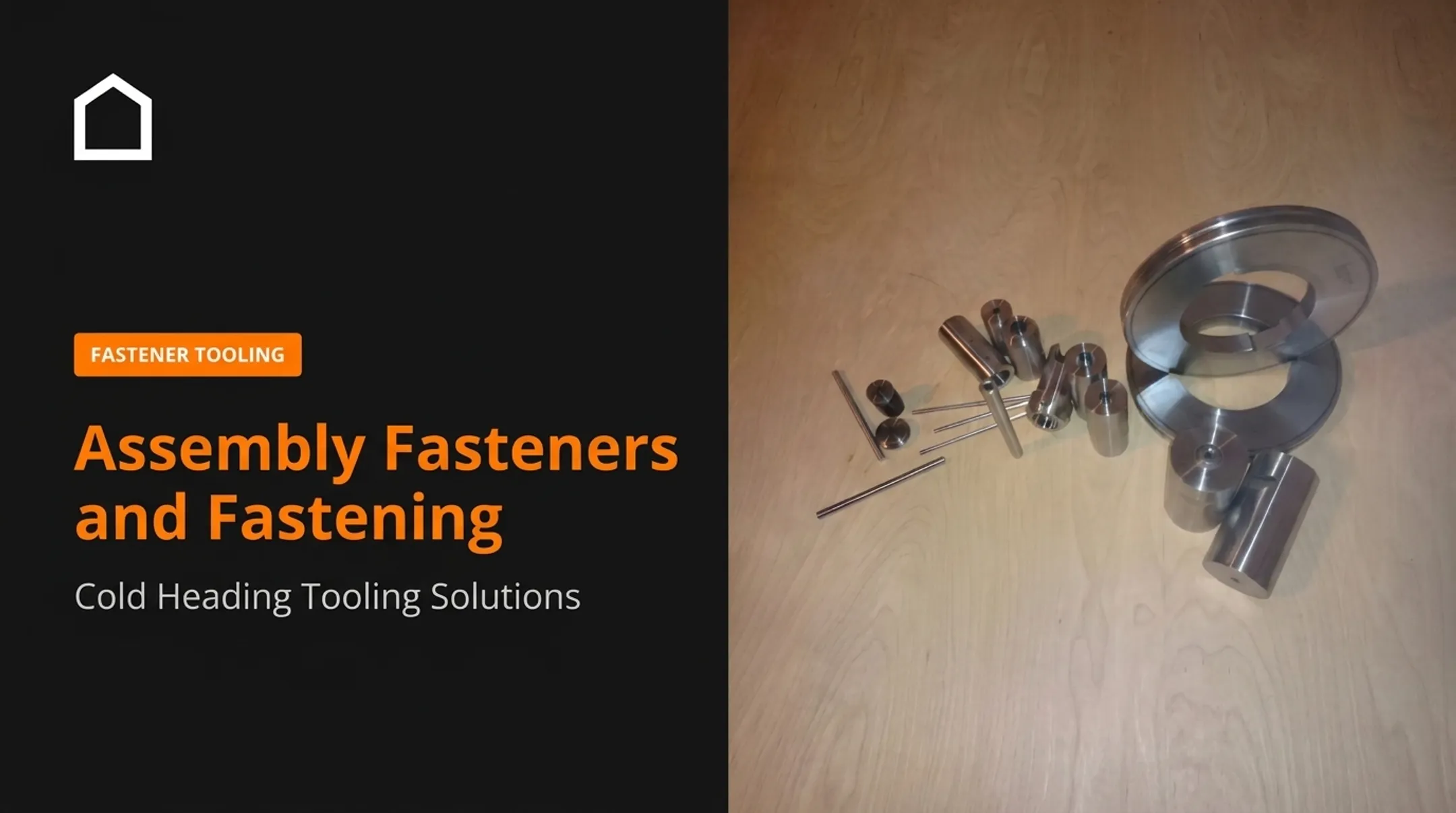
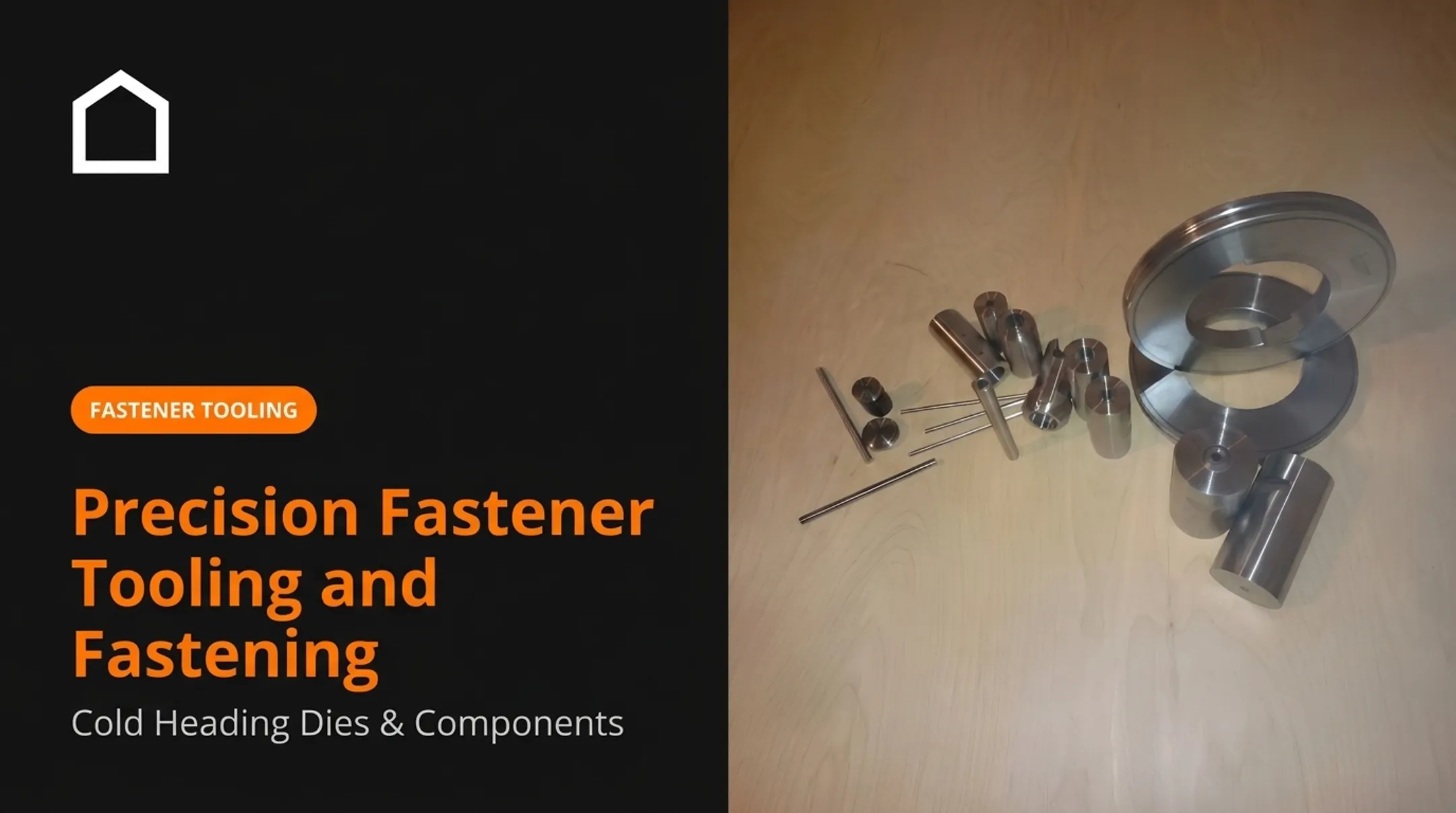
- Thread rolling requires enough ductility to displace material without tearing Fastener material and tooling material are two separate conversations. Quality FORM Tools supports cold header and fastener-forming operations with tooling built from tool steels including M2, D2, H13, and S5. Those tooling steels are not interchangeable with the steel used in the finished fastener. A die made from D2 doesn't tell you whether the bolt it forms should be carbon steel, alloy steel, or stainless. Manufacturers developing new tooling, or replacing worn dies and punches, need to coordinate the fastener material, part geometry, production volume, and expected die wear together. Since 2008, Quality FORM Tools has worked as a manufacturing brokerage connecting fastener and wire-forming shops with domestic and overseas suppliers. That network covers cold header tooling such as dies, punches, cut-offs, quills, feed rolls, and complete tooling packages when shops need that coordination in one place.

A Practical Fastener Material Selection Checklist
Run through this before approving a substitute material or grade:
- Identify the governing specification: ASTM, SAE, or ISO, then pull the mechanical property data
- Confirm load type: tensile, shear, fatigue, or impact
- Confirm required strength or property class: not just a material name
- Check temperature range: ambient, elevated, or low-temperature service
- Assess corrosion exposure: chemical, chloride, or general atmospheric
- Evaluate vibration conditions: including how they affect preload retention
- Review installation method: torque control, lubrication, and thread engagement
- Verify mating material compatibility: nuts, washers, and joined components
- Confirm coating requirements: finish type, thickness, and any restrictions
- Set inspection and traceability requirements: lot control, certs, and acceptance checks
For safety-critical, fatigue-loaded, high-temperature, corrosive, or highly customized assemblies, involve a qualified engineer or fastener specialist.
A lower-cost grade that needs frequent replacement or causes unplanned downtime usually costs more over the life of the assembly than the higher-spec choice.
Frequently Asked Questions
What is the strongest fastener material?
No single material wins every category. SAE J429 Grade 8 alloy steel reaches 150 ksi minimum tensile strength, but specialty stainless, duplex, or precipitation-hardening grades can beat it on toughness, fatigue life, or corrosion resistance in the right service conditions.
What types of steel are commonly used in bolts?
Carbon steel, alloy steel, and stainless steel cover most bolts. Carbon steel suits general-purpose loads, alloy steel suits high-strength jobs, and stainless steel suits corrosive environments—with specialty heat-treated grades for niche needs.
What are stainless steel fasteners?
Stainless steel fasteners are bolts, screws, nuts, and related hardware made from corrosion-resistant alloys. Chromium forms a passive protective layer; grade 304 suits mild atmospheres, while 316 or duplex grades handle chloride-heavy environments better.
What is an alloy steel bolt?
An alloy steel bolt is manufactured from steel containing added elements like chromium, nickel, or molybdenum to improve strength, toughness, or wear resistance. Unlike a stainless steel bolt, it typically has no inherent corrosion resistance and needs a coating for outdoor or wet service.
Is alloy steel the same as stainless steel?
No. Stainless steel is a corrosion-resistant subset of steel defined by its chromium content and passive layer. Alloy steel is a broader category engineered for mechanical properties like strength and toughness, and it can corrode without a protective finish.
What is grade 8.8 steel equivalent to?
Grade 8.8 is an ISO metric property class, not a direct US-grade equivalent. It indicates a nominal 800 MPa tensile strength and 640 MPa nominal yield strength. Compare complete mechanical requirements, dimensions, and thread systems before treating it as interchangeable with any SAE grade.