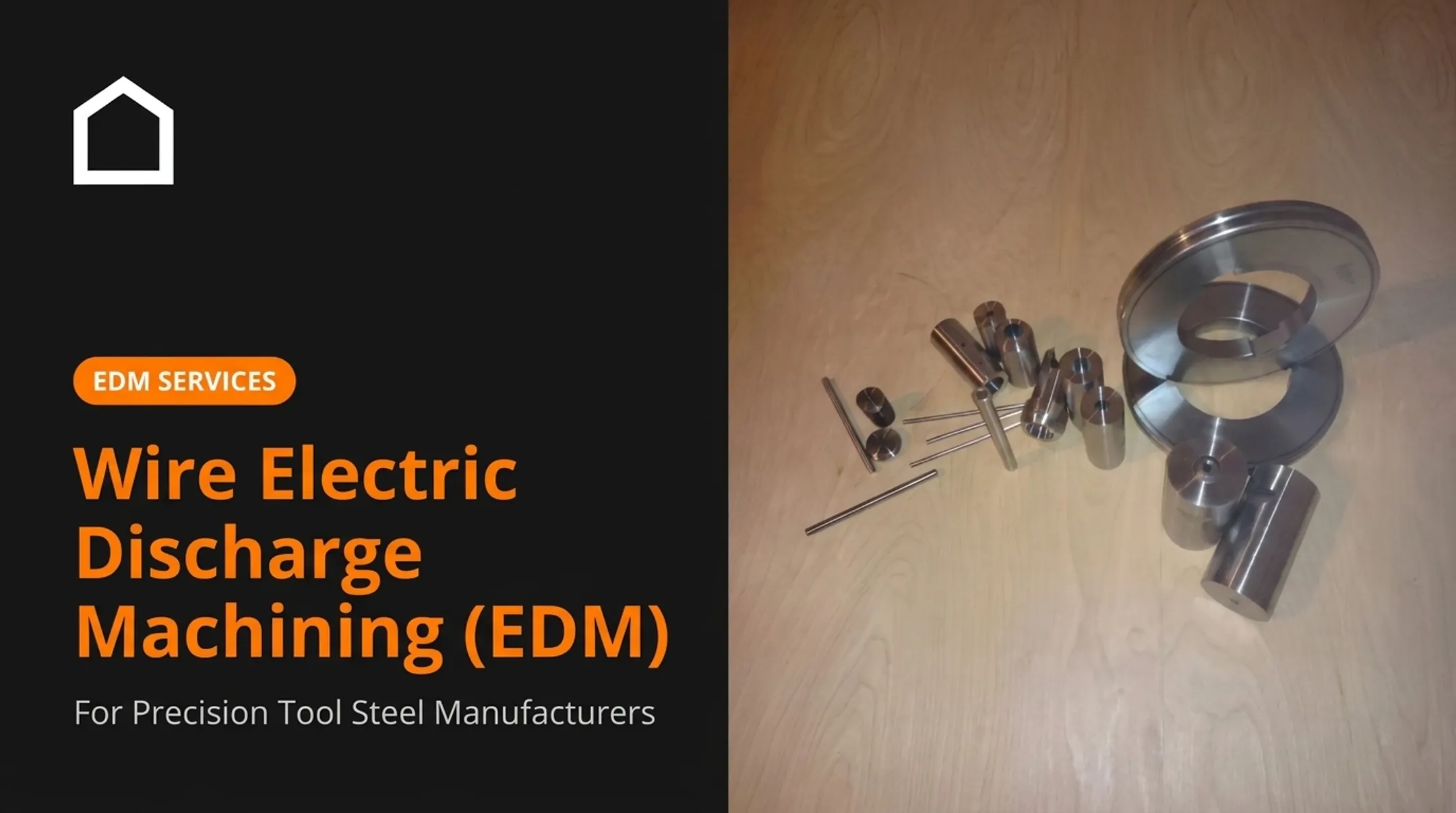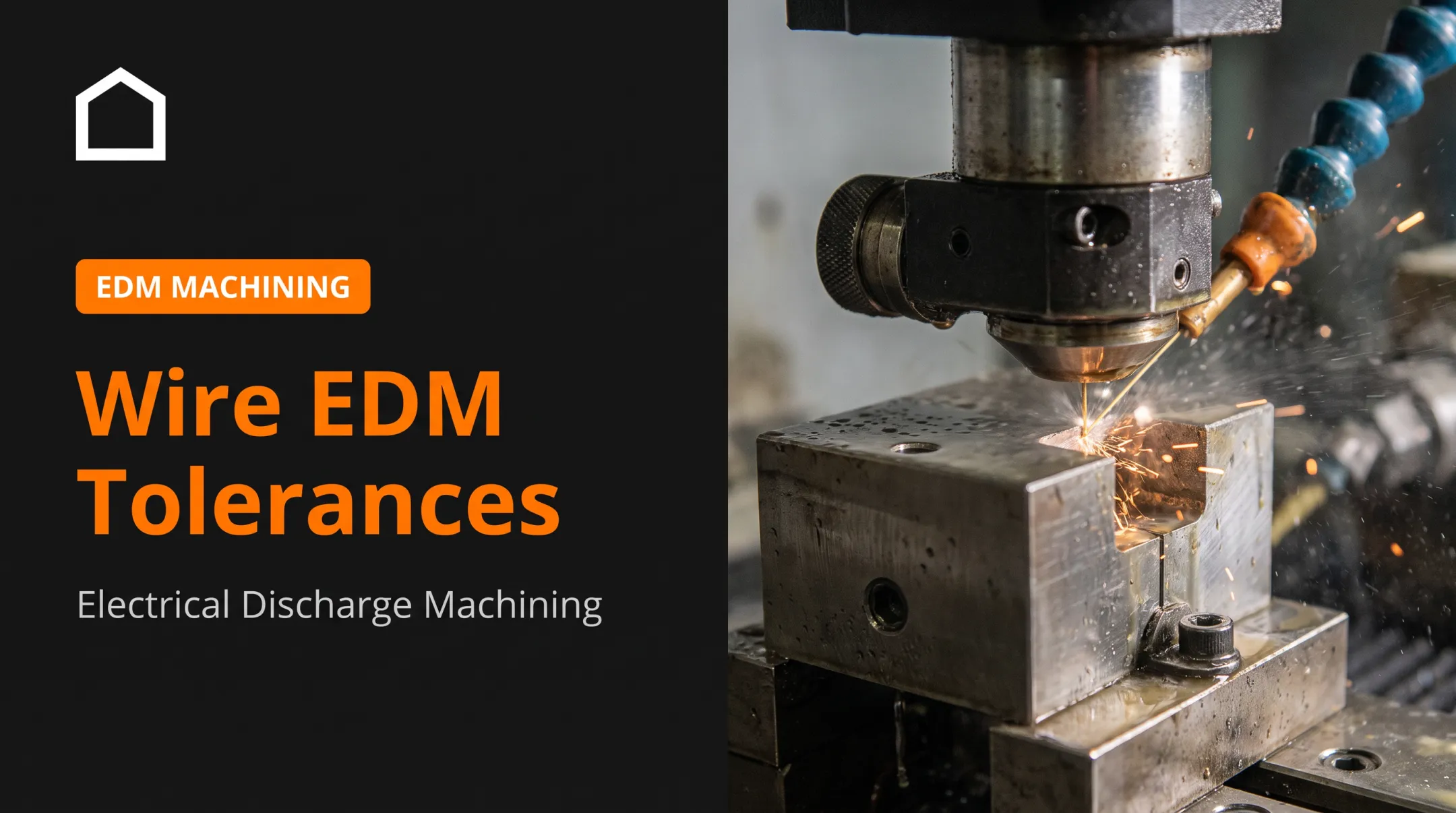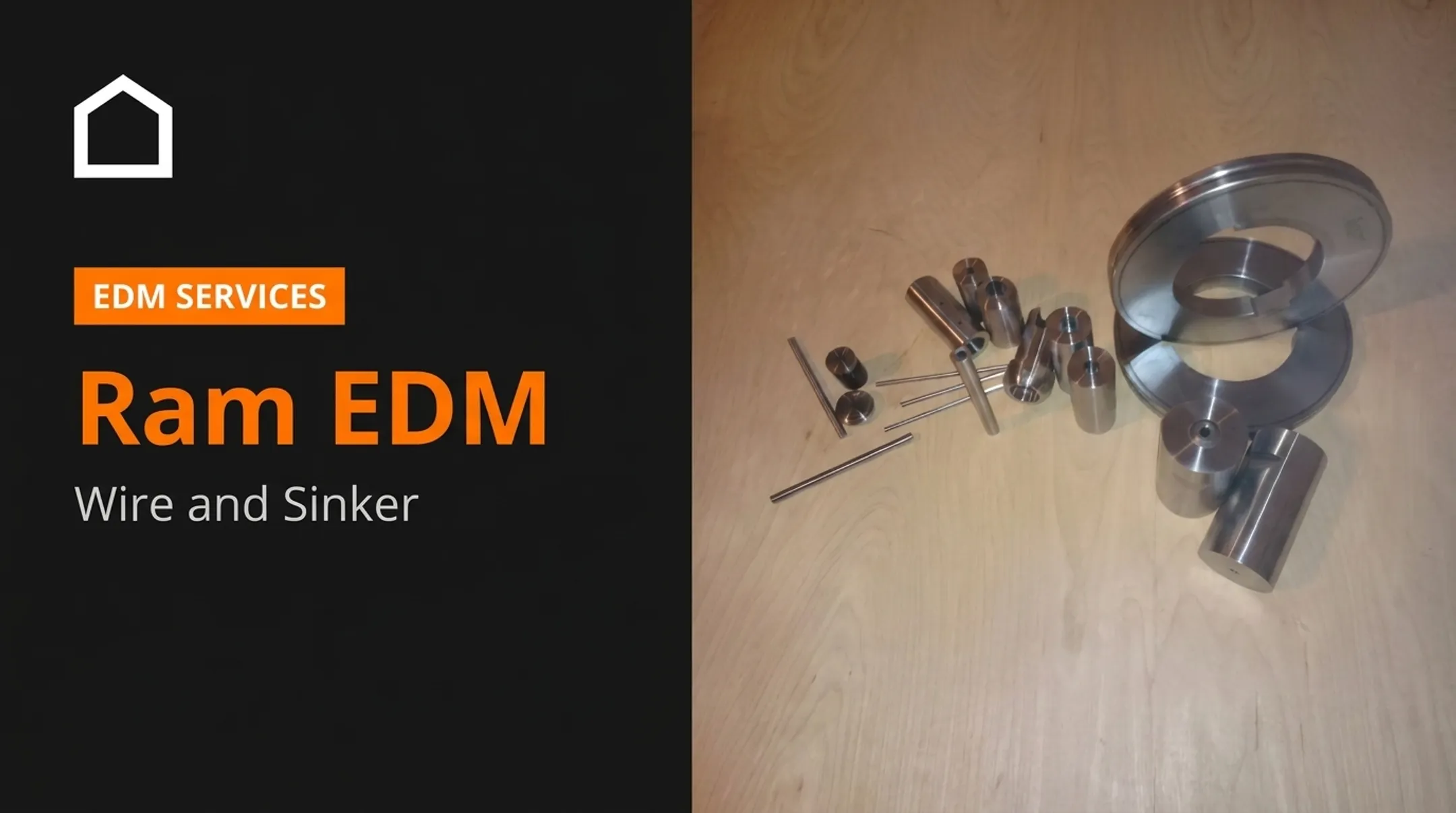

Swiss-type machining rotates bar stock past a cutting tool to produce small, slender cylindrical parts. Wire EDM uses electrical sparks to erode conductive material along a programmed path. They solve different problems, use different equipment, and suit different geometries.
Many buyers struggle to know which process fits their part before they even request a quote. This guide breaks down how wire EDM actually works, how it stacks up against Swiss machining, when to pick each one, and what to hand a supplier when you're ready to source the work.
Key Takeaways
- Wire EDM cuts conductive materials with electrical discharges from a moving wire, with no mechanical force on the workpiece.
- Swiss machining suits small cylindrical parts; wire EDM handles intricate profiles, slots, and dies.
- Process choice hinges on conductivity, geometry, hardness, tolerance, finish, and volume.
- Confirm final tolerance and cost against your specific part and setup before you commit.
What Is Wire EDM and How Is It Different From Swiss Machining?
Wire electrical discharge machining is a non-contact cutting process. A thin, continuously fed electrode wire follows a CNC-programmed path through a conductive workpiece, using controlled electrical discharges to erode material rather than cut it mechanically.
Swiss-type turning works on a completely different principle. The workpiece — typically bar stock — is supported close to the cutting tool by a guide bushing and rotates as it advances. This tight support point is what makes Swiss machines so effective at holding tolerance on long, slender, small-diameter parts.
Here's the core distinction most people miss: wire EDM doesn't require a cutting tool harder than the workpiece. There's no tool-to-material hardness competition happening. What it does require is an electrically conductive workpiece and a viable path — usually a start hole — for the wire to follow through the part.
Comparing the Two Processes
| Factor | Wire EDM | Swiss Machining |
|---|---|---|
| Removal mechanism | Electrical discharges erode material; no contact | Rotating bar stock cut by stationary tool |
| Best-fit geometry | 2D profiles, slots, internal contours, tapers | Turned diameters, grooves, threads, axial features |
| Material requirement | Must be electrically conductive | Must suit conventional cutting tools |
| Typical output | Dies, punches, gears, thin sections | Small pins, shafts, bushings, threaded parts |
According to Modern Machine Shop, wire EDM's independently positioned upper and lower guides let the wire cut tapers and shapes that differ from top to bottom of the workpiece — something no turning operation can replicate.
Swiss machining excels at: turned diameters, concentric features, threads, and grooves produced efficiently from bar stock.
Wire EDM excels at: narrow slots, internal contours, punches, dies, and profiles that need to be cut clean through hardened material.
Neither process is a substitute for the other. They're chosen based on what the drawing actually calls for.
How Does the Wire EDM Process Work?
The wire never touches the workpiece the way a conventional cutting tool does. Instead, the machine maintains a controlled gap between the wire and the material, then applies electrical pulses across that gap. Each pulse creates a localized spark that melts or vaporizes a microscopic amount of metal.
Deionized water plays three roles in this cycle:
- Acts as a dielectric, insulating the gap between pulses so discharges stay controlled
- Cools the cutting zone as sparks generate intense localized heat
- Flushes eroded particles away from the cut and into the filtration system
The Machine Behind the Cut
A wire EDM machine relies on several coordinated systems:
- Wire spool and feed mechanism, with tension controls to keep the wire taut and stable
- Upper and lower guides, often independently positioned to enable tapered cuts
- CNC controls driving the programmed path
- Power supply generating the discharge pulses
- Dielectric circulation and filtration to manage the water and debris
The wire itself is consumable. It feeds continuously through the cut and is discarded afterward, since sparking degrades the wire surface. Wire tension, flushing pressure, alignment, and electrical settings all influence how stable and accurate the cut stays.
Rough Cuts vs. Skim Passes
Most jobs start with a rough pass focused on speed and material removal. When the part spec demands tighter dimensional control or a finer surface finish, the machine follows up with skim passes: lighter cuts that trim progressively less material each time.

Modern Machine Shop reports that achieving a surface finish around 4-5 microinches Ra can require six or seven skim passes. That time adds up, so finish requirements should be defined clearly before quoting—not left as an assumption.
Process constraints worth knowing:
- The workpiece must be electrically conductive
- Internal features generally need a pre-drilled start hole
- The wire needs sufficient access around the part
- Account for heat-affected or recast layers on critical surfaces
Exact wire diameters, cutting rates, and achievable tolerances vary significantly by machine, material, and thickness. Get current figures from your machine builder or shop rather than treating any single published number as universal.
What Are the Benefits and Applications of Wire EDM?
Wire EDM uses no mechanical cutting force, so it avoids the tool deflection and distortion risk that comes with conventional machining. That matters most on thin, delicate, or already-hardened workpieces where a cutting tool would either struggle or introduce stress.
Where Wire EDM Gets Used
- Stamping dies and progressive die tooling
- Punches and cold header tooling
- Extrusion tooling and forging dies
- Precision gears with fine tooth profiles
- Narrow slots and keyways
- Replacement components for aging production equipment
One documented example: a shop supplying progressive stamping dies runs its Mitsubishi wire EDMs roughly 20 hours a day to keep pace with die production. That kind of utilization shows how central wire EDM is to die-shop workflows.
Those tooling jobs usually run in hard, conductive materials. Suitable categories include hardened tool steels, carbide, conductive superalloys, and titanium alloys, though you should always verify material-specific limits with the shop cutting the part.
Why Wire EDM After Heat Treatment?
Here's a real advantage: complex profiles can be cut after hardening, not before. That sidesteps the distortion risk that comes from machining a part and then heat-treating it afterward. For die and tooling work, this sequencing often saves a rework cycle.

At Quality FORM Tools, that post-hardening capability matches the work customers send in: custom cold header tooling, recess punches, specialty dies, and stamped or forged replacement parts. Wire EDM fits that mix because so much of the tooling runs in hardened tool steels like M2, D2, and H13.
One caveat: wire EDM isn't the fastest route for bulk material removal. It shines on intricate, low-to-moderate volume profile work. For high-volume runs where a dedicated stamping or turning tool already exists, conventional cutting often wins on speed.
When Should You Choose Wire EDM Over Swiss Machining or CNC Milling?
Five factors drive this decision every time:
- Workpiece conductivity: wire EDM is off the table for non-conductive materials
- Part geometry: profiles and slots versus turned diameters versus open 3D shapes
- Material hardness: hardened conductive stock favors wire EDM
- Tolerance and finish: some specs demand skim passes; others don't
- Production quantity: one-off tooling versus repeat bar-fed runs
Recommended by Process
Choose wire EDM for:
- Intricate through-profiles and narrow slots
- Thin sections prone to distortion under cutting force
- Hardened conductive materials requiring post-heat-treat profiling
- Tight internal features
Choose Swiss machining for:
- Small cylindrical components with turned diameters
- Concentric features, threads, and grooves
- Efficient bar-fed production runs
Choose CNC milling for:
- Substantial material removal
- Open 3D geometry, pockets, and angled surfaces
- Non-conductive materials wire EDM simply can't touch
Hybrid Workflows Are Common
Many parts don't fit neatly into one bucket. A typical sequence might look like this:
- Mill or turn the part to remove bulk stock
- Drill a start hole for the wire EDM operation
- Heat-treat to final hardness
- Wire EDM the critical profile after hardening

This combination combines the efficiency of conventional roughing plus the precision and distortion control wire EDM offers on the finished feature.
Don't select a process based on an advertised tolerance alone. Confirm the full drawing requirements: datum scheme, material condition, thickness, and inspection method with your manufacturing partner before committing.
After the drawing is clear, weigh the practical tradeoffs:
- Programming and setup time
- Start-hole prep
- Wire consumption and cutting time
- Secondary deburring
- Final inspection steps the finished part requires
What Information Should You Provide When Requesting a Wire EDM Quote?
A complete RFQ saves back-and-forth and gets you a more accurate quote the first time. Here's what to include:
- CAD model and drawing
- Material grade and hardness condition
- Stock thickness
- Profile dimensions and tolerances
- Surface-finish requirements (Ra or Rz; specify which)
- Quantity and delivery target
- Inspection documentation requirements
Details Suppliers Often Need But Buyers Forget
Shops often also need:
- Start hole and wire-entry locations
- Taper requirements
- Corner radii
- Fixturing needs
- Heat treatment and coating specs
- Secondary machining or deburring requirements
Production quantity changes the math. A one-off prototype and a 50,000-piece run might point to entirely different process routes: wire EDM, milling, Swiss turning, sinker EDM, grinding, or some combination. The most economical path depends on volume as much as geometry.
Quality FORM Tools works with manufacturers across this full range: prototype work, low-volume tooling, and larger production support. It connects customers with the right capability across its network of machining and EDM sources.
Contact Jeff White at 877-368-3676 or jeff@doyouform.com to talk through your requirements.
Questions Worth Asking Any Supplier
- What's the machine envelope and maximum workpiece thickness?
- What wire types and diameters are available?
- Can they cut tapers, and to what angle?
- What inspection equipment do they use for documentation?
- Have they cut this specific material and geometry before?
Frequently Asked Questions
How much does a Swiss wire EDM machine cost?
"Swiss wire EDM" can mean a Swiss-type machine or a wire EDM machine, and pricing differs substantially. Cost hinges on size, axes, automation, accuracy, new vs. used condition, and accessories. Request a current quote instead of relying on a published figure.
What does wire EDM mean?
Wire Electrical Discharge Machining is a CNC-controlled, non-contact process that uses electrical sparks between a continuously fed wire and a conductive workpiece to erode material along a programmed path.
What type of wire does wire EDM use?
Brass wire is the most common choice. Zinc-coated and other specialty wires are used when you need faster cutting, a finer finish, or better results on thicker stock.
Is Swiss machining the same as wire EDM?
No. They're different processes. Swiss machining rotates bar stock past a cutting tool for small cylindrical parts, while wire EDM uses electrical discharges and a moving wire to cut conductive profiles and intricate shapes.
What materials can wire EDM cut?
Wire EDM cuts electrically conductive metals and alloys, including many tool steels, carbide grades, and titanium alloys. It cannot directly cut non-conductive plastics or ceramics, and exact suitability depends on conductivity, thickness, and hardness.