
Introduction
Every stamped bracket, hood panel, and battery tray on a modern vehicle starts as a flat sheet of steel or aluminum. Getting it into shape requires an engineered tooling system: the automotive metal stamping die.
Manufacturers face real friction when specifying dies. Choosing the wrong die architecture wastes budget. Springback and dimensional drift create fit and weld problems downstream. Tooling costs balloon when nobody accounts for maintenance, scrap, or press compatibility upfront.
This guide covers die types, the stamping workflow, design and material selection, cost drivers, and maintenance practices. If you're a US automotive manufacturer or supplier evaluating tooling decisions—sourcing new dies or keeping existing ones running—use it to pressure-test architecture, cost, and uptime tradeoffs before you commit.
Key Takeaways
- Automotive stamping dies convert flat sheet into body panels, brackets, reinforcements, and closures at production scale.
- Match progressive, transfer, compound, blanking, deep-drawing, or single-operation dies to part size and volume.
- Lowest tooling price rarely equals lowest total cost once scrap, cycle time, and downtime enter the equation.
- Die capability, press compatibility, and supplier responsiveness matter as much as the quote itself.
What Do Automotive Metal Stamping Dies Do?
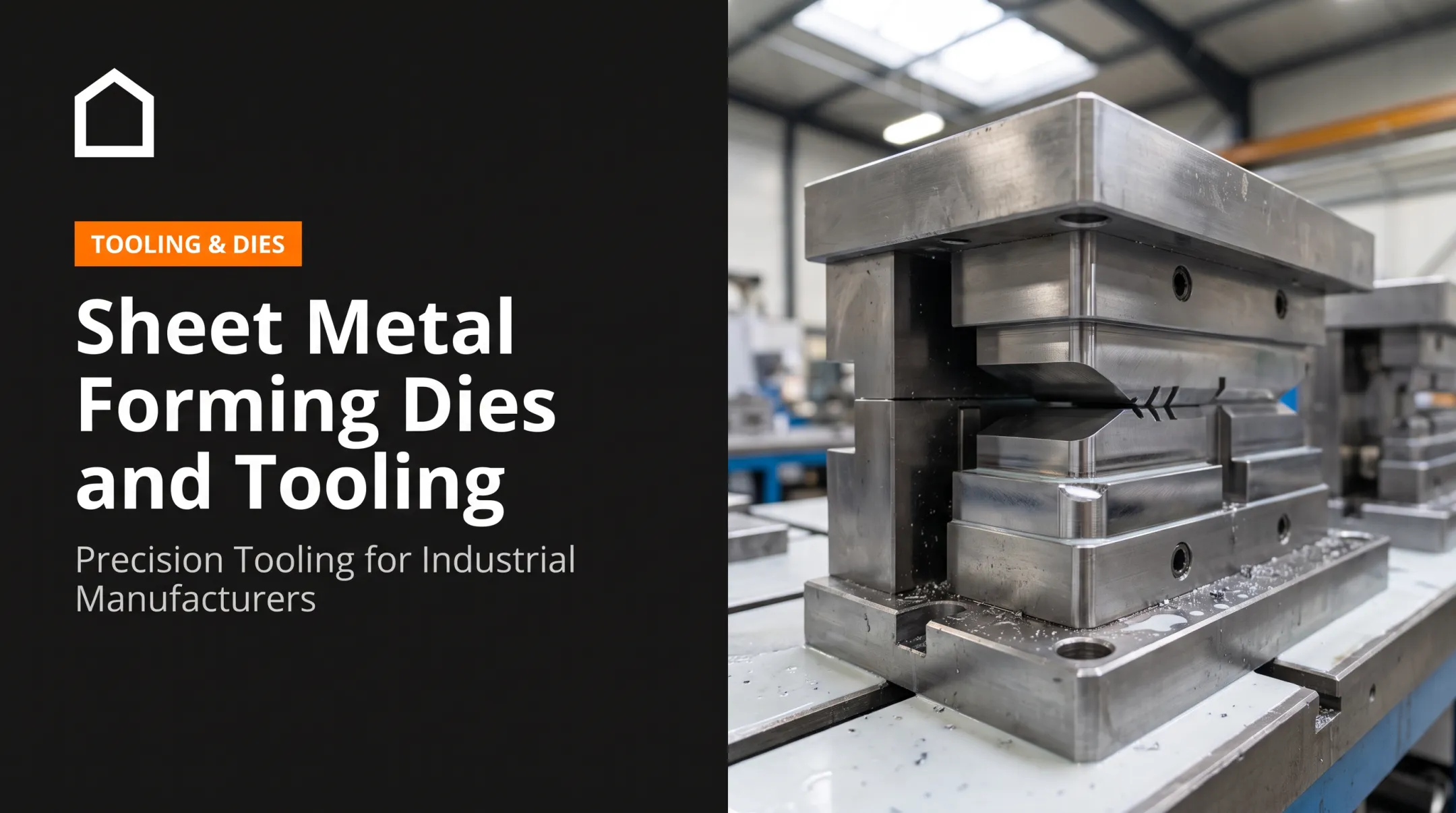
An automotive stamping die is a matched tooling set, not a single part. It typically includes a die block, punch, guide posts and bushings, holders, strippers, and inserts, all built to interface with a specific press. Together, these components apply controlled force to sheet metal to cut, form, or shape it.
Stamping is a distinct process from other metal-forming methods used in vehicle manufacturing:
- Die-casting molds shape molten metal as it cools and solidifies.
- Forging dies compress heated or cold metal stock into a forged shape.
- Stamping dies cut or form sheet metal in a press, without melting the material at all.
Core Operations
Stamping dies generally perform one of three operation families:
- Cutting operations — blanking (separating a shape from sheet or coil) and piercing (creating internal holes)
- Forming operations — bending, flanging, and similar shape changes
- Drawing operations — pulling a flat blank into deeper three-dimensional geometry
A simple die may handle just one of these. Progressive, transfer, and compound systems combine several operations into one tool or one production line.
Why Die Accuracy Matters
Die accuracy isn't a cosmetic detail. It directly affects panel fit, weld alignment, assembly gaps, and surface appearance. A die that's slightly out of tolerance can create structural inconsistency that only shows up during final assembly, forcing costly rework.
Those tolerances show up across the parts stamping dies produce. Common automotive applications include:
- Body panels, doors, hoods, fenders, and floor pans
- Brackets, seat hardware, and structural reinforcements
- Suspension components
- EV battery structural parts
Types of Automotive Metal Stamping Dies
Die selection depends on part geometry, material grade and thickness, production volume, press configuration, tolerance requirements, and how many operations the part needs. Here's how the main die types differ.
Blanking Dies
Blanking dies cut a flat sheet or coil into a defined blank shape. Success depends on:
- Punch-to-die clearance (too tight or too loose both cause problems)
- Cutting-edge condition and sharpness
- Burr control on the finished edge
- Material utilization and scrap management
Compound Dies
Compound dies perform multiple cutting operations, such as blanking and piercing, in a single press stroke. They work well for flat or moderately complex parts where reducing handling steps and maintaining alignment matter more than adding forming capability.
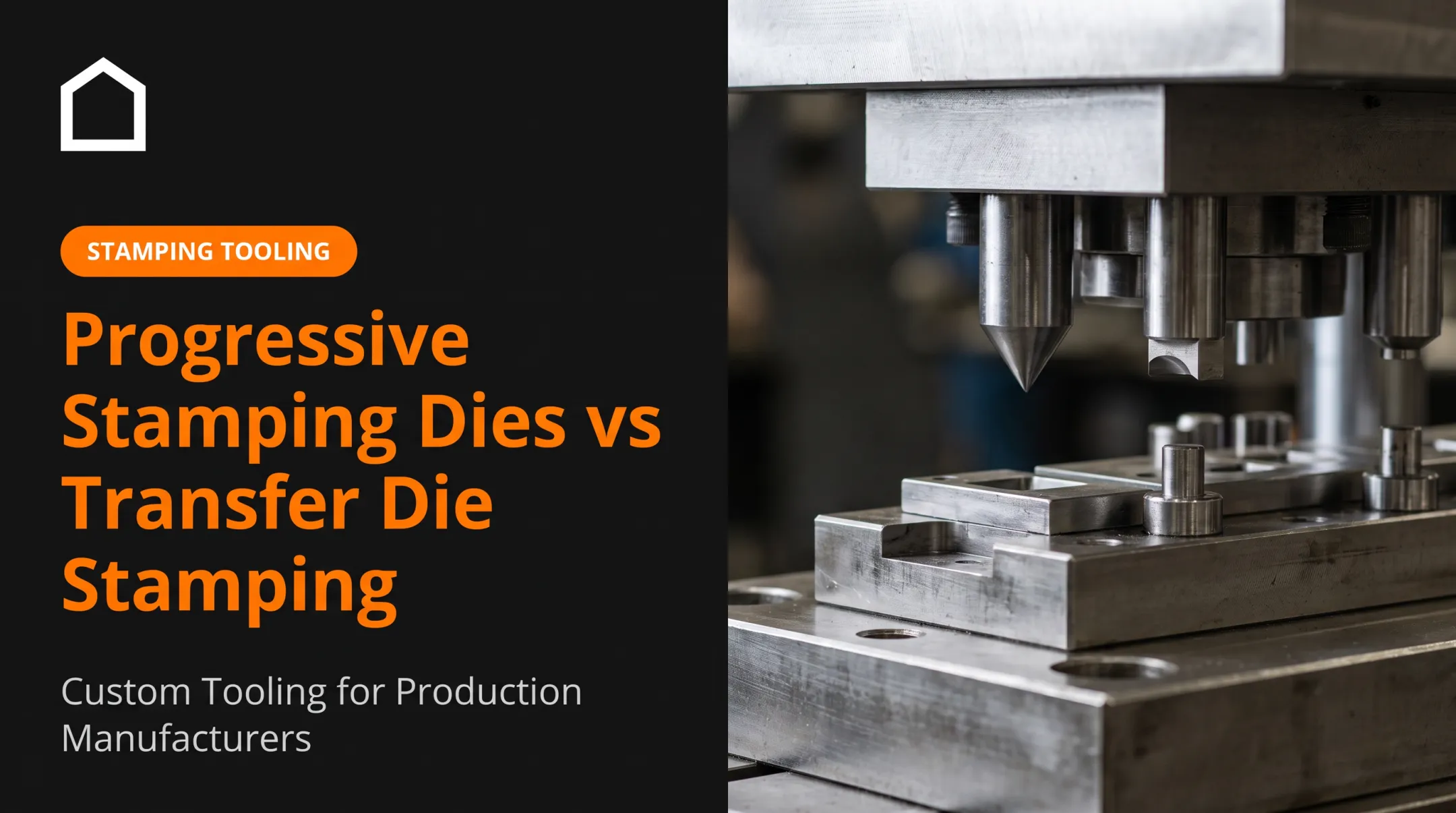
Progressive Dies
A strip of material advances through sequential stations, each performing an operation such as blanking, piercing, bending, coining, or forming. The part is only cut free at the final station.
Progressive dies suit smaller, repeatable, high-volume components. The Fabricator's die basics overview draws a clear line between this continuous-strip method and transfer or single-station tooling.
Upfront cost shows up as heavier engineering work, tighter strip-layout constraints, and specialized feeding requirements.
Transfer Dies
Transfer systems separate individual blanks from the strip early, then mechanically move them between stations for operations like drawing, trimming, piercing, and flanging.
| Factor | Progressive Dies | Transfer Dies |
|---|---|---|
| Part size | Smaller, simpler | Larger, more complex |
| Material handling | Strip stays connected | Parts move individually |
| Capital investment | Typically lower | Typically higher |
| Flexibility | Fixed strip layout | More adaptable to complex geometry |
Deep-Drawing Dies
Deep drawing pulls a flat blank into a deeper, hollow shape using a punch, die radius, and blank holder to control material flow. It does not always need a dedicated die set. MetalForming Magazine's progressive-die guidance notes that deep draws can run inside a progressive sequence.
Common forming risks include wrinkling, tearing, thinning, and springback. Simulation and physical tryout catch most of these issues before they become expensive late-stage die corrections.
Single-Operation and Prototype Dies
A single-operation die handles one step at a time. It's the right call for:
- Low-volume production runs
- Design validation before committing to production tooling
- Replacement parts for legacy components
- Early vehicle development phases
You take on more handling and more secondary operations than you would with a multi-station production die. That lower initial complexity still makes sense when volumes do not justify a larger tooling investment yet.
Automotive Stamping Process and Applications
Getting from a part drawing to a production-ready component follows a clear workflow. Details shift with part complexity.
Typical stages:
- Part design and manufacturability review
- Blank development and process planning
- Die design and engineering
- Machining and assembly of the die
- Tryout and inspection
- Production release
CAD/CAM modeling and forming simulation catch problems early. These tools flag material flow issues, insufficient radii, springback risk, interference between components, and press-capacity mismatches before anyone cuts steel for the actual tool.
Material Behavior Shapes Die Design
The material being stamped changes how the die needs to be built. Mild steel, high-strength steel, advanced high-strength steel (AHSS), and aluminum alloys each behave differently under cutting and forming loads.
WorldAutoSteel's AHSS guidance notes that required cutting clearance depends on grade, tensile strength, and sheet thickness. Clearance that is too tight risks chipping or galling; excessive clearance creates reverse-loading problems.
A published battery-tray stamping case shows the same point in practice. Engineers assigned different steel grades to regions of one tailor-welded blank, then used forming simulation and trials to control corner geometry and avoid defects. Material choice and die geometry have to be developed together.

Small Bracket vs. Large Structural Part
Two common paths make the tradeoff clear:
- A small bracket with repeatable geometry and moderate volume often fits a progressive die (blank, pierce, form, and cutoff in one strip).
- A larger structural or closure panel (door inner, floor section) more often needs a transfer die for draw, trim, pierce, and flange work on separated blanks.
Neither setup wins every job. Part size, complexity, and press-line layout decide which path fits.
How Are Automotive Stamping Dies Designed and Selected?
Choosing the right die starts with a clear picture of the part and the production environment. A practical selection framework covers:
- Part print and 3D geometry
- Material grade, sheet thickness, and tolerance
- Surface finish requirements
- Annual and batch production volume
- Press type, available tonnage, bolster dimensions, stroke, and shut height
- Automation and feeding requirements
From there, engineers weigh whether the part is better suited to progressive, transfer, compound, deep-drawing, or single-operation tooling based on size, complexity, and required throughput.
Die-Design Variables That Affect Wear and Repairability
Review several variables against the material's strength, ductility, thickness, lubrication needs, and expected wear mechanisms:
- Clearance and radii
- Draw beads and blank-holder force
- Guiding systems and shut height
- Lifters, strippers, and sensors
- Scrap removal and inspection access
Press Compatibility Isn't Optional
Rated press tonnage doesn't tell the whole story. A published tonnage-and-energy analysis found that a 600-ton mechanical press supplied less than half its rated capacity at 3 inches above bottom dead center. Switching to a higher-strength material changed the required load entirely.
Check the press's actual capacity curve, energy, and shut-height range before approving tooling, not just the nameplate number.
Tooling Materials Affect Wear and Repair Costs
Tool steel choice influences wear resistance, toughness, edge stability, and how easily a die can be repaired later. Grades like M2, D2, H13, and S5 each have different strengths. None of them is universally correct. The right choice depends on the specific cutting or forming application, expected volume, and material being stamped.
Supplier RFQ Checklist
Before approving a quote, confirm the supplier has what they need and you know what you're getting:
- Part drawings, 3D models, and material specifications
- Production volumes and tolerance/inspection requirements
- Press information and delivery expectations
- Prototype needs and existing die or replacement-part references
- Tryout responsibilities and approval criteria
- Spare inserts, maintenance instructions, and post-delivery support
A specialty tooling sourcing partner can help when in-house capacity or a usual supplier can't cover the job. Quality FORM Tools, based in Hammond, Indiana, works with manufacturers on custom stamped and forged components, cold header tooling, and press-related replacement parts for low- through high-volume runs. Shops evaluating outsourced die work or replacement inserts can use that network to match the RFQ package above to builders already set up for this tooling.

Die Quality, Maintenance, and Total Cost of Ownership
Why Stamping Dies Cost What They Cost
Tooling price reflects several cost categories:
- Engineering and process development
- Steel, components, and machining
- Heat treatment or surface treatment
- Assembly, tryout, and inspection
- Modifications, shipping, and installation
- Ongoing maintenance over the die's service life
More progressive-die stations mean more tool steel, machining time, and assembly work, but too few stations can complicate production or increase scrap rates, according to industry reporting on progressive-die design. Die size, precision requirements, forming complexity, and expected production life all push cost up or down.
Initial Price vs. Total Cost
The cheapest quote up front isn't always the cheapest option over the die's life. Compare tooling price against:
- Cycle time and labor requirements
- Scrap rates and rework frequency
- Secondary operations needed
- Die sharpening and insert replacement
- Unplanned downtime costs
Building a Preventive Maintenance Program
A maintenance program should track production history and tool condition together. Regularly inspect:
- Working surfaces, cutting edges, punches, and inserts
- Guide posts, bushings, and springs
- Nitrogen systems and fasteners
- Sensors, lifters, feeders, and scrap paths
Also log:
- Die installations and material grades run
- Cycle counts, dimensional trends, and burr growth
- Repairs, regrinds, and insert replacements
- Downtime causes
That history shows when a die is near end of life versus when it only needs a routine repair.
Warning signs that justify stopping production for inspection:
- Increasing burrs or scratches on parts
- Visible cracks or wrinkles
- Dimensional drift from print specifications
- Abnormal press noise or rising press load
- Feeding errors or loose components
- Recurring assembly mismatch
Worn tooling can often be restored through sharpening, polishing, insert replacement, or alignment correction. but any repair needs validation against the part print and process requirements before returning to production.
Service Life Is Application-Specific
Die life depends on material, geometry, construction, press conditions, volume, lubrication, and maintenance history. There is no universal number.
In one documented automotive stamping case, a D2 tooling detail cracked after roughly 250,000 hits, while a substituted tool steel exceeded 300,000 hits in the same application. That result is application-specific, not a lifetime guarantee for every die built from either material.

When a die does need made-to-print replacement parts or an outsourced precision component, Quality FORM Tools supplies specialty tooling and stamped or forged replacement parts for press-related equipment. Confirm material, tolerance, quantity, and application requirements with the supplier before ordering.
Frequently Asked Questions
Why are stamping dies so expensive?
Cost stems from engineering time, precision machining, die size, multi-station complexity, material selection, and tryout. These expenses get amortized over the die's expected production run, so higher volumes generally lower the per-part tooling cost.
Is stamping cheaper than milling?
Stamping can lower per-part cost at suitable production volumes once the die is built and paid for. Milling tends to be more economical for prototypes, complex low-volume parts, or situations where dedicated tooling isn't justified.
What is a die in automotive?
An automotive die is a matched tool set used in a press to cut, form, draw, pierce, bend, or emboss sheet metal into a specified vehicle component. It's distinct from casting molds or forging dies.
What are the main types of automotive stamping dies?
The main types are blanking, compound, progressive, transfer, deep-drawing, and single-operation dies. Each suits different combinations of part geometry, material, and production volume.
How long can an automotive stamping die last?
Service life depends on material, geometry, die construction, press conditions, production volume, lubrication, and maintenance history. There's no universal figure — ask suppliers for life data specific to your part, material, and application.
How do you choose the right automotive stamping die?
Weigh part geometry, material, thickness, volume, tolerance, and press capability alongside required operations, automation, maintenance access, total cost, and supplier support. No single factor should drive the decision alone.