
The trouble is, "mold," "die," and "tooling" get used interchangeably on the shop floor and in RFQs. That's a problem, because the correct term (and the correct tool) affects design decisions, machining strategy, cost, production volume, and long-term maintenance.
This guide breaks down what separates molds from dies, where each type shows up in manufacturing, how they're machined, which materials make sense for which job, and what you need to gather before requesting a quote.
Key Takeaways
- Molds shape material in a cavity; dies cut, bend, or deform it with force.
- Industry terms overlap: die casting uses a "mold (die) cavity."
- Choose CNC milling, EDM, or grinding by feature geometry, not shop habit.
- Material choice drives tool life more than any other machining decision.
- A complete RFQ package cuts rework and speeds accurate quoting.
What Are Molds, Dies, and Tooling?
"Tooling" is the umbrella term. It covers molds, dies, punches, inserts, fixtures, jigs, gauges, and other production aids that help a machine make a consistent part. Molds and dies are specialized forms of tooling, not synonyms for the whole category.
The basic distinction:
- Molds generally form material within a cavity, most commonly molten plastic or metal poured or injected into a shaped space.
- Dies typically cut, bend, draw, extrude, forge, or otherwise deform material through applied mechanical force.
That said, the line blurs depending on industry. The Society of Manufacturing Engineers uses "die" as the generic term for tooling that produces stamped parts.
NADCA's glossary describes die casting as injecting molten metal into a "mold (die) cavity," using both words for the same feature. So the process name, not the word choice, is what actually tells you what the tool does.
Core Components You'll See Across Both
Depending on the tool, you'll find some combination of:
- Male and female features (cores and cavities, punches and die blocks)
- Inserts for wear-prone or complex sections
- Guide components for alignment
- Ejector systems, including knockout pins, to release the finished part
Not every mold or die uses every feature. A simple blanking die might just need a punch and die block, while a multi-cavity injection mold needs cores, cavities, cooling channels, and an ejector system all working together.
Why custom, every time: Even when the finished part will be mass-produced, the mold or die itself is typically built for one specific part geometry, one machine, one material, one tolerance band, and one production method.
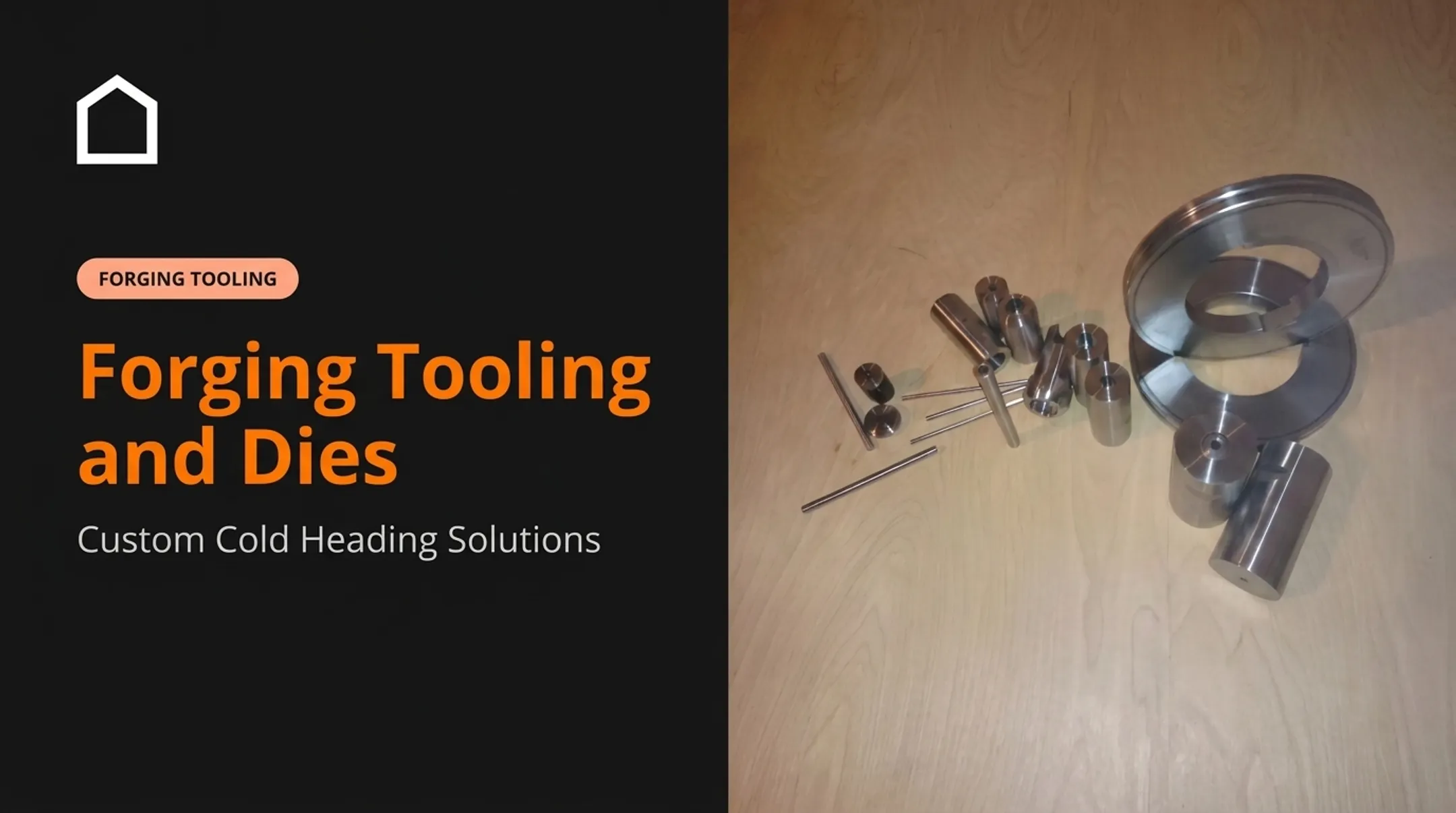
That's why Quality FORM Tools builds cold header tooling (dies, punches, cut-offs, quills, feed rolls, wire draw dies) to print rather than pulling from a generic catalog.
Types of Molds and Dies Used in Manufacturing
Different processes call for different tooling. Here's how the major categories break down.
Injection Molds
Injection molds use core-and-cavity construction to shape molten plastic. Runners or gates feed material in, cooling channels pull heat out, and an ejector system releases the part.
Cavity count typically scales with expected annual volume. A prototype run might use a single-cavity mold, while high-volume production justifies a multi-cavity tool that raises upfront cost but lowers per-part cost.

Stamping and Press Dies
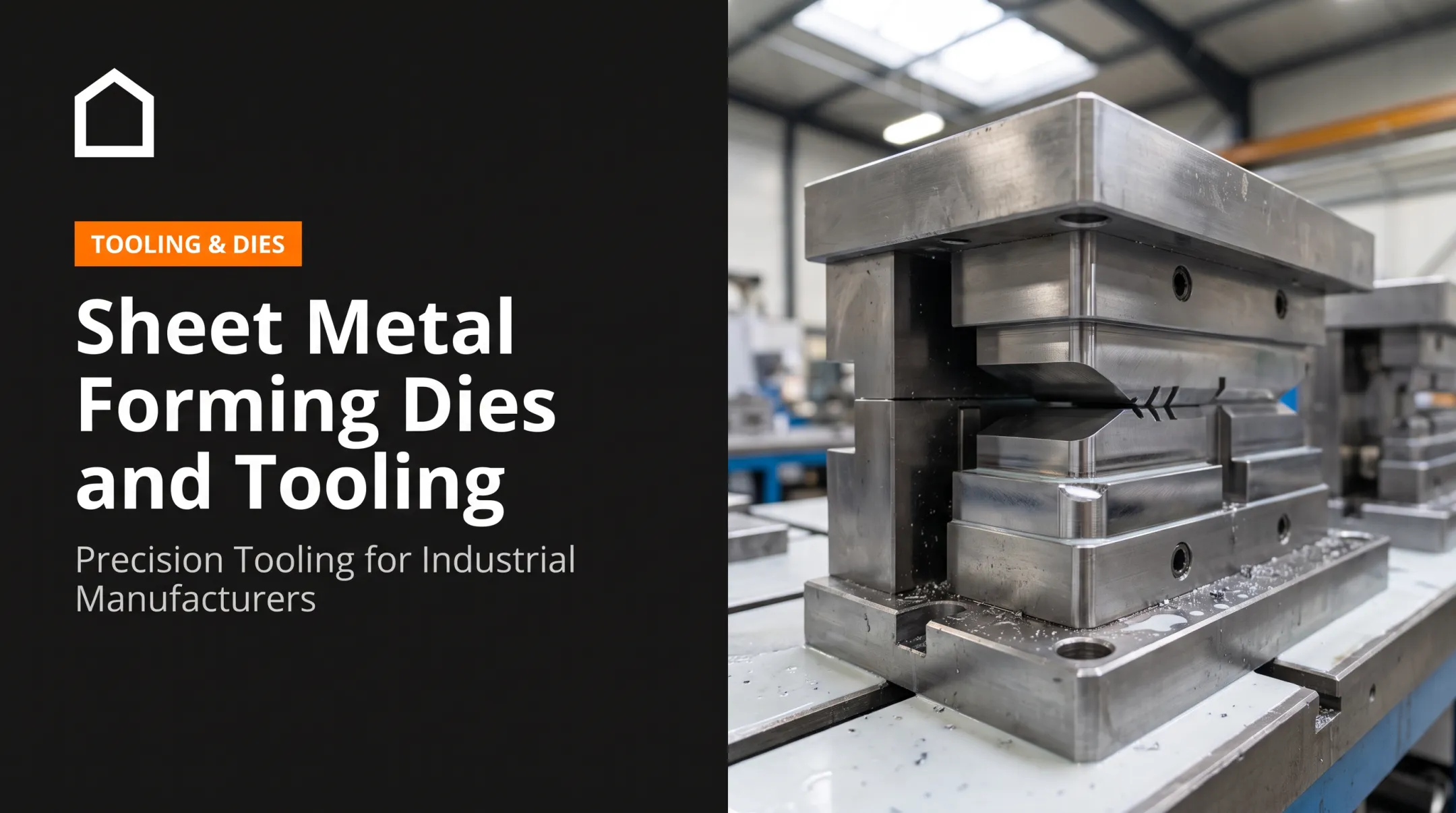
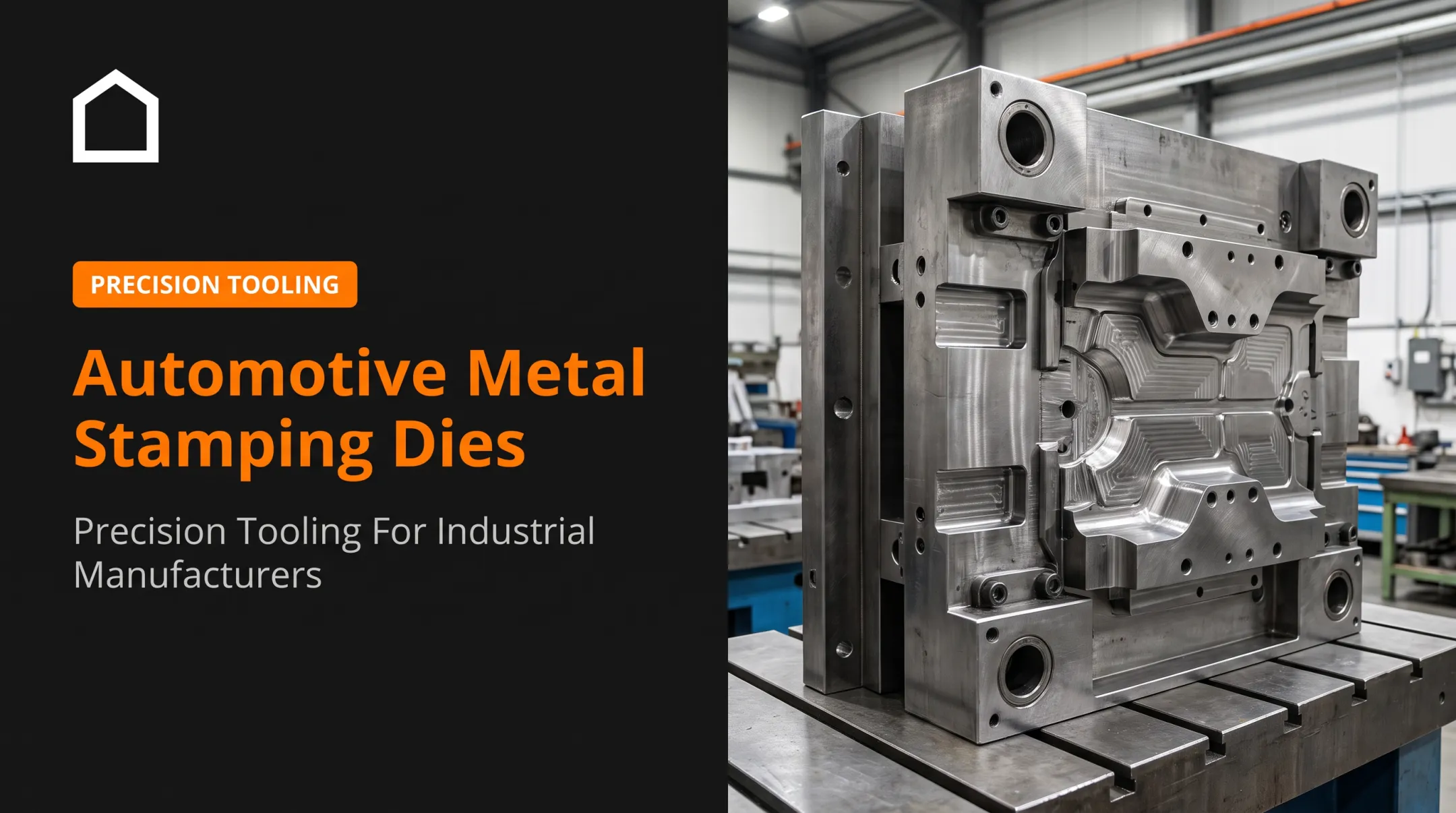
This category covers blanking, piercing, progressive, and transfer dies, plus bending, forming, and drawing tools that reshape sheet without shearing out a blank. Sheet-metal thickness, material hardness, and part complexity all shape the die design:
- Blanking dies produce a retained, enclosed-shape blank
- Piercing/punching dies remove a slug to create a hole or slot
- Progressive dies carry interconnected stampings on fed coil stock through multiple stations
- Transfer dies move individual blanks mechanically from station to station
Forging and Cold-Heading Dies
Forging shapes solid metal through compressive force, usually with heat. Cold heading pushes room-temperature wire blanks through a high-speed, multi-station machine, a process common for bolts, nuts, and fasteners. Both depend heavily on:
- Die inserts that absorb repeated impact
- Punch alignment
- Staged forming operations that build the final shape gradually
Extrusion Dies and Die-Casting Dies
Extrusion dies push material (often aluminum) through a shaped opening to create continuous profiles — think window frames or heat sinks. Die-casting dies instead force molten metal into a closed cavity under pressure, producing a discrete part per cycle rather than a continuous length.
| Process | Input Material | Force/Pressure | Output | Typical Tooling Need |
|---|---|---|---|---|
| Injection molding | Molten plastic | Low-moderate injection pressure | Discrete cavity-shaped part | Core/cavity mold, cooling |
| Stamping | Sheet metal | Press tonnage (shear/bend) | Flat or formed sheet part | Punch/die set |
| Forging | Solid metal billet | High compressive force | Bulk-formed part | Die inserts, punches |
| Cold heading | Wire stock | High-speed impact | Fastener blank | Dies, punches, quills |
| Extrusion | Metal billet | High ram pressure | Continuous profile | Extrusion die, container |
| Die casting | Molten metal | High-velocity injection | Discrete cast part | Reusable metal die cavity |
How Molds and Dies Are Machined
Building a mold or die starts long before a machine ever touches steel.
Engineering Handoff and Planning
The process begins with reviewing the part print or 3D model, then confirming:
- Material and tolerances
- Draft angles, parting lines, and forming direction
- Machine constraints and expected production volume
- Inspection requirements
From there, CAD and CAM planning defines toolpath strategy, stock allowances, workholding, datum selection, cooling or lubrication passages, and access points for future repair.
Machining Operations
Several processes typically combine to build a single tool:
- CNC milling: cavities and profile surfaces
- Turning: round components like pins and inserts
- Drilling: holes and cooling/lubrication passages
- Grinding: close fits and surface finish
- Wire or sinker EDM: intricate or hardened features that milling cutters can't safely reach
The choice between hard milling and EDM often comes down to geometry, not preference. One die-cast toolmaker found EDM preferable for deep, narrow cavities because slender milling cutters risked deflection or breakage in those tight spaces.
Wire EDM has shown high precision on hard materials. One documented case cut a 3-inch-thick carbide workpiece to ±0.0001 inch accuracy with a 5-microinch Ra finish. That's not a default expectation for every job, but it shows what's achievable when the feature demands it.
Post-Machining and Inspection
After machining comes deburring, heat treatment, stress relief, polishing, texturing, coating, and final fitting, sequenced based on material, geometry, and distortion risk. Then comes tryout: dimensional measurement, alignment checks, surface-finish verification, and sample-part evaluation to catch flash, burrs, short fills, mismatch, or dimensional drift before the tool goes into production.

Quality FORM Tools builds this sequence into its own process, combining CNC machining, wire and sinker EDM, and hard turning/grinding after heat treatment to hold tight tolerances on cold header tooling and forging dies.
Materials, Design, and Quality Considerations
Material choice shapes tool life more than almost any other single decision.
Common Tooling Material Categories
- Tool steels (D2, H13, M2, S5): the workhorses of mold and die construction
- Pre-hardened steels: reduce distortion risk since heat treatment happens before final machining
- Carbide: extreme hardness for high-wear applications
- Specialty alloys: for corrosive or high-temperature conditions
Matching Material to Operating Conditions
- Repeated impact (cold heading, forging) generally calls for toughness over pure hardness
- Abrasive stock favors wear-resistant grades
- Elevated temperatures (die casting, extrusion) require hot-work performance
- Corrosive environments need corrosion resistance or protective treatment
A stamping shop running D2 die details saw cracking begin around 250,000 hits, alongside galling from wear. After switching to a matrix-type cold-work steel, the replacement details ran nearly a year and exceeded 300,000 hits with no visible wear.
Trim details averaged five to six times the life of the original D2 parts. That's one shop's result, not a universal guarantee, but it shows why matching material to failure mode matters more than picking the "harder" steel by default.

Design Factors That Affect Tool Life
- Wall thickness and corner radii that avoid thin sections and sharp internal corners
- Draft angles and relief for cleaner ejection
- Clearances between mating components sized to the stock and process
- Parting-line placement
- Cooling and lubrication access built into the layout
- Ease of maintenance and insert replacement on high-wear details
Common Quality Risks
- Inadequate alignment or incorrect clearance
- Poor surface finish that promotes galling
- Residual stress from machining or heat treatment
- Heat-treatment distortion that throws off critical fits
- Sharp stress concentrators that invite cracking
- Insufficient cooling or lubrication under production loads
Grade names alone don't guarantee hardness. H13-family steel, for instance, carries different recommended hardness ranges depending on whether it's built into a die-casting die or an extrusion die. Always specify grade, component, and heat-treated condition together, not just the alloy name.
Choosing, Quoting, and Maintaining Molds and Dies
Getting an accurate quote starts with a complete RFQ package.
RFQ Checklist
Before requesting a quote, gather:
- Part drawing or CAD file
- Material being formed
- Finished-part tolerances
- Expected production quantity
- Machine or press information
- Tooling dimensions and surface-finish requirements
- Inspection expectations
- Replacement-part needs
- Delivery target
Omitting expected volume or acceptance criteria directly affects cavity count, press compatibility, and construction method. Two suppliers quoting the same drawing without the same requirements aren't giving you comparable bids.
Matching Tooling Design to Production Needs
Production volume, part complexity, cycle time, changeover frequency, and expected wear all influence whether you need:
- A simple, single-use tool
- Replaceable inserts for high-wear zones
- Multi-cavity tooling for volume production
- Progressive tooling for complex, multi-step parts
- A heavier-duty production design built for long runs
Maintenance That Extends Tool Life
- Clean die, bolster, and ram surfaces before each setup; debris interferes with tight clearances in progressive and transfer dies
- Inspect wear surfaces and alignment regularly
- Watch for burrs or flash creeping toward nonconformance
- Replace damaged inserts before they compromise the whole tool
- Document every change for traceability
- Follow the equipment and tooling manufacturer's instructions
Quality FORM Tools works with fastener, stamping, forging, and processing customers across the US who need custom cold header tooling, wire-form tooling, stamped and forged parts, replacement components, or precision-machined tooling built to print.
The company draws on a network of domestic and overseas suppliers. Bring your prints and specifications, and the mold or die gets built around your actual requirements.
Conclusion
Molds and dies aren't interchangeable, and treating them that way in an RFQ leads to mismatched quotes and wasted lead time. The right tooling depends on several factors:
- Material being formed
- Forming process and press or machine
- Part geometry and tolerance requirements
- Production volume
- Maintenance and replacement plan
Define your process and part requirements clearly, then build a complete RFQ package. Choose a tooling supplier that can cover machining, inspection, tryout, and replacement support from one job to the next. Quality FORM Tools works with fastener, forging, and stamping manufacturers who need that full-cycle support on dies, cold header tooling, and related components.
Frequently Asked Questions
How much does an injection mold die cost?
Cost varies with part size and complexity, cavity count, tool material, tolerances, cooling, surface finish, and expected volume. Treat any published figure as a rough estimate and get a quote for your specific part.
What are dies and molds?
Both are specialized manufacturing tools. Molds generally shape material inside a cavity, while dies typically cut or deform material through applied force. Industry terminology overlaps, so the process name matters more than the label.
Is die casting a permanent mold?
Die casting uses a reusable metal die rather than a disposable sand mold, so in that sense it is permanent. Actual die life depends on the alloy, working temperature, pressure, cycle conditions, design, and maintenance.
What is the difference between a mold and a die in machining?
In the shop, molds are usually cavity tools finished by CNC milling, EDM, and polishing for casting or molding work. Dies are typically built for stamping, forming, or cold heading, with punch-and-die clearances and cutting edges held to tight tolerances. Some processes still use both labels for one tool, so match the term to the process.
How do you choose the right material for a mold or die?
Match the tool steel to the workpiece, temperature, pressure, abrasion, impact, and corrosion exposure, plus your tolerance and volume needs. Common picks include H13 for hot work, D2 for wear resistance, and M2 for high-speed cutting—confirm the grade with your supplier on critical or high-volume jobs.