
Introduction: Finding the Right Cold Forging Manufacturers
Picking a cold forging manufacturer isn't as simple as finding a shop with a press. The right supplier has to match your material, part geometry, tooling approach, tolerances, and volume — all at the same time.
Cold forging (also called cold forming) shapes metal through compressive force at or near room temperature. It's the go-to method for producing high volumes of repeatable, precise components, from fasteners to shafts to gears.
This guide covers:
- How the cold forging process actually works
- Which materials and applications make sense
- Real benefits and limitations, backed by industry sources
- How cold forging stacks up against hot forging
- What separates a capable supplier from a risky one
- What to include when you send out an RFQ
Key Takeaways
- Cold forging yields strong, precise parts with efficient material use when alloy, tooling, and force are controlled.
- Match the manufacturer to part geometry, alloy, volume, tolerances, and inspection needs.
- Vet suppliers on finished-part capability plus die design, tooling, secondary machining, and communication.
- Not every part belongs in a cold header—hot forging, machining, or a hybrid process sometimes wins.
How the Cold Forging Process Works
Cold forging deforms a solid blank, slug, wire, or preform between dies at or near room temperature. That's the key distinction from casting (which uses molten metal) and hot forging (which uses heated stock). The Forging Industry Association defines cold forging as deformation performed near room temperature, where work hardening occurs as a natural byproduct.
The Typical Forming Sequence
A cold-forming job generally moves through these stages:
- Review requirements — evaluate the part drawing, material spec, volume, and forming needs before anything touches a press.
- Prepare the blank — cut coiled wire or slug stock to length and lubricate it to reduce friction, sticking, and tool wear.
- Position and form — seat the blank in a die while a punch applies high compressive force through a mechanical or hydraulic press.
- Move through additional stations — multi-station equipment handles upsetting, extrusion, heading, coining, bending, punching, or thread rolling in sequence.
- Trim and inspect — trim flash, complete secondary operations if needed, and check the finished part against the drawing.

Tooling's Role in Repeatability
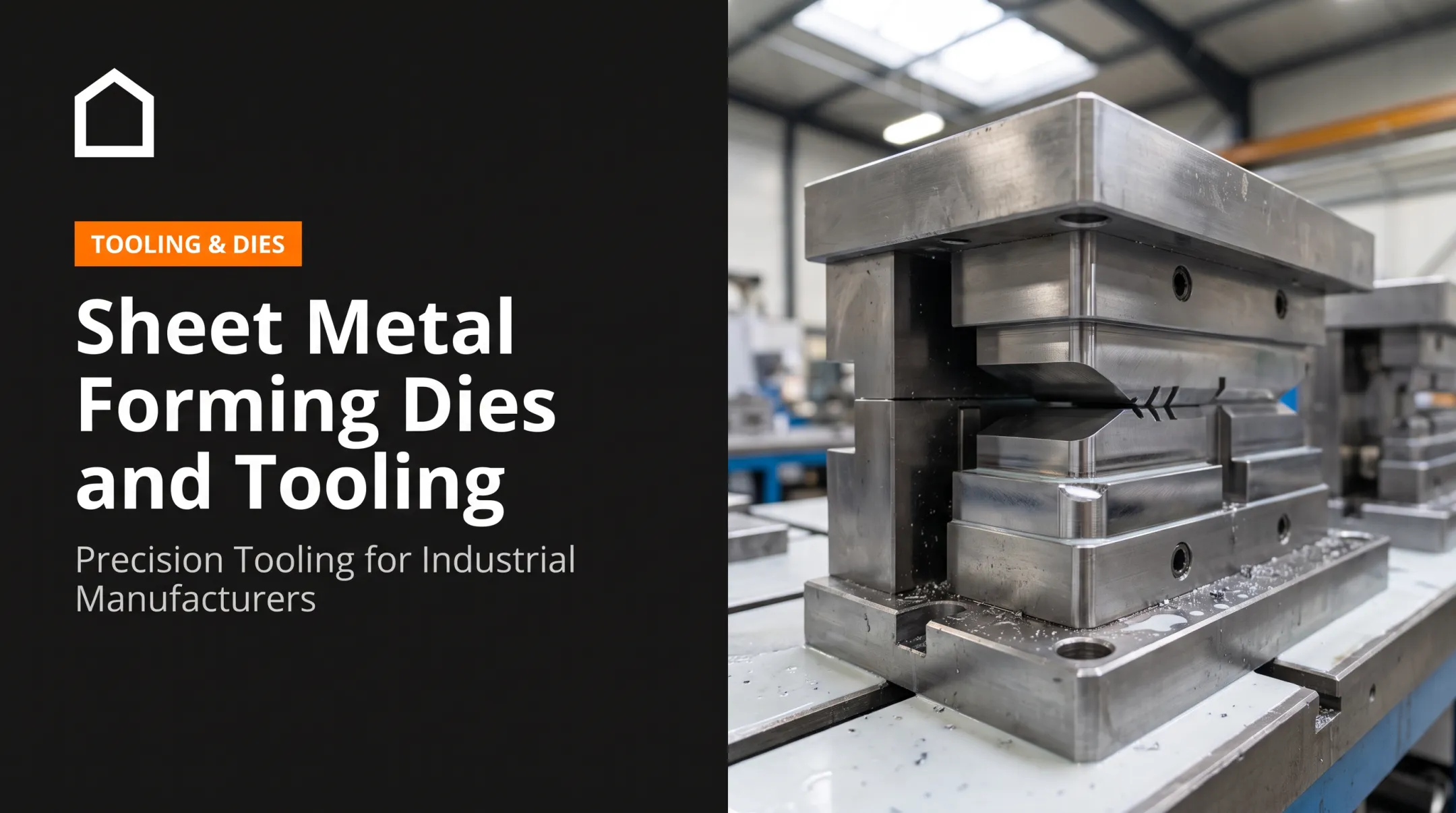
Dies, punches, cut-offs, quills, and feed rolls control how material flows through each station. Tooling design has to account for forming loads, lubrication strategy, wear patterns, and the volume the job requires — a die built for a 5,000-piece prototype run won't survive a 500,000-piece production order.
Work Hardening Has Limits
Cold deformation increases strength and hardness through work hardening, but it also reduces ductility. Push a blank too far without intermediate annealing, and you risk cracking. Carpenter Technology's heading guide for specialty alloys notes that unsuitable material or excessive forming stress can split a blank outright. Rough or poorly coated wire can also accelerate tool wear and breakage.
Those limits also shape equipment choices. Most industrial cold forming today runs on multi-station transfer equipment rather than a single-hit open-die setup, an equipment distinction, not a temperature difference.
Materials, Applications, and Process Fit
Whether a material works for cold forging depends on more than its general family. Alloy, grade, temper, ductility, work-hardening behavior, and the direction of deformation all matter.
National Machinery's cold forming principles overview lists these material families as cold-formable:
- Carbon steel
- Alloy steel
- Stainless steel
- Aluminum
- Copper
- Brass
That's a starting list, not a guarantee. A specific grade in the wrong condition can still crack under forming stress.
Steel Selection in Practical Terms
Low- and medium-carbon steels, and grades engineered for cold forming, tend to head cleanly. Higher-strength or less ductile steels often need preconditioning, intermediate annealing, or a shift to warm or hot forming.
A published study on two-stage cold forging for an integrated drive shaft used spheroidized and annealed AISI 1035 steel to improve workability before forming an internal spline and spur gear in the same part.
Common cold-forged applications include:
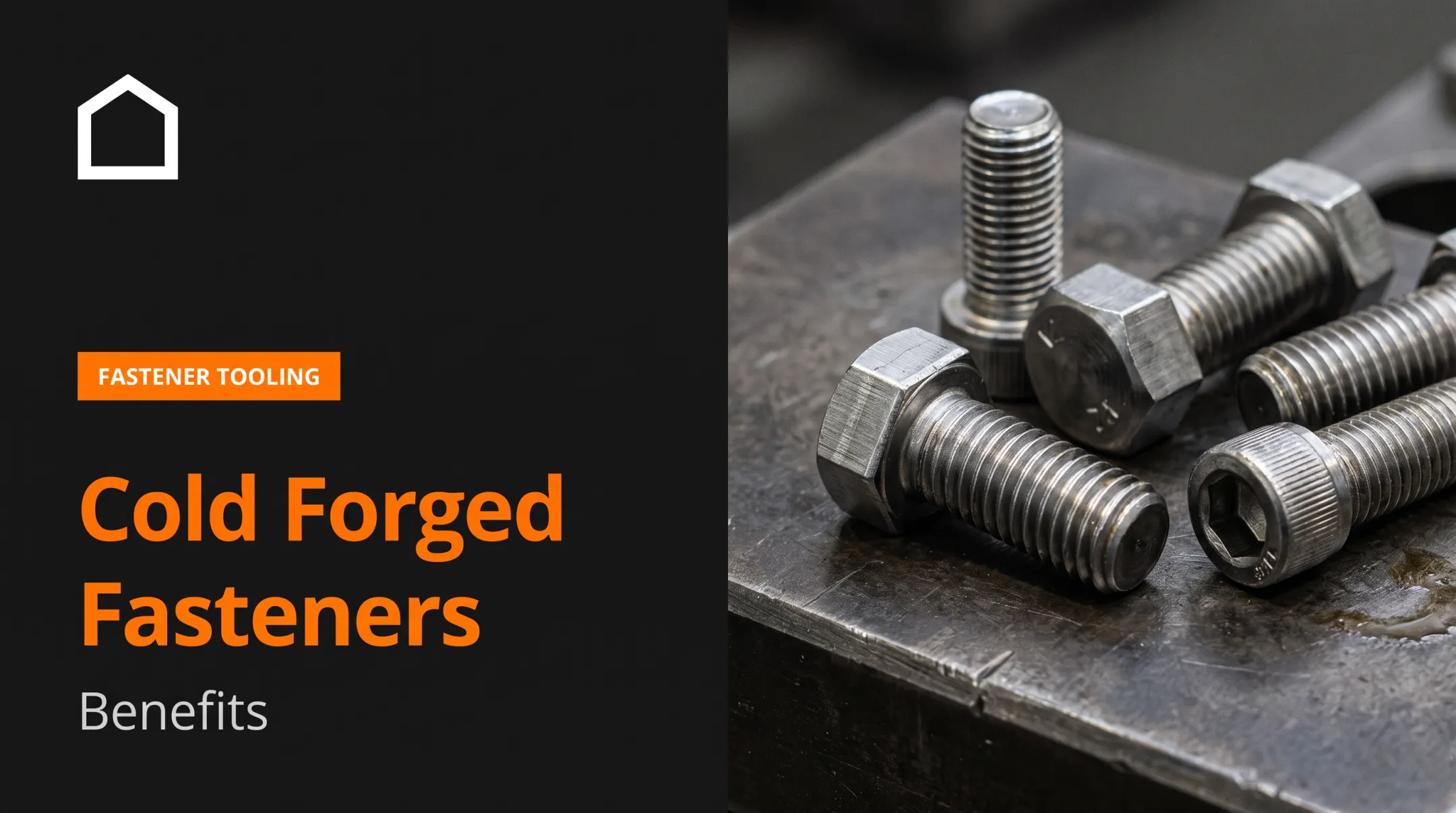
- Fasteners, bolts, and screws
- Pins and shafts
- Splines and gears
- Electrical contact components
- Automotive powertrain and safety parts
- Valves and other repeatable precision parts
Cold forging fits best when geometry is controlled and volume is high enough to justify dedicated tooling.
It usually fits when you need:
- Repeatable net-shape or near-net-shape features
- High piece counts on the same progression
- Strong grain flow in fasteners, pins, shafts, or similar parts
Look at machining, hot forging, or a hybrid route when you face:
- Very complex shapes or severe material movement
- One-off or low-volume work
- Oversized components that exceed practical cold-forming limits
Cold-Rolled Steel Isn't Cold Forging
These terms get confused often. Cold rolling passes hot-rolled coil through reduction mills to tighten thickness and improve surface finish — it's a stock-preparation operation. Cold forging is the separate step of shaping that stock (or another blank form) between dies. Cold-rolled bar can be a good starting material for cold forging, but the two processes aren't interchangeable.
Benefits and Limitations of Cold Forging
What Cold Forging Does Well
Cold forging delivers several clear production advantages:
- Minimal material waste — parts form to near-net shape with little scrap.
- Strong grain flow — deformation follows the part's shape rather than cutting through it.
- Repeatable dimensions — multi-station tooling produces consistent parts run after run.
- Improved surface finish — no heating means no scale formation.
- Reduced finishing needs — near-net-shape parts often skip extensive secondary machining.
The FIA's Product Design Guide for Forging includes an illustrative wheel-hub comparison: the cold-forged version used one-third the machining time and weighed 24% less than its hot-forged counterpart. That figure excludes tooling and processing costs, though, so treat it as a single-part illustration rather than a universal savings benchmark.
Where Cold Forging Gets Risky
Those gains come with tradeoffs. Tooling investment is significant upfront, even when repeat production later pays it back through fast cycle times. Beyond cost, watch for:
- High press loads that stress equipment and dies
- Work hardening that limits how far you can deform a part before annealing
- Material restrictions — not every alloy extrudes or upsets cleanly
- Lubrication demands that, if skipped, cause galling and premature tool wear
- Cracking risk from overly aggressive reduction
A 2022 published study on multi-stage cold-forged ball studs found that repeated compressive loading damaged dies and that die fractures disrupted production. The researchers built a real-time load-monitoring model that cut prediction error from roughly ±20% down to ±7%, a clear gain in die-life forecasting.

A capable manufacturer evaluates the full part lifecycle—material prep, tooling maintenance, inspection, secondary machining, heat treatment, and finishing—not the forming hit alone. Die design, press load, and maintenance planning decide whether cold forging stays profitable after the first run.
Cold Forging vs. Hot Forging: Which Is Better?
Neither process wins universally. The right choice depends on material, geometry, volume, and what the part needs to do in service.
| Factor | Cold Forging | Hot Forging |
|---|---|---|
| Starting temperature | At or near room temperature | Workpiece is heated |
| Material flow stress | Higher — more force needed | Lower — heat reduces resistance |
| Work hardening | Occurs naturally, adds strength | Diminished or absent |
| Surface finish | No scale; smoother as-formed surface | Scale forms; more finishing needed |
| Dimensional control | Generally tighter | Generally looser |
| Typical part size | Usually under 50 lb (with exceptions) | Ranges from a few pounds to 300+ tons |
| Best fit | High-volume, repeatable, moderate-size parts | Larger parts, major reductions, complex geometry |
Cold forging tends to win when:
- Volume is high enough to justify tooling investment
- Parts are small to moderate in size
- Dimensional consistency and surface quality matter
- Work-hardened strength is desirable without added heat treatment
Hot forging tends to win when:
- Parts are large or require major material reduction
- Geometry is complex and three-dimensional
- The alloy is difficult to deform safely at room temperature
"Stronger" isn't a single answer here. Strength, toughness, ductility, and grain flow trade off differently by process and service conditions.
A cold-forged fastener may beat a hot-forged equivalent on fatigue strength, while a hot-forged crankshaft may deliver better toughness for its duty cycle. Choose the process that matches size, geometry, volume, tolerances, tooling budget, and the properties the part must hold in service—not a generic winner.

What to Look for in Cold Forging Manufacturers
Choosing a supplier means looking past "we do forging" and into specifics.
Technical Capability and Tooling Support
Ask directly:
- Does the supplier produce finished cold-forged parts, cold header tooling, dies and inserts, or only source them?
- Can they show comparable part geometries and materials from past work?
- Do they offer design-for-manufacturing feedback, including blank-volume calculations, forming progression, die and punch design, and lubrication strategy?
Volume Flexibility
Some jobs need prototype quantities. Others need six-figure production runs. Ask for capacity information relevant to your specific part rather than accepting broad capability claims at face value.
Quality Practices
Look for:
- Drawing and revision control
- Material traceability
- Dimensional inspection appropriate to your tolerances
- Hardness or mechanical-property verification where required
- Documentation matching your industry's expectations
Communication and Responsiveness
Projects don't always start with a perfect drawing. Urgent replacement tooling, production interruptions, or coordination between your in-house tool room and an outside supplier all test how well a manufacturer communicates under pressure.
Comparing Quotes on Total Value
Unit price alone hides the real cost. Compare:
- Tooling ownership and expected tool life
- Setup charges
- Secondary operations and inspection
- Packaging and shipping
- Cost of potential rework
Quality FORM Tools, based in Hammond, Indiana, supplies cold header tools, custom recess punches, and related stamping and forging parts. The company supports both small-batch replacement tooling and higher-volume production needs, drawing on a network of domestic and overseas manufacturing partners.
How to Prepare an RFQ for a Cold Forging Manufacturer
A tight RFQ saves time on both sides. The FIA's RFQ checklist recommends including:
- Current part print and 3D model (if available)
- Material grade and condition — including any specified heat treatment
- Annual and batch volume expectations
- Tolerances and surface finish requirements
- Hardness or strength requirements, where applicable
- Inspection criteria and testing — destructive, nondestructive, or PPAP requirements
- Packaging needs and delivery schedule
Ask the manufacturer to flag assumptions and risks upfront:
- Does the design need a preform or multiple forming stations?
- Is intermediate annealing likely?
- Will trimming, machining, heat treatment, or coating be needed?
- Does the material need a different starting condition than what's specified?
Request a clear tooling proposal that covers:
- Die and punch materials
- Who owns the design
- Maintenance and replacement terms
- Expected tool-life methodology
- Whether production tooling differs from prototype tooling
If you're sourcing replacement tooling, send photos of failed parts or worn tools. It's often faster for a manufacturer to diagnose a failure mode from a photo than to reverse-engineer it from a formal drawing alone.
Have a print, tooling detail, or replacement part to source? Call Quality FORM Tools at 877-368-3676 or email jeff@doyouform.com to talk through material, volume, and tooling specifics before you commit to a supplier.
Frequently Asked Questions
What is the cold forging process?
Cold forging compresses a solid metal blank between dies at or near room temperature, using a mechanical or hydraulic press. The process work-hardens the material and commonly produces high-volume parts like fasteners, pins, and shafts.
Is cold forging stronger than hot forging?
Neither process is universally stronger. Cold forging builds strength through work hardening; hot forging preserves ductility and toughness through controlled grain flow at elevated temperature. The better choice depends on the part's service conditions.
What metals can be cold forged?
Selected carbon steels, alloy steels, stainless steels, aluminum, copper, and brass are commonly cold-formed. Suitability depends on the specific grade, temper, ductility, and how severe the deformation will be, not just the material family.
What type of steel is commonly used for cold forging?
Low- and medium-carbon steels, along with grades engineered specifically for cold heading, are common choices. Material condition and work-hardening behavior should always be confirmed with the manufacturer before committing to a design.
What is special about cold rolled steel?
Cold rolling improves surface finish, thickness consistency, and dimensional control in the stock itself. It's a separate process from cold forging. Cold-rolled bar can be a good starting material, but it isn't a finished cold-forged part.