
Introduction
Every bolted joint needs two things: clamping force to hold parts together, and bearing surface to spread that force without crushing the material underneath. Flanged fasteners solve both problems at once by combining a threaded bolt or nut with a built-in bearing surface.
Engineers and maintenance teams face this decision constantly: use a flange bolt or nut, or stick with a conventional hex fastener plus a separate washer? The answer depends on load direction, mating surface condition, vibration exposure, and whether a governing specification even permits the substitution.
This guide covers how flanged fasteners work, common types, where they perform well, and how to select and install them for US industrial and manufacturing use.
Key Takeaways
- Flanges add bearing area and can replace a washer; they don't automatically strengthen or seal a joint.
- Serrated flanges resist loosening on compatible surfaces but can mar soft or coated materials.
- Verify grade, dimensions, threads, coating, and torque together, not in isolation.
- Evaluate the full joint (bolt, nut, material, gasket, environment) before choosing by shape alone.
What Are Flanged Fasteners and How Do They Work?
A flange bolt (also called a hex-flange screw) has a circular bearing collar molded or forged directly beneath its head. A flange nut carries the same feature beneath its hex body. Instead of a separate flat washer sitting under the fastener, the flange is part of the fastener itself.
ASME B18.2.2 treats hex-flange nuts as their own dimensional family, separate from plain hex and square nuts—not a variant covered by a general hex-nut callout.
What the Flange Actually Does
Think of the flange as a permanently attached washer. It widens the contact patch between the fastener and the clamped surface, spreading bearing pressure over a larger area. This matters most when:
- The mating material is thin sheet metal or a casting that could deform under a small hex head
- Assembly speed matters and a loose washer would slow things down or get lost
- The joint sees vibration and a serrated flange face can help maintain contact
A fastener flange is not a pipe flange connection. A flange bolt or nut does not replace a gasket, sealing surface, or engineered bolt pattern in a pressure or fluid-handling assembly. It is a bearing feature on the fastener, not a sealing system.
Preload, Friction, and Why Torque Isn't Simple
Flange diameter and face finish change the friction under the head or nut, so the same wrench setting can produce different clamp loads than a plain hex plus washer. Clamping force still comes from stretching the bolt, not from spinning the nut—torque is only the tool used to create that stretch.
Most applied torque is lost to friction rather than clamp force. Fastenal's bolted joint design guide frames this as T = KDF, where K is a friction-dependent nut factor that shifts with finish, lubrication, and surface condition, not bolt diameter alone.

Practical limitations to keep in mind:
- Reduced clearance beneath the flange head can interfere with tight assemblies
- Serrations can leave visible marks or gouges on softer or coated mating surfaces
- Flange geometry may not satisfy every structural or OEM equipment specification, even when the thread size matches
Types of Flanged Bolts and Nuts
Flange fasteners are classified first by bearing-face design, then by configuration.
Serrated vs. Non-Serrated
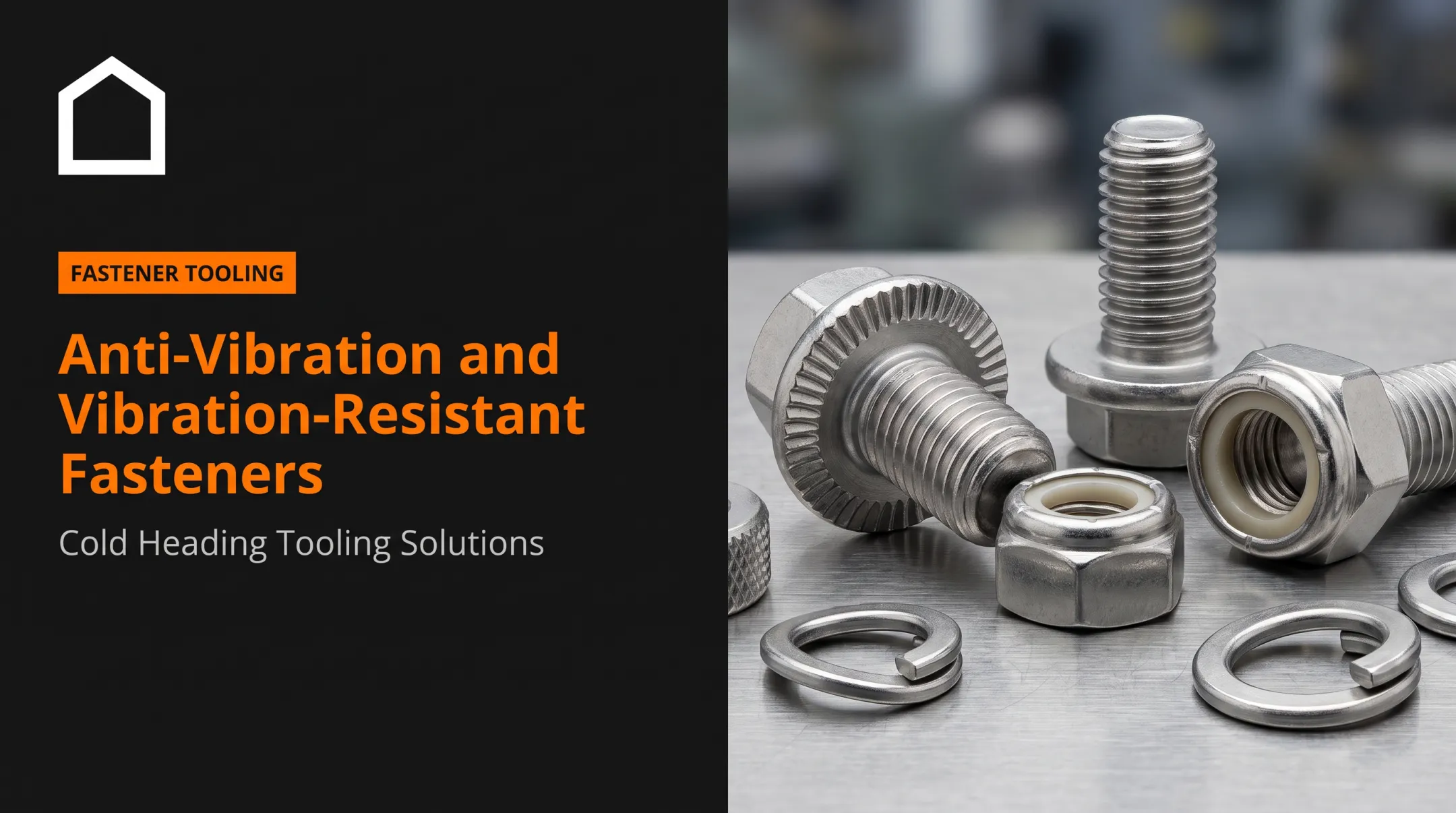
Non-serrated (smooth) flange fasteners provide bearing area without engaging the mating surface. Serrated versions add small ridges or teeth under the flange that bite into the clamped material for extra resistance to loosening.
The catch: serration geometry isn't universally defined by a single dimensional standard. Brighton-Best International's technical sheet for serrated hex-flange nuts notes that DIN 6923 does not specify serration geometry; that detail is left to the manufacturer.
In other words, "DIN 6923" tells you the nut's dimensions, not whether or how it's serrated.
When to avoid serrated designs:
- Painted or plated surfaces where marking matters cosmetically
- Soft aluminum housings that could gall or embed material
- Surfaces requiring frequent disassembly without visible damage
Common Configurations
| Fastener type | Typical description | Governing dimensional reference |
|---|---|---|
| Hex-flange screw/bolt | Bolt with integral hex head and bearing flange | IFI-111 (inch series) |
| Flange screw | Smaller machine-screw style with flange | ASME B18.2.1 family |
| Standard flange nut | Hex nut body with smooth flange | ASME B18.2.2 |
| Serrated flange nut | Flange nut with manufacturer-designed teeth | Manufacturer spec + base dimensional standard |
| Prevailing-torque flange nut | Adds a distinct locking feature (nylon insert or deformed thread) | ASME B18.16.6 |
A prevailing-torque locknut is a different locking mechanism than a serrated flange nut. Don't assume a "flange nut" automatically includes prevailing-torque behavior. That's a separate feature governed by its own standard.
Dimensional references also change with unit system. Metric applications use ISO 4162 for flange bolts and ISO 4161 for flange nuts. Older DIN 6921 and DIN 6923 callouts have been superseded by DIN EN equivalents, so verify current applicability before specifying a legacy DIN number on a new drawing.
Flanged Fastener Applications
Flanged fasteners show up wherever assembly speed, vibration resistance, or bearing-surface protection matter more than a conventional hex-bolt-and-washer stack.
Common uses include:
- Automotive subframes, engine mounts, and suspension components exposed to constant vibration
- Agricultural equipment with frequent field maintenance and disassembly
- Industrial machinery and stamping press assemblies where downtime for lost washers isn't acceptable
- Thin-sheet and cast-housing assemblies where a wider bearing face reduces the risk of localized deformation
One documented example: Dexter's product bulletin describes switching an axle tie-plate assembly from a mixed nut arrangement to serrated flange nuts specifically to improve uniform clamping across the leaf spring stack. That's a specific engineering decision for one assembly, not a blanket claim that serrated nuts fix every vibration problem.
Fluid-Handling and Gasketed Joints
Flanged fasteners can support gasketed assemblies by helping distribute clamp load evenly around a bolt pattern. But sealing performance depends on the gasket, flange face condition, bolt alignment, and tightening sequence, not the fastener flange alone.
Fastenal's own torque reference explicitly limits its general recommendations to nongasketed metal-to-metal joints. That is a useful reminder that gasketed assemblies need their own torque and sequencing procedure.
Where Manufacturing Support Fits In
Producing or maintaining flanged fastener tooling isn't a catalog purchase for every shop. Cold header tooling, trim dies, and feed rolls used to form these fasteners wear down and need replacement or custom builds to match specific part geometry.
Quality FORM Tools, based in Hammond, Indiana, supports fastener-forming manufacturers with custom cold header tooling and precision replacement components built to supplied specifications. The company supplies the tooling shops use to produce and maintain flanged fasteners, not off-the-shelf flange bolts or nuts.
How to Choose the Right Flanged Fasteners
Selection starts with the joint, not the fastener.
Start With the Joint Specification
Before comparing brands or catalog numbers, nail down:
- Diameter and thread form — matched to the mating thread, not assumed from a similar-looking part
- Length and thread engagement — enough thread inside the nut or tapped hole to develop full strength
- Head or nut clearance — flange diameter must clear surrounding structure
- Load direction — shear, tension, or combined loading changes fastener requirements
- Applicable standard — customer print, industry code, or regulatory requirement governing the joint
Smooth vs. Serrated: The Real Comparison
| Factor | Smooth flange | Serrated flange |
|---|---|---|
| Vibration resistance | Moderate (bearing area only) | Higher (mechanical grip) |
| Surface marking | None | Likely on soft/coated surfaces |
| Removability | Easier, cleaner | Can be harder without visible damage |
| Best suited to | Painted, plated, cosmetic surfaces | Bare steel, structural connections |
Match Material and Grade to the Load
Don't select by flange shape alone. Strength comes from material grade, not the flange.
For inch-series steel bolts, SAE J429 defines mechanical property requirements by grade marking. Metric bolts fall under ISO 898-1; metric nuts under the separate ISO 898-2. High-temperature or high-pressure bolting typically calls for ASTM A193/A194 material specifications instead of a general-purpose grade.
Also verify:
- Corrosion exposure and galvanic compatibility between fastener and base metal
- Coating type (zinc, plating) and how it changes thread friction and torque requirements
- Temperature range the joint will see in service

When a Conventional Hex Bolt Still Wins
Flange fasteners aren't always the right call. Reach for a standard hex bolt, nut, and separate hardened washer when:
- The joint specification requires a particular hardened washer (common in structural bolting under ASTM F3125/RCSC requirements)
- You need a broad range of dimensional options not available in flange form
- Field replacement parts must be widely stocked and interchangeable
- The application falls under a structural fastening standard that doesn't recognize integral-flange substitutions
Procurement Checklist
Before ordering, confirm:
- Drawing or physical sample
- Full dimensional callout (diameter, thread pitch, length)
- Material and grade marking
- Finish/coating requirement
- Serrated or smooth preference
- Quantity and lead time
- Inspection requirements and documentation (mill certs, torque-tension test data)
Installation and Joint Performance Considerations
Getting the right fastener is only half the job. Installation determines whether that fastener actually performs.
Pre-Assembly Inspection
Check threads, flange faces, and mating holes for:
- Burrs or debris on the bearing surface
- Contamination (paint overspray, corrosion, oil residue)
- Misalignment between hole and fastener
- Surface hardness incompatible with a serrated design
Correct Seating
The flange should sit flush and even against the mating surface: no rocking, no partial contact. The nut needs full thread engagement without short bolting (too little thread inside the nut) or excessive protrusion beyond it.
Torque Is Never a Diameter-Only Number
A common mistake: picking a torque value based on bolt diameter alone. Real torque requirements depend on:
- Material grade and strength class
- Lubrication and coating condition
- Thread condition (clean vs. damaged)
- Joint stiffness and design
- Governing engineering specification
Use calibrated torque tools or an approved tensioning method whenever the application requires controlled preload. Pull actual values from the manufacturer's or engineer's specification, not a generic chart.
Tightening Sequence for Multi-Fastener Joints
For assemblies with multiple bolts around a pattern (flanges, covers, gasketed joints), use a cross-pattern, staged tightening sequence:
- Snug all fasteners in a star or cross pattern to a low initial torque
- Repeat the same pattern at 50% of final torque
- Complete the final pass at full specified torque
- Do one final check pass around the full pattern

This differs from tightening bolts one after another in physical order. Sequential tightening around a joint can cause uneven clamping and gasket distortion.
Post-Installation Checks
During ongoing maintenance, watch for:
- Signs of loosening or backed-off torque
- Corrosion at the bearing surface or threads
- Surface embedding from serrated flanges
- Thread damage from repeated disassembly
- Evidence of joint movement between inspections
Follow the equipment manufacturer's re-torque interval rather than a generic maintenance schedule. Joint behavior varies too much between applications to standardize.
Frequently Asked Questions
What are flanged fasteners?
Flanged fasteners are bolts and nuts with an integrated bearing collar beneath the head or nut body. That flange distributes clamping load over a wider area and can reduce or eliminate the need for a separate washer.
Do flange bolts need washers?
Usually not, since the flange itself acts as the bearing surface. However, the joint drawing, mating material, and any governing specification determine whether a washer is still required or even permitted.
Are flange nuts suitable for high-vibration applications?
Serrated flange nuts can resist loosening better than smooth designs by gripping the mating surface. Performance still depends on correct preload, compatible surface material, and any application-specific locking requirement.
What is the difference between serrated and non-serrated flange nuts?
Serrated designs bite into the mating surface for extra grip but can mark or damage soft, coated, or cosmetically sensitive materials. Non-serrated designs provide bearing area without that risk, making them better for finished surfaces.
Are flange bolts stronger than regular hex bolts?
Not inherently. Strength comes from material grade, dimensions, and the governing specification, not the presence of a flange. The flange changes bearing behavior and assembly convenience, not tensile capacity.
How do you choose the right flange bolt and nut?
Match thread size, material grade, and coating to the load and environment, then confirm clearance and mating-surface compatibility. Always check the applicable standard and the manufacturer's torque or installation instructions before finalizing the selection.