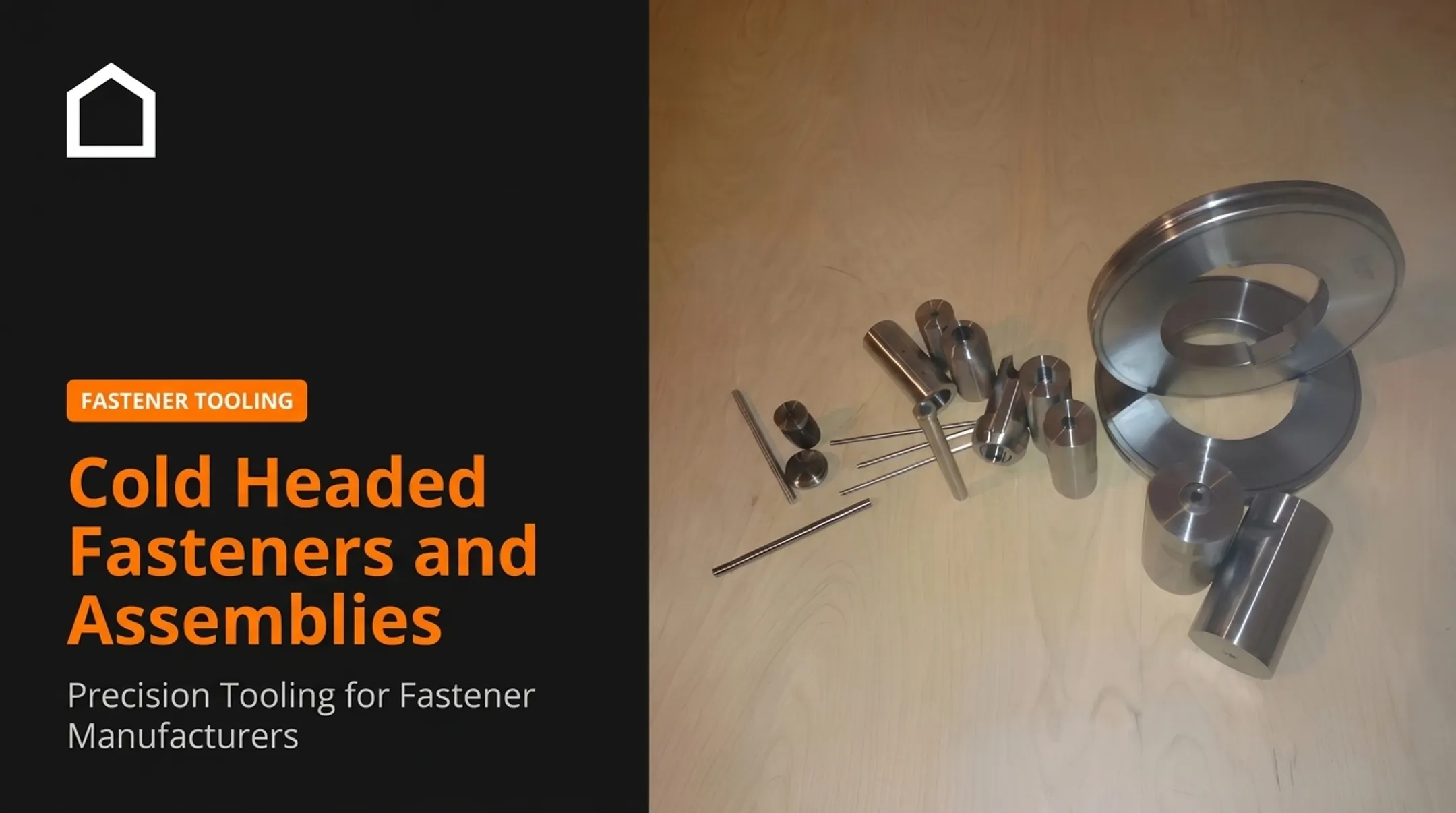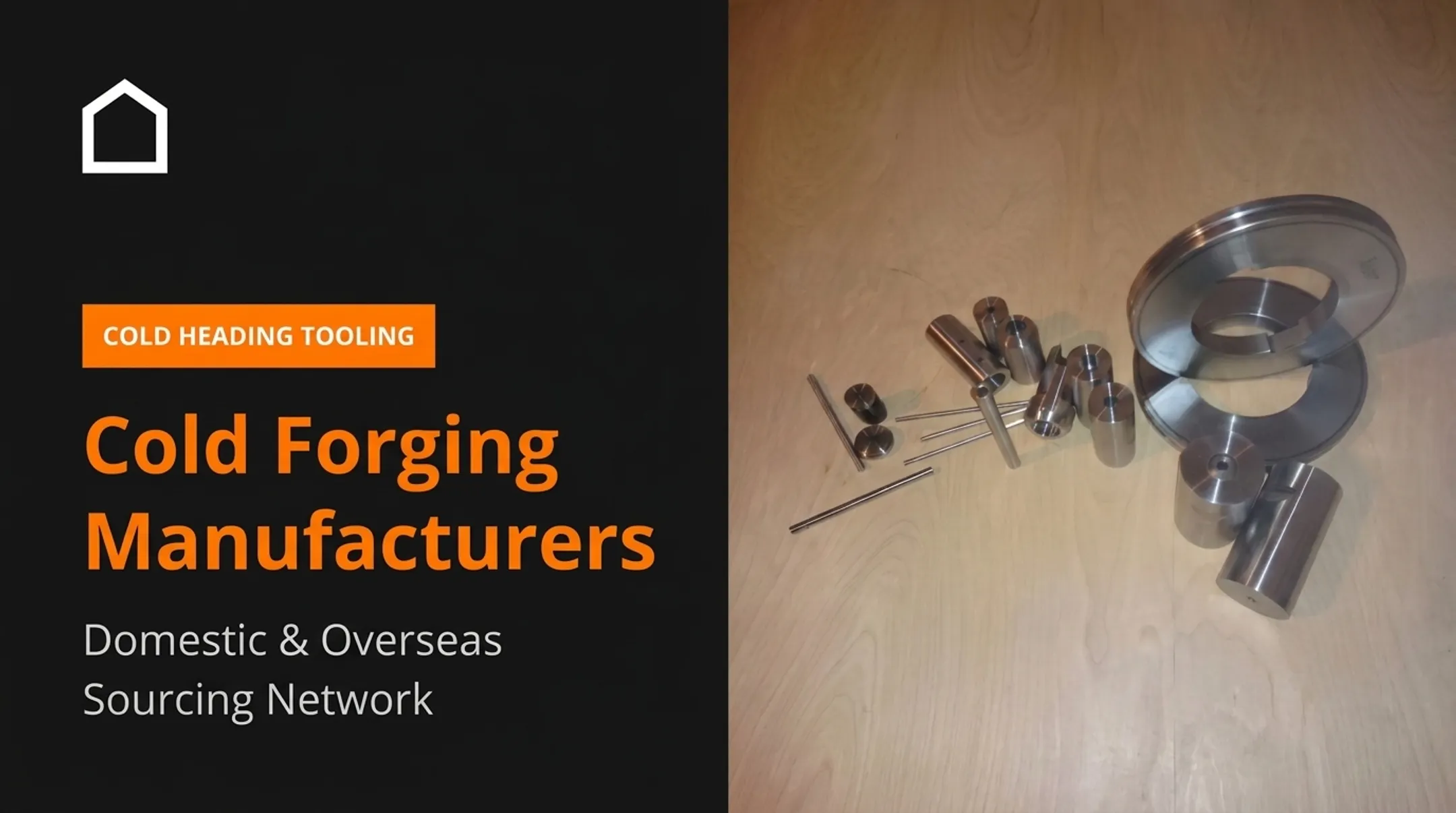

If you're a fastener manufacturer, manufacturing engineer, or purchasing lead evaluating bolts, screws, rivets, or custom formed components, understanding this process matters. It affects your tooling costs, part strength, and how consistently your production line runs.
Cold heading gets lumped in with "cold forming" and "cold forging" constantly, but the terms aren't interchangeable. Fastener + Fixing Magazine describes heading as a specific application within the broader forging category, not a synonym for it. This article breaks down the process sequence, the main forming techniques, where the process fits, what affects your results, and where it falls short.
Key Takeaways
- Cold heading forms wire or slugs near room temperature using progressive dies and punches
- Upsetting builds heads and shoulders; extrusion adjusts diameter or creates cavities
- Best fit at high, repeatable volumes with stable part designs
- Material ductility, lubrication, and tooling precision drive final part quality
- Poor fit for prototypes, brittle materials, or heavily machined geometries
What Is Cold Heading?
Cold heading is a cold-forming operation where a wire-fed blank gets cut to length, then forced into a die cavity at temperatures below the material's recrystallization range. National Machinery describes it as coiled wire is sheared to length and passed through tooling at room temperature.
The goal is to redistribute a fixed volume of metal into a near-net-shape part: a bolt head, screw head, rivet, pin, collar, or specialty fastener feature. The material doesn't leave the part; it moves within it.
Cold Heading vs. Cold Forming vs. Cold Forging
These terms get used loosely, and that causes confusion on RFQs and prints.
- Cold forming is the umbrella category for any room-temperature deformation process, including extrusion, drawing, rolling, and forging
- Cold forging is a broader forming discipline that includes heading as one application
- Cold heading specifically refers to progressive forming of wire-based parts, particularly parts with a formed head
A part labeled "cold-formed" on a spec sheet doesn't confirm it went through a header. Nedschroef's automotive materials group both standard fasteners and engineered cold-formed parts under one umbrella, which is useful context but not proof of the manufacturing route.
Forming vs. Machining: The Core Distinction
Machining removes material to reach a shape. Cold heading moves it and keeps it. That difference drives everything downstream:
- Scrap: Forming avoids chip generation; machining generates it by design
- Grain flow: Forming keeps grain structure continuous around the part's contours; machining cuts through it
- Tooling: Forming requires dies and punches built for the specific geometry; machining relies on cutting tools and fixtures
- Economics: Forming tooling costs more upfront but scales better at volume; machining scales more linearly per part
How the Cold Heading Process Works
Cold heading moves from wire selection through final inspection, with quality checks at each stage. Carpenter Technology's heading guide outlines four basic steps: cut a length of wire from the coil, align it in the die, shape it with one or more blows, then eject the part.
Wire and Blank Preparation
Wire must meet several requirements before it enters the header:
- Diameter held within tolerance
- Surface condition free of scale, pitting, or contamination
- Straightness sufficient for accurate feeding
- Cleanliness and lubrication matched to the forming sequence
- Cold-forming suitability verified for the alloy and temper
The machine feeds the wire, cuts a controlled length, and positions the slug. Incorrect blank volume—too little or too much—causes incomplete die fill or excessive flash.
Machine Components and Progressive Forming
A cold header relies on several coordinated components: the punch applies force, the die contains and shapes the material, the casing supports the die under pressure, and a knock-out system ejects the finished part. A transfer mechanism moves the blank between stations on multi-die machines.
Simple parts may need only one or two blows. Complex geometries—large heads, recesses, shoulders, hollow features, or multiple diameter changes—require several stations, each forming the material closer to final shape. Carpenter's guide notes that more complex parts transfer through successive dies on a multi-station machine, rather than forming in a single blow.

Primary Forming Actions
| Action | What it does | Typical result |
|---|---|---|
| Upsetting | Compresses the blank axially, enlarging a section | Bolt heads, flanges, shoulders, collars |
| Forward extrusion | Pushes material through a smaller opening | Reduced diameter, increased length |
| Backward (reverse) extrusion | Drives material around a punch | Hollow cavities, recesses, tubular shapes |
These aren't mutually exclusive. A single part often combines upsetting for the head with extrusion for a shoulder or bore. Carpenter's tubular rivet example shows exactly this kind of combined-motion approach.
Finishing and Verification
Once the part leaves the header, common secondary operations include:
- Trimming to remove flash
- Piercing for holes not formed in the die
- Thread rolling for external threads
- Heat treatment to meet strength specs
- Plating or coating for corrosion resistance
- Shaving, grinding, or machining for tight-tolerance features
- Dimensional and visual inspection before shipment
Carpenter's material data supports this workflow—their 302HQ-FM stainless grade pairs headability with free-machining characteristics because parts are often drilled, slotted, or tapped after heading. A headed blank rarely leaves the press finished, which is why multi-station jobs depend on matched punches, dies, casings, and knock-out tooling built for the full progression.
Why Cold Heading Is Used and Where It Is Applied
Manufacturers turn to cold heading for a mix of practical reasons: repeatable output, efficient material use, fast cycle times, and grain flow that survives intact through the part's shape. National Machinery attributes these benefits to the near-net-shape nature of the process and unbroken grain flow around formed features.
The Nickel Institute frames the material-efficiency case simply: heading generates no chips compared to machining the same shape. That's a real mechanism, not a guaranteed percentage. Actual savings depend on your specific part geometry and starting stock, so compare real input weight against real scrap for your application rather than trusting a generic industry figure.
When the Economics Work
Cold heading tooling isn't cheap. It pays off when:
- Part demand is recurring, not a one-time order
- The design is stable, with no frequent revisions mid-production
- Volume justifies dedicated die and punch investment
- Geometry can be reached through a controlled progression of stations
Common Cold-Headed Products
- Bolts, screws, and studs
- Rivets and pins
- Nails
- Electrical contacts and terminals
- Bushings and collars
- Custom fasteners with specialty heads or recesses
MW Components documents a good example of feature-specific heading: a copper wire-wrap pin with a headed flange that functions as a circuit-board insertion stop. The flange locates the pin during assembly and prevents overinsertion, turning a formed feature into a functional stop rather than a cosmetic detail.
Where These Parts Show Up
- Automotive: structural and engine fasteners requiring consistent strength
- Construction: anchors, structural bolts, and connectors
- Industrial equipment: pins, bushings, and wear components
- Electrical and electronics: terminals, contacts, and formed pins
- Agriculture and energy: heavy-duty fasteners for demanding service conditions
- Aerospace: precision fasteners with tight tolerance requirements
- General hardware: everyday bolts, screws, and rivets
In suitable designs, cold heading replaces multi-piece assemblies by forming an integrated head or shoulder directly onto the shank. That said, threading, heat treatment, and finishing operations typically still follow.
Manufacturers running or building out cold heading production usually need application-specific tooling: dies, punches, recess tooling, cut-offs, quills, and feed components. Quality FORM Tools works with cold heading shops on this custom tooling, building to print for new part numbers or supplying replacement components to keep existing production running.

Key Factors That Affect Cold Heading Results
A handful of variables determine whether a cold heading job runs clean or turns into a scrap problem.
Materials:
- Ductility and work-hardening behavior determine how far material can move before cracking
- Common candidates include carbon and alloy steels (1010/1018), stainless grades (302HQ, 316), aluminum, brass, and copper
- Grade-specific suitability should always come from engineering or supplier data, not a general material family assumption
Part design:
- Head-to-shank proportions and blank length affect how much material needs to move
- Diameter changes, recess depth, wall thickness, and radii all add forming complexity
- More stations mean more opportunity for precise control, but also more tooling cost
Tooling and equipment:
- Die support, punch alignment, and clearances directly affect part consistency
- Machine capacity and station count need to match the part's forming requirements
- Tool steel selection matters—Carpenter's guide names M2 and D2 for die inserts and H13 for casings; specific grade choice should follow supplier recommendations for the application
Lubrication and operating conditions:
- Poor lubrication drives metal pickup, galling, and premature die wear
- Feed accuracy and stroke timing affect dimensional consistency part-to-part
- Stainless steels typically demand more durable lubrication than low-carbon steel

Production scale and quality controls:
- Throughput and changeover frequency shape overall tooling economics
- Inspection frequency should match tolerance requirements and part criticality
- Standards like ISO 3269:2019 govern lot-acceptance inspection for bolts, screws, nuts, pins, washers, and rivets
Common Issues, Misconceptions, and When Cold Heading May Not Be Appropriate
Cold Heading Isn't Always "Cold Forming"
They're related, not identical. Cold heading is a specific application within the broader cold-forming category. Treating them as synonyms leads to confusion on specs and RFQs—ask specifically whether a part was headed, not just "cold-formed."
Common Defects and Root Causes
| Defect | Likely cause |
|---|---|
| Cracking or head bursts | Material ductility exceeded during upset |
| Laps or cold shuts | Improper material flow during forming |
| Incomplete die fill | Insufficient blank volume or forming force |
| Excessive flash | Oversized blank or die mismatch |
| Transfer damage | Misalignment or timing issues |
| Premature tool wear | Poor lubrication or incorrect tool steel selection |
A 2006 IFI paper draws a clear line: head bursts and material seams from incoming stock are different problems and need different fixes. A crack that looks like a forming issue might actually trace back to a defect in the wire itself. Inspecting only the press setup risks missing the real cause.
"Cold" Doesn't Mean Low-Force
The compressive forces involved are substantial. Proper machine design, guarding, safe handling procedures, and inspection controls are baseline requirements for running this equipment safely.
When to Look Elsewhere
Cold heading isn't the right call for every job:
- Prototypes and very low volumes: tooling investment won't pay back
- Unstable designs: frequent revisions waste tooling spend
- Very large components: may exceed practical forming force or die size
- Brittle or poorly formable materials: cracking risk outweighs the benefits
- Intricate geometries or severe undercuts: often need heavy secondary machining anyway
Alternatives worth considering:
- Machining for prototypes and complex, low-volume parts
- Hot or warm forging for larger sections or less ductile materials
- Stamping for sheet-based or flat geometries
Skip universal volume thresholds—what justifies tooling investment varies by part complexity, material cost, and your specific tooling budget.
Practical Evaluation Checklist
Before committing to cold heading, review:
- Annual quantity and demand stability
- Material grade and confirmed headability
- Part envelope and geometry complexity
- Tolerance requirements
- Tooling budget and expected payback
- Secondary operations required after forming
- Expected service loads on the finished part
- Design flexibility for progressive forming
If several of these raise red flags, another process—or a design tweak before tooling—usually costs less than forcing the part through a heading progression.
Conclusion
Cold heading is a progressive, room-temperature forming process that turns measured wire or slug volume into fasteners and precision components through upsetting, extrusion, and related motions.
The process pays off only when material, geometry, tooling, machine capability, production volume, and inspection requirements all fit the job. Lower waste and faster output alone are not enough reason to adopt it.
Before selecting cold heading for a new part, review these items with an experienced tooling partner:
- Part prints and geometry
- Material grade and formability
- Expected production quantities
- Tooling needs and secondary operations
Quality FORM Tools works with fastener manufacturers and forming shops across the Midwest and beyond on this kind of evaluation, supplying custom dies, punches, and complete tooling packages built to specific part requirements.
Frequently Asked Questions
Are cold heading and cold forming the same thing?
Not exactly. Cold heading is a specialized application within the broader cold-forming family, which also includes extrusion, drawing, and rolling at room temperature.
What does 'cold heading' mean?
It refers to shaping wire or a cut slug at room temperature using dies and punches, typically to create a fastener head or other near-net-shape feature.
What are 7 types of fasteners with examples?
Common types include hex bolts, machine screws, locknuts, solid rivets, threaded studs, dowel pins, and flat washers. Bolts, screws, rivets, and pins are often cold headed; nuts, studs, and washers may use heading for some features but usually need extra operations.
How does the cold heading process work?
Wire is straightened and fed into the machine, cut into a blank, then progressively upset or extruded through one or more die stations. Secondary operations like threading and inspection typically follow.
When is cold heading a good choice for manufacturing parts?
It works best for repeatable designs in ductile materials, at production quantities that justify tooling investment. It's ideal when you need efficient, strong, dimensionally consistent parts at volume.