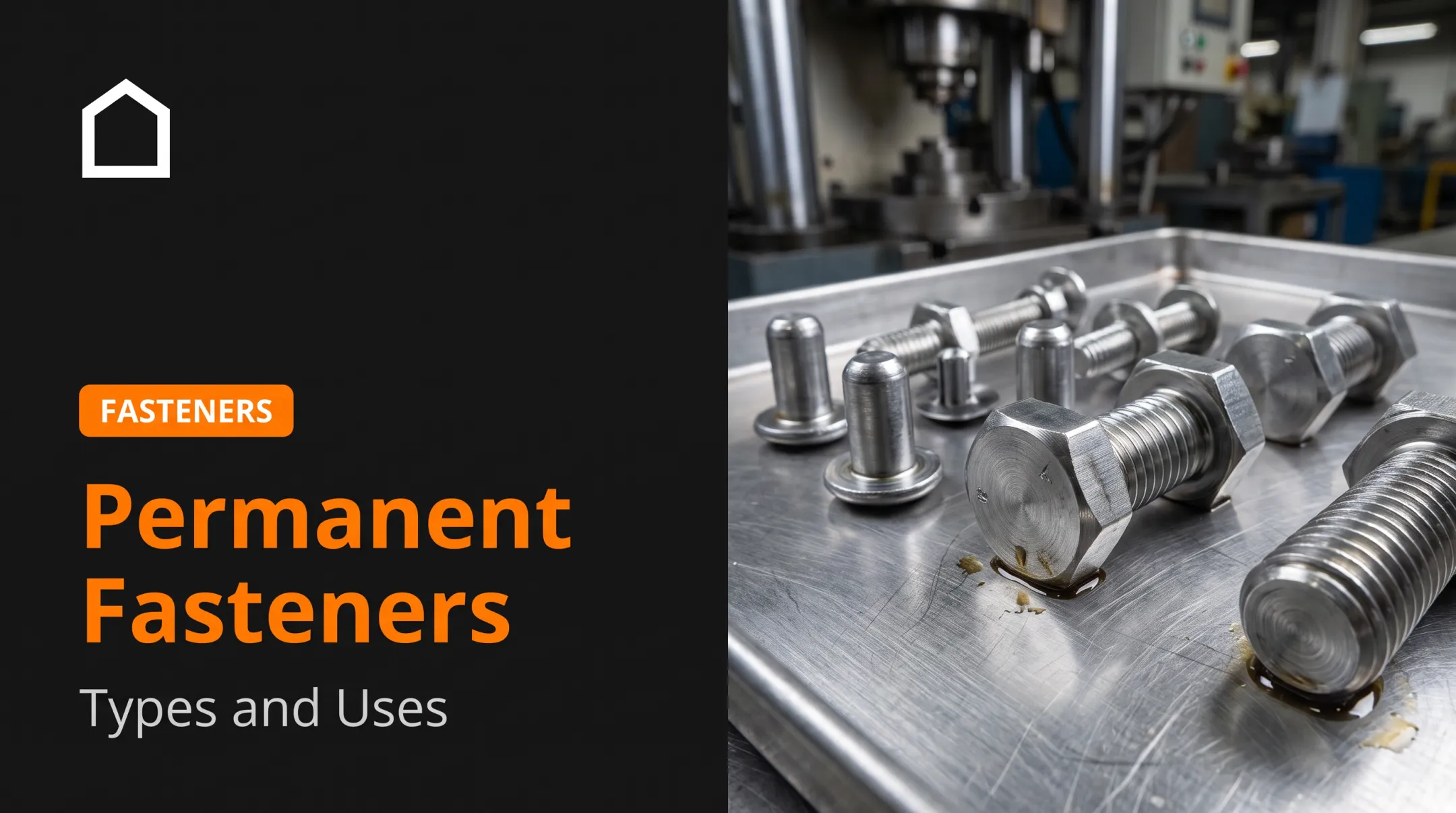

Yet many engineering and production teams treat fastener selection as an afterthought — a hardware line item instead of a design decision. That's a mistake. Load path, material compatibility, environmental exposure, serviceability, installation access, and production volume all shape whether a joint holds up or fails prematurely.
This guide walks through the major fastener categories, how fastening actually works at the joint level, when permanent versus removable makes sense, and what to weigh before finalizing a fastening design for a manufacturing application.
Key Takeaways
- Fasteners join parts by clamping force, tension, friction, interference, or deformation, not welding or adhesives
- Pick threaded, unthreaded, permanent, removable, or semi-permanent types to match load and service needs
- Match fastener, materials, geometry, and installation method to the joint for reliable performance
- Build tooling, repeatability, inspection, and volume into the fastening design from the start
What Are Mechanical Fasteners?
Mechanical fasteners are hardware components that join two or more parts using mechanical force: tension, compression, friction, interference, or controlled deformation. TWI describes mechanical fastening as a method of joining components, typically without applied heat, where some resulting joints can later be disassembled.
That last point matters. Mechanical fastening isn't automatically synonymous with removable fastening. Rivets are mechanical fasteners too, even though pulling one apart usually means drilling it out.
Fastener vs. Fastening
The two terms get used interchangeably, but they mean different things:
- Fastener: the physical hardware component (a bolt, rivet, pin, or clip)
- Fastening: the method and process used to create the joint (torquing a bolt, deforming a rivet, pressing an interference-fit pin)
How Fasteners Are Classified
Industry standards, including ASME B18.12's fastener glossary, group hardware by product family. For practical selection, classify along two axes: form and service intent.
Form:
- Threaded fasteners create clamping force through mating threads (bolts, screws, studs)
- Unthreaded fasteners rely on interference, alignment, or deformation (rivets, dowel pins, retaining rings)
Service intent:
- Permanent fasteners are intentionally difficult or impossible to remove without damage
- Removable/semi-permanent fasteners support repeated assembly, maintenance, or replacement to varying degrees
Common Types of Mechanical Fasteners
Choosing the right hardware starts with knowing what's actually available and where each type fits.
Bolts and screws. Bolts typically pair with a nut to clamp two parts together. Screws often engage a tapped hole, threaded insert, or self-forming thread cut directly into the mating material (no separate nut required).
Nuts and washers. Nuts supply the internal mating thread. Washers distribute clamping load across a wider bearing surface, protect finished surfaces from galling, and in some designs help resist vibration-induced loosening.
Rivets. Rivets are unthreaded fasteners installed by deforming part of the shank to form a second retained head. They suit joints that must stay permanent or assemblies where you only have access to one side.
Pins, dowels, retaining rings, clips, and clamps. These handle alignment, shear loads, axial retention, or quick-release holding — often at lower cost and faster installation than threaded hardware.
Threaded inserts and rivet nuts. These reinforce threads in thin sheet metal, plastics, composites, or other soft base materials where a tapped hole alone wouldn't hold up to repeated use.
| Fastener Type | Joint Behavior | Removable? | Common Use | Key Limitation |
|---|---|---|---|---|
| Bolt + nut | Clamping via thread tension | Yes | Machine assembly, structural joints | Requires access to both sides |
| Screw | Clamping into tapped/formed thread | Yes | Enclosures, sheet metal, plastics | Thread wear in soft materials |
| Rivet | Deformed-shank retention | No (destructive removal) | Aircraft skin, permanent enclosures | Not field-serviceable |
| Dowel pin | Interference-fit alignment | Limited | Precision location between parts | Not designed for axial load |
| Retaining ring | Groove-seated axial stop | Yes | Shaft/bore retention | Limited by groove and ring shear capacity |
| Threaded insert | Reinforced internal thread | Mating screw only | Thin sheet, plastic, composite hosts | Insert itself stays installed |
How Mechanical Fastening Works
Clamp Load and Preload
Tightening a threaded fastener stretches the bolt slightly and compresses the joint, creating clamp load that resists separation and slippage. Torque and preload are not the same thing.
NASA's flight-hardware torque-tension research found that most applied tightening torque actually gets consumed overcoming head-bearing and thread friction , not converting into clamp force. Lubrication and surface condition swing that relationship significantly, and even controlled torque still produced measurable preload scatter.
The takeaway: a published torque spec is only as good as the surface conditions it was tested under. Reference manufacturer data or applicable standards rather than assuming one universal number applies across every joint.
Load Types and Joint Design
Joints rarely experience just one kind of load. Design should account for:
- Tension: pulling the joint apart along the fastener axis
- Shear: forces perpendicular to the fastener
- Bending: off-axis loading that stresses one side more than the other
- Vibration and impact: cyclic or shock loads that can work a joint loose over time
- Combined loading: most real-world joints see some mix of the above
Thread engagement length, hole quality, bearing area, edge distance, and fastener spacing all affect how well a joint carries these loads. Installation access for tools matters just as much . A perfectly engineered joint is useless if a technician cannot reach it with a torque wrench.
Installation Controls and Failure Modes
Getting a joint right in service depends on:
- Correct torque values (from manufacturer or standards-based sources)
- Proper tightening sequence for multi-fastener joints
- Lubrication consistency between test and production conditions
- Locking features suited to the vibration environment
- Post-installation inspection
When these controls slip, joints tend to fail in predictable ways: loosening, stripped threads, fatigue cracking, corrosion, joint separation, hole elongation, or cracking around the fastener hole.
Context changes the fastening strategy for the same bracket-to-frame joint:
- A removable machine guard needs quick-release fasteners a technician can service without leaving tools behind
- A vibrating production assembly needs a locking feature and verified preload to resist loosening over millions of cycles
- A permanent sheet-metal enclosure can use rivets or self-clinching fasteners when it is never meant to come apart

Permanent, Removable, and Semi-Permanent Fastening
Not every joint needs to come apart — and not every joint should.
| Category | Examples | Disassembly | Best Fit |
|---|---|---|---|
| Removable | Bolts, screws, many pins | Routine, tool-based | Maintenance, inspection, reconfiguration |
| Permanent | Rivets, crimped/deformed fasteners | Destructive only | Limited access, high-speed assembly, tamper resistance |
| Semi-permanent | Threaded inserts, locking nuts, retaining rings, interference-fit pins | Possible, but may reduce service life | Repeated assembly with reinforced threads |
Choose permanent fastening when:
- The back side of the joint is inaccessible
- Production speed matters more than field serviceability
- Tamper resistance is a design requirement
- Vibration resistance without ongoing maintenance is critical
Choose removable fastening when:
- Equipment needs routine maintenance or wear-part replacement
- Inspection access is required
- The assembly may need reconfiguration or field service
Some designs sit between the categories. Self-clinching fasteners and blind threaded inserts are a clear example. PennEngineering's self-clinching fastener documentation explains that these fasteners cold-flow into ductile sheet metal and become a permanent part of the panel, while the mating screw stays fully removable.
What's an example of a permanent mechanical fastener?
A solid rivet is the clearest case. Installation deforms the rivet shank to form a second head and lock the joint. Removal usually means drilling it out, which destroys the fastener. Permanence depends on how the fastener is installed and removed, not on the product family alone.
How to Choose the Right Fastener for a Manufacturing Application
Start with the joint, not the catalog. Selection should follow a sequence:
1. Define the joint requirements.
- Materials being joined
- Expected tensile and shear loads
- Vibration or cyclic loading exposure
- Temperature, moisture, and chemical exposure
- Whether the joint must be removable
2. Match fastener material and finish.
- Strength requirements
- Corrosion resistance and galvanic compatibility between dissimilar metals
- Conductivity, weight, and heat exposure needs
- Manufacturer or standards-based references for material and finish choices
3. Evaluate design and installation constraints.
- Access from one side or both
- Available tools and automation
- Hole size, quality, and thread engagement
- Clearance, countersinking, and assembly sequence
4. Consider production and purchasing factors.
- Standardization and interchangeability across product lines
- Availability and lead time
- Traceability and inspection requirements
- Fit for prototype, low-volume, or high-volume production
5. Put it in writing. Fastener specs belong on engineering drawings and purchasing documents: size, thread form, grade or material, finish, head style, length, tolerances, and any required testing or documentation. Verbal specs get lost. Drawings don't.

For manufacturers developing fastener-forming, stamping, forging, or production-equipment applications, tooling sourcing comes next.
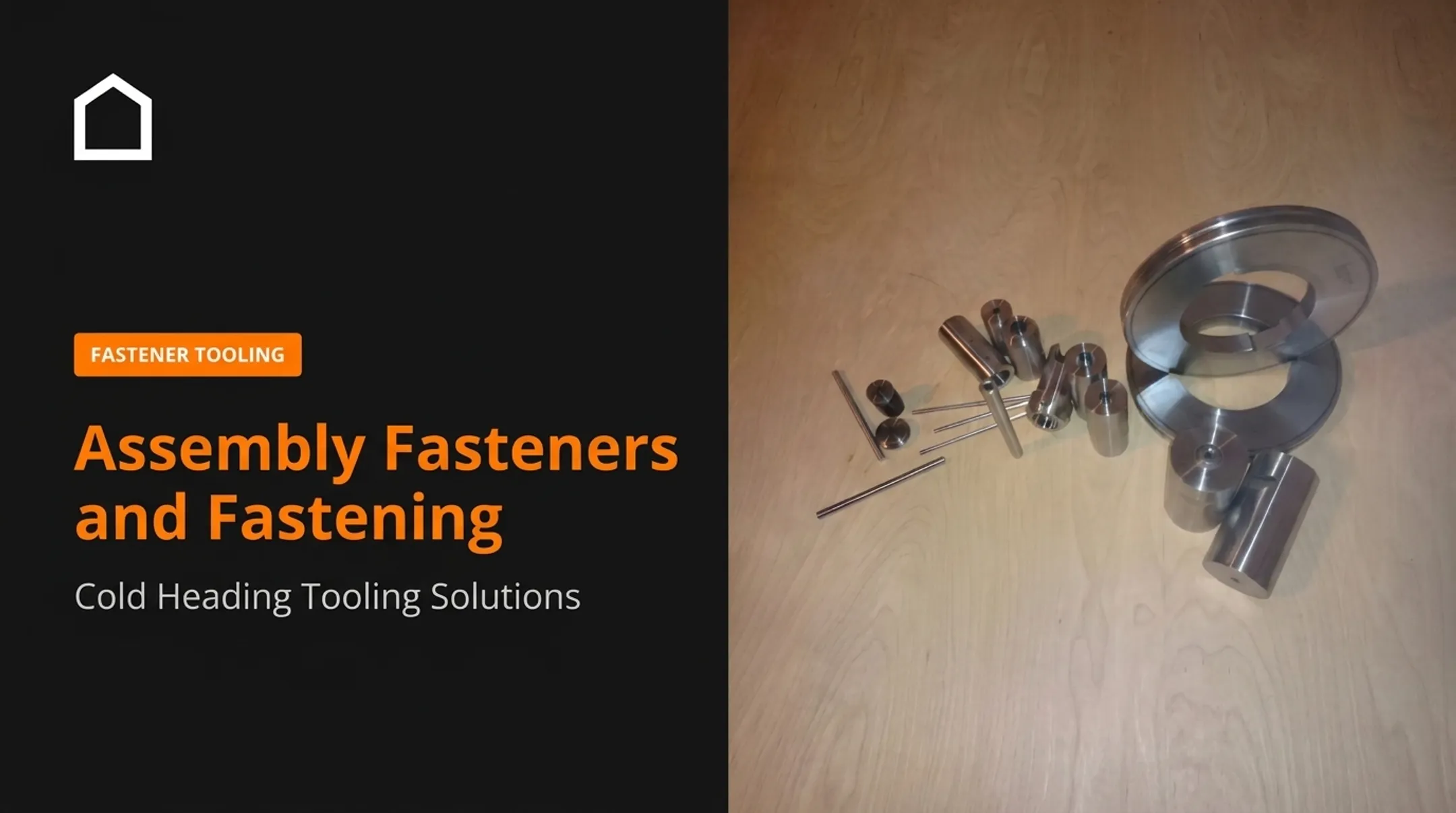
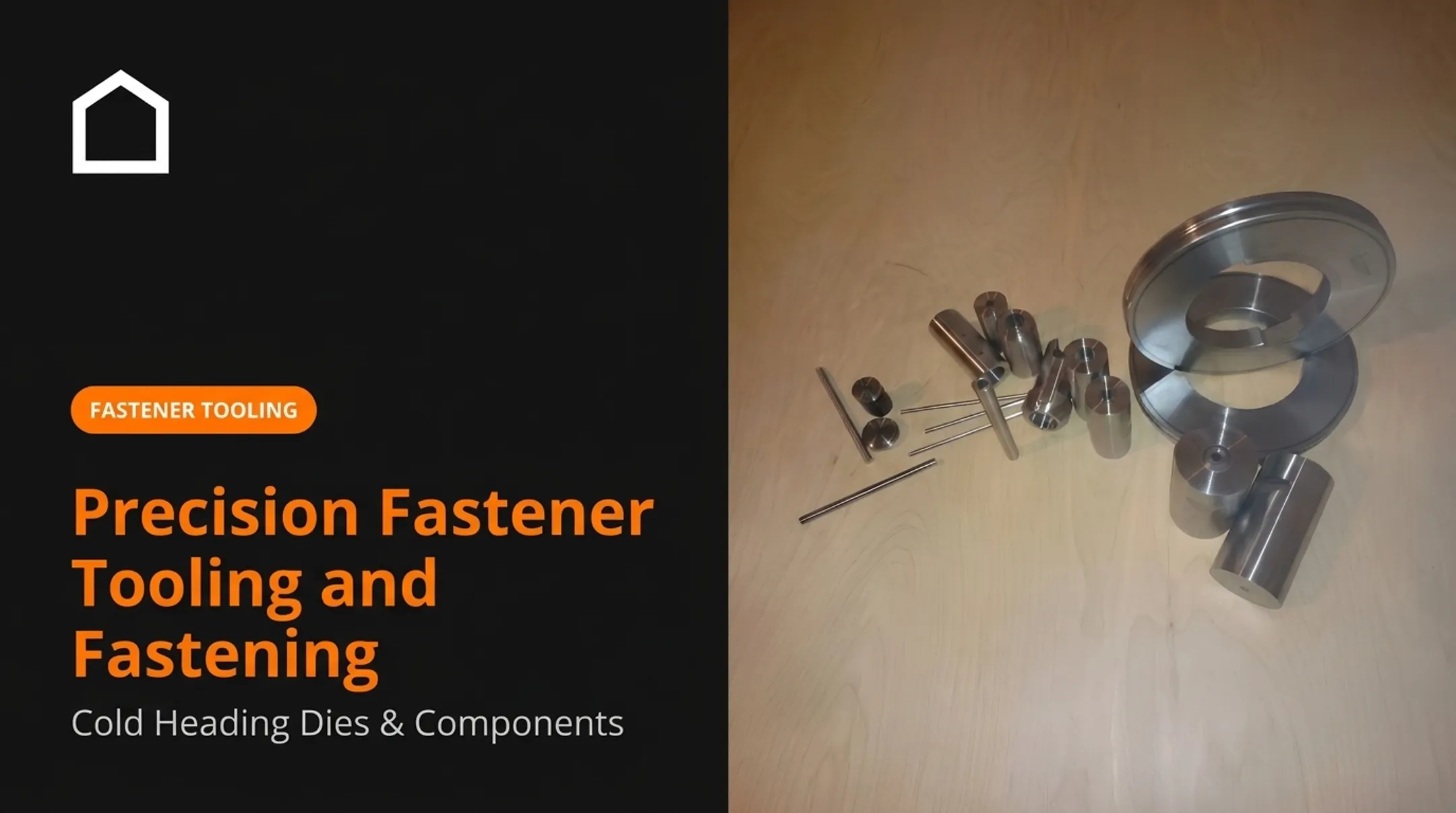
Quality FORM Tools, based in Hammond, Indiana, reviews drawings and specifications for custom cold header tooling: dies, punches, cut-offs, quills, feed rolls, and wire draw dies. The company also covers replacement tooling components, stamped or forged parts, and precision machined support components.
Whether a job needs a one-off prototype or a production run, a tooling source that works directly from your specs saves a round trip later.
Common Fastening Problems and Prevention
Most fastening failures trace back to a handful of root causes:
| Problem | Common Cause | Prevention Step |
|---|---|---|
| Loose joints | Under-torqued or vibration-loosened | Verify preload; add locking feature |
| Corrosion | Galvanic mismatch or moisture exposure | Match fastener/base material; apply protective finish |
| Damaged threads | Cross-threading or over-torque | Standardize installation procedure |
| Incorrect length | Poor spec or drawing error | Define length and tolerance on drawings |
| Uneven clamping | Wrong tightening sequence | Follow documented sequence for multi-fastener joints |
| Premature fatigue | Insufficient preload or combined loading | Design for actual load path, not assumed conditions |
Inspection should combine several methods, not just one:
- Visual checks for damage or improper seating
- Torque verification where applicable
- Dimensional inspection and thread gauges
- Material documentation review
- Installation record checks
If fasteners keep failing in the same location, the fastener itself usually isn't the problem. Investigate the joint design, hole quality, or installation process before swapping in a bigger or stronger part. That approach often masks a design flaw instead of fixing it.
Safety note: Safety-critical, pressure-containing, lifting, transportation, aerospace, and other regulated applications require qualified engineering review against the applicable codes and standards. Nothing in this guide substitutes for that review.

Conclusion
Mechanical fasteners are small components that directly affect structural integrity, equipment uptime, and manufacturing quality. Getting the joint right comes down to a repeatable sequence:
- Define the load and environment
- Choose the appropriate joint behavior (permanent, removable, or semi-permanent)
- Match materials and finishes to the application
- Design the installation process, including torque and sequence
- Verify the finished assembly
Before requesting tooling or precision-part support for a fastening application, gather your drawings, specifications, quantities, materials, and application details.
Whether you're tooling up a new cold-headed part or sourcing replacement components for a stamping press, that package helps Quality FORM Tools return an accurate quote and the right part the first time.
Frequently Asked Questions
What are mechanical fasteners?
Mechanical fasteners are hardware components that join parts through mechanical force (tension, friction, or interference) rather than heat or adhesive bonding. Unlike welding or brazing, many mechanical joints can be inspected, adjusted, or disassembled.
What are the different types of mechanical fasteners?
Major categories include bolts, screws, nuts, washers, rivets, pins, dowels, retaining rings, clips, clamps, and threaded inserts. Each category serves different load capacities, removability needs, and service environments.
What is an example of a permanent mechanical fastener?
A solid rivet is the classic example. Installation deforms the rivet to lock components together, and removal typically requires drilling it out, damaging the fastener or the surrounding joint in the process.