
The industrial fasteners market is expected to reach $104.12 billion by 2029, driven by automotive, construction, and industrial machinery demand. That growth makes one question more important than ever: what actually makes a fastener "standard," and does that label guarantee it will fit your application?
The short answer is no. A standard fastener is made to a recognized dimensional, material, thread, or performance specification. It's not automatically interchangeable with every part that looks similar. This guide breaks down the types, specs, materials, and selection steps that matter.
Key Takeaways
- Standard fasteners follow established dimensions, thread forms, and material grades, not one universal specification
- Core hardware families cover bolts, screws, nuts, washers, studs, rivets, pins, and retaining rings
- Match each fastener to joint design, load, environment, thread system, material, and grade
- Matching appearance does not guarantee matching fit, strength, or corrosion resistance
- Specify custom fasteners when standard hardware cannot meet the design requirement
What Are Standard Fasteners?
A standard fastener is specified against a published product or property standard rather than a purchaser's one-off drawing. Organizations like ASME, ASTM, SAE, and ISO each cover different parts of the specification:
- ASME B18 standards define product dimensions
- ASTM covers material and coating specifications
- SAE addresses mechanical and material requirements
No single standard number tells the whole story on its own.
That's a critical distinction. "Standard" describes how a part is specified and sourced, not a guarantee that any two parts sharing a name are interchangeable. A 3/8-inch hex bolt from two different suppliers can still differ in grade, thread class, or finish.
Why Standardization Matters
Standardization exists because it solves real production problems:
- Easier sourcing — multiple qualified suppliers can produce the same spec
- Predictable fit — dimensions and thread tolerances are documented, not guessed
- Faster replacement — maintenance teams can find parts without custom lead times
- Simplified quality control — inspection criteria already exist in the published standard
Standard Doesn't Mean Low-Performance
Standard fasteners aren't limited to low-stress, non-critical applications. High-strength structural bolts, corrosion-resistant stainless hardware, and vibration-resistant locking fasteners are all standard products when the correct specification is selected.
A general industry standard (ASME, ASTM) differs from a sector-specific specification used in aerospace, automotive, or defense work. Neither one defines "standard" for every application. The right choice depends entirely on what the joint needs to do.
Common Types of Standard Fasteners
Fasteners are classified by how they create a joint, how they're installed, and whether they're meant to come apart again. Some clamp two parts together. Others align, space, or permanently join them.
Threaded Fasteners
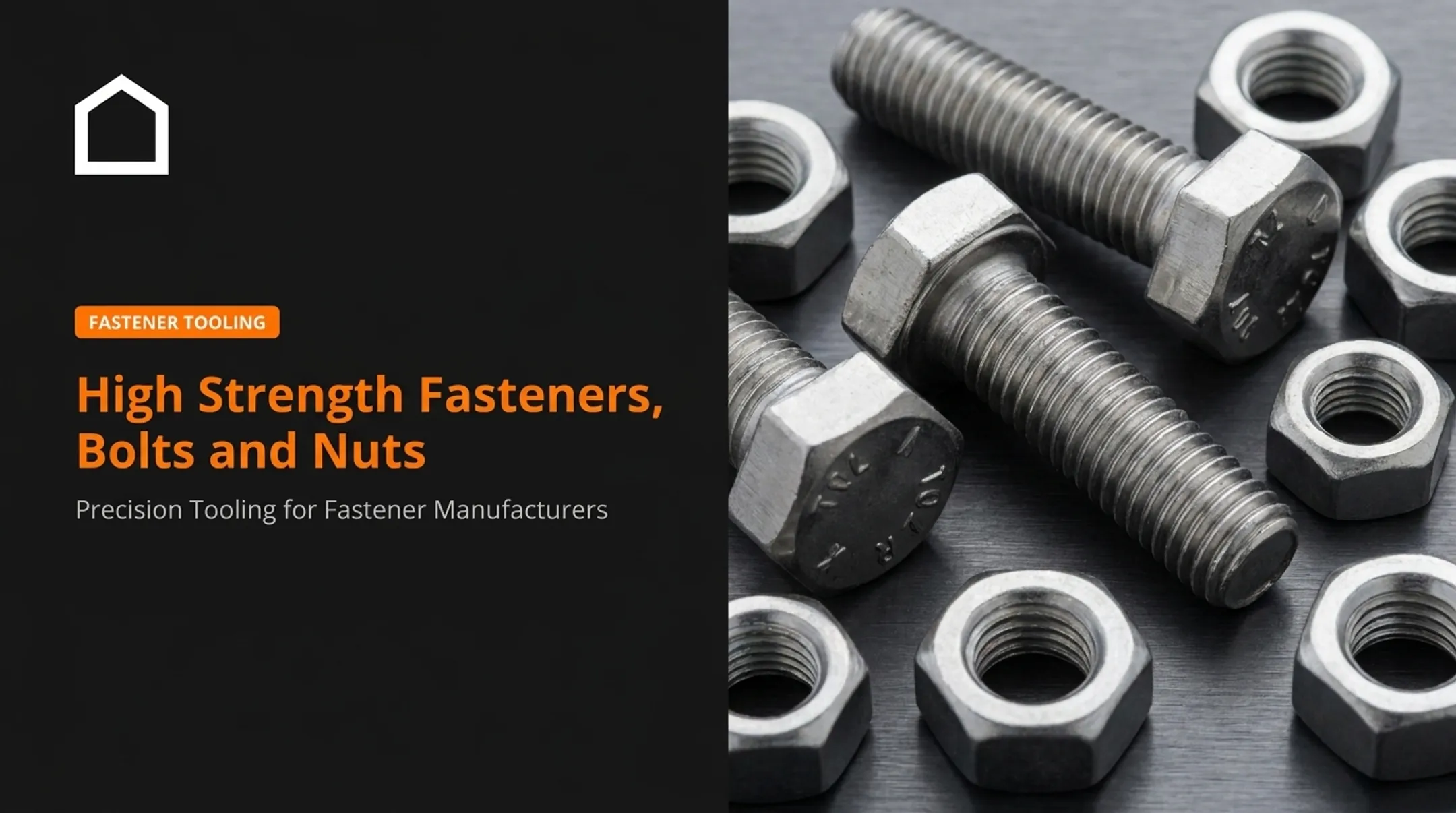
- Bolts — used with a nut to clamp components together; selected by diameter, length, thread pitch, head style, and grade
- Screws — driven into a tapped hole or self-forming material without a separate nut
- Nuts — mating components including hex nuts, locknuts, and prevailing-torque nuts that resist loosening
- Washers — distribute load, protect surfaces, add spacing, or assist locking; chosen for the joint, not added by default
- Studs and set screws — provide permanent threaded locations, positioning, or flush adjustment without a full bolt head
Non-Threaded Fasteners
- Rivets — create permanent or semi-permanent joints, selected by material, grip range, and access
- Pins — provide alignment or positioning rather than clamping force
- Retaining rings — secure components in grooves or on shafts, common in rotating assemblies
The IFI Book of Fastener Standards organizes these into distinct product categories, each with its own dimensional standard. A hex bolt and a socket head cap screw follow entirely different dimensional documents, even though both are "standard" bolts in a broad sense.
Quick comparison: Removable threaded fasteners (bolts, screws, nuts) allow disassembly for maintenance. Rivets and most pins are primarily locating or permanent, meaning removal usually damages the part or the joint.

How Standards, Materials, and Specifications Affect Fastener Selection
Treat a fastener's part number or grade as an engineering requirement. Three variables drive most selection decisions: thread fit, material, and strength grade.
Threads, Dimensions, and Fit
Inch threads follow ASME B1.1, which defines Unified thread forms and fit classes. External threads carry an "A" suffix, internal threads a "B" suffix, and the common paired designation is Class 2A/2B for general-purpose fits.
Metric threads follow a parallel but separate system under ISO 965.
Nominal diameter, length, pitch, thread class, and required engagement all need to match the mating part. A fastener that's the right diameter but wrong thread class can still cross-thread or strip.
Material and Strength Grades
Material choice trades off strength, weight, corrosion resistance, and cost:
- Carbon steel: strong and economical; needs coating in corrosive environments
- Alloy steel: higher strength; still requires corrosion protection
- Stainless steel (300-series): corrosion-resistant, but prone to galling under high friction
- Aluminum: lightweight, with lower tensile strength than steel
- Brass: conductive and corrosion-resistant, but relatively soft
Strength grades quantify how much load a fastener can handle before yielding. SAE J429 sets minimum tensile and proof stress values for externally threaded steel fasteners:
| Grade | Diameter Range | Minimum Tensile | Proof Stress | Hardness |
|---|---|---|---|---|
| Grade 5 | 1/4–1 in | 120,000 psi | 85,000 psi | Rockwell C25–C34 |
| Grade 8 | 1/4–1 1/2 in | 150,000 psi | 120,000 psi | Rockwell C33–C39 |
| Metric 10.9 | M1.6–M39 | 1,040 MPa | 830 MPa | Rockwell C32–C39 |
Coatings and Documentation
Coatings protect against corrosion in different ways, and each one changes installation torque:
- Zinc plating, hot-dip galvanizing, and passivation are not interchangeable finishes
- A dry zinc finish and a lubricated coating do not reach the same clamp load at the same torque
- For regulated or safety-critical assemblies, material certificates, lot traceability, and supplier qualification records matter as much as the part itself
How to Choose the Right Standard Fastener
Start with the joint's purpose, then work outward.
- Define the joint's function: clamping, alignment, spacing, retention, sealing, or permanent attachment
- Evaluate service conditions: tension, shear, vibration, shock, temperature swings, moisture, and chemical exposure
- Match dimensions to the mating parts: hole size, thread engagement, clearance, and any countersink or counterbore requirements
- Confirm installation access: tool clearance, tightening method, required torque, and inspection access after assembly
- Check for locking features: needed anywhere vibration or repeated assembly is expected

Replacement checklist: Before swapping any fastener, verify:
- Type, diameter, length, and thread
- Head and drive style
- Material, grade, and finish
- Nut or washer compatibility
If the fastener is part of a load-bearing, safety-critical, or production-controlled assembly, get substitution approval from the responsible engineer or quality team first. A part that "looks close enough" is a common source of field failures.
Where Standard Fasteners Are Used
Standard fasteners show up across nearly every manufacturing and maintenance environment:
- Machinery and fabricated equipment assembly
- Vehicles and transportation equipment
- Construction and structural steel work
- Plant maintenance and equipment repair
- Consumer products and general industrial production
- Energy equipment, including alternative energy installations
Application conditions shape the right choice:
- Outdoor or wash-down environments need corrosion-resistant hardware
- Structural loads need high-strength grades
- Vibration-prone equipment needs locking features
- Electrical work often needs nonconductive materials
Routine maintenance sourcing differs from production sourcing. A maintenance team needs a quick, compatible replacement. A production line needs repeatable dimensions, consistent packaging, and documented traceability across thousands of parts.
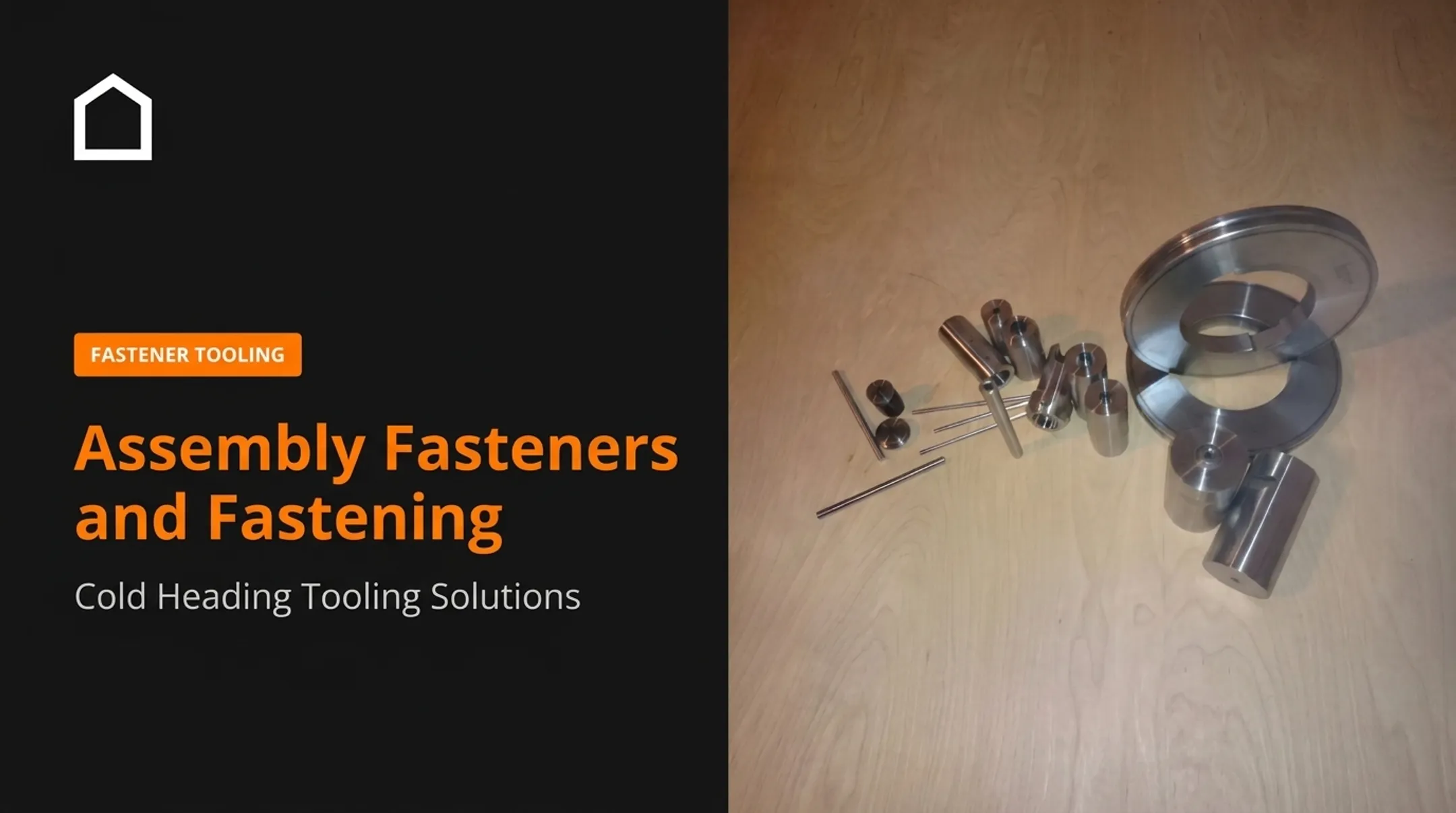
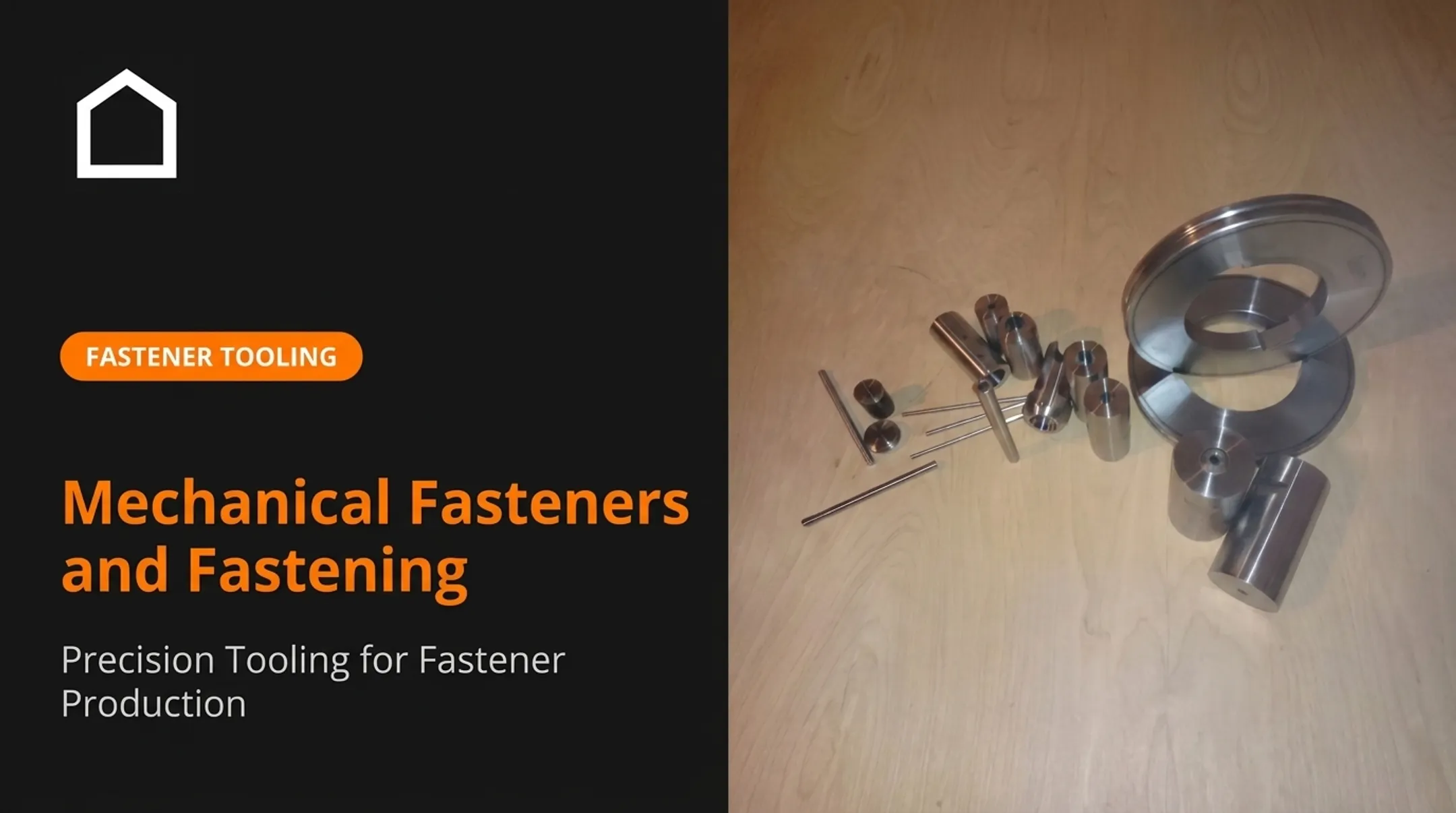
Behind every formed fastener is the tooling that produces it. Cold heading dies, punches, cut-offs, and feed rolls wear down and need replacement to keep production running to spec.
Manufacturers who can't source that tooling off the shelf can work with Quality FORM Tools on custom cold header tooling and specialty tooling packages built to their production requirements.

Standard Fasteners vs. Custom and Specialty Fasteners
Standard fasteners cover most applications, but not all of them.
| Factor | Standard Fastener | Custom / Specialty Fastener |
|---|---|---|
| Availability | Multiple qualified suppliers | Single source, made to order |
| Lead time | Typically shorter | Longer, tooling-dependent |
| Cost per unit | Lower at volume | Higher, especially at low volume |
| Documentation | Published standard specs | New drawings and inspection criteria |
| Best fit for | Common joints, standard clearances | Unusual geometry or performance needs |
Modifying a standard fastener through drilling, slotting, turning, or grooving can turn it into a specialty part. That part then needs its own drawing and inspection process, even if it started as an off-the-shelf item.
Signs an application may need a custom or specialty fastener:
- Unusual clearance or space constraints
- Unique sealing or retention requirements
- Nonstandard materials not available in catalog products
- Severe service conditions beyond standard grade ratings
- Production volumes that justify dedicated tooling
Any custom solution still needs to preserve required mechanical performance, validated through engineering review, testing, and dimensional inspection before it goes into production.
Frequently Asked Questions
What are the most common fasteners?
Bolts, screws, nuts, washers, rivets, pins, studs, and retaining rings cover most industrial applications. Choose based on the joint's function and load.
What is considered a standard fastener?
A standard fastener is built to published dimensional, material, thread, or performance specs and is generally available from multiple qualified suppliers—not made to a custom drawing.
Are standard fasteners interchangeable?
Only when dimensions, thread class, grade, material, finish, and head geometry all match. A similar appearance doesn't guarantee a safe substitution.
What is the difference between a standard fastener and a custom fastener?
Standard fasteners follow published specs and are widely sourced. Custom fasteners are designed or modified for a specific assembly, clearance, or production requirement that standard hardware can't meet.
How do I choose the correct fastener for an application?
Match the fastener to the joint's load, environment, dimensions, thread, material, and strength grade. Then confirm the installation method and any required documentation before you finalize the choice.