
Introduction
Choosing a metal stamping supplier means matching your part geometry, material, volume, tooling needs, quality expectations, and delivery timeline to what a supplier can deliver.
Get this wrong, and you'll pay for it in blown lead times, scrapped tooling investments, or parts that don't hold tolerance in production.
This guide helps engineers, purchasing teams, OEMs, fastener manufacturers, forging shops, and job shops sourcing replacement or production parts. You'll find:
- How stamping processes and die types differ
- What materials suit which applications
- A practical checklist for vetting suppliers
- What actually drives stamping cost
- The information you need for a usable RFQ
Key Takeaways
- Presses and dies cut, bend, draw, emboss, or coin sheet metal into repeatable production parts.
- Match die type—progressive, transfer, compound, or single-op—to geometry, volume, and automation.
- Lowest piece price rarely equals lowest total cost after tooling, setup, and finishing.
- Front-load RFQs with drawings, material specs, tolerances, volumes, and delivery needs.
What Do Metal Stamping Companies and Manufacturers Do?
A metal stamping company converts sheet, coil, strip, or blanks into finished parts through press-based cutting and forming. U.S. industry classifications separate this work into distinct categories: nonautomotive stamping falls under NAICS code 332119, while motor-vehicle stampings get their own classification.
Industry codes only tell part of the story for buyers. A tool-and-die maker builds and repairs the dies themselves, a different skill set from running production on those dies day after day. Some suppliers do both. Many don't.
Typical Production Flow
Most stamping projects move through a predictable sequence:
- Design review - Design-for-manufacturability (DFM) check against the print
- Die engineering - Strip layout, station planning, tool steel selection
- Toolmaking - Machining, heat treatment, assembly
- Material procurement - Sourcing coil or strip stock
- First-article approval - Sample parts checked against the drawing
- Production stamping and inspection - Full runs with in-process checks
- Secondary finishing - Deburring, plating, or assembly as needed
Prototype Work vs. Repeat Production
Before committing to a production die, ask whether you actually need one yet. A documented case from a metalworking supplier shows a shop producing 20,000 parts using laser cutting and press-brake forming to hit a six-week deadline. It only converted to stamping once volume and design stability justified it.
When volume later dropped, that same shop reversed course and went back to fabrication as described by The Fabricator.
The lesson: soft tooling, machining, or press-brake work often makes more sense before a design is locked. Quality FORM Tools works across this spectrum, from prototype and low-to-medium volume machined components to full production tooling packages, which matters when your part design is still moving.

Types of Metal Stamping Processes and Dies
Stamping is a toolkit of actions, each suited to a different feature on the part.
The Core Stamping Actions
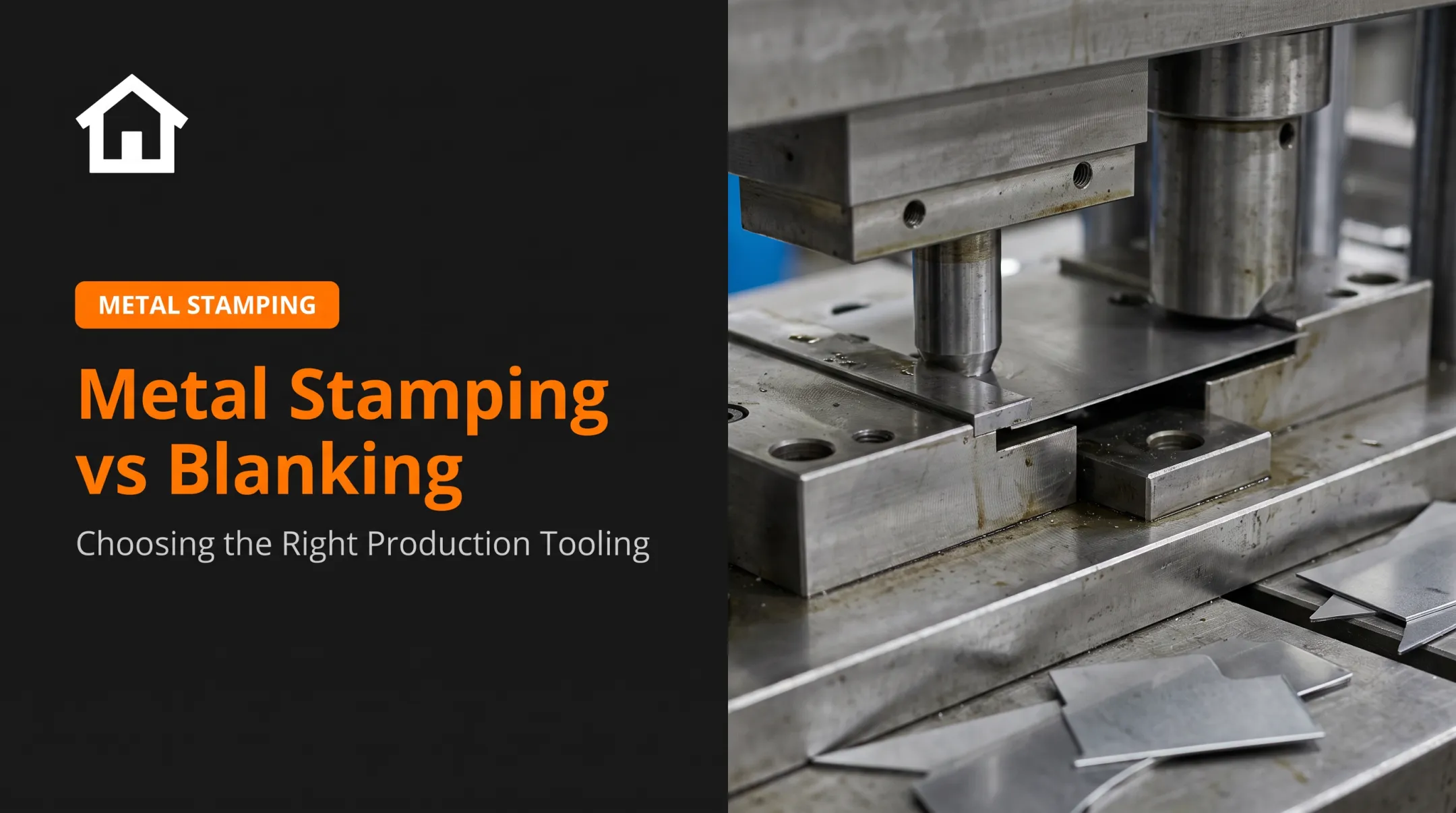
- Blanking separates the part's outer profile from the sheet
- Piercing or punching creates holes and openings
- Shearing or trimming removes excess material
- Bending and flanging form angles and projecting edges
- Embossing presses raised or recessed details
- Coining applies concentrated pressure for precise, detailed forming
- Drawing pulls sheet into a cavity to form cups or hollow shapes
Most parts combine several of these in one die.
Comparing Die Types
Die choice hinges on part complexity, volume, and how much automation you want.
Line dies suit low runs, progressive dies are usually coil-fed for speed, and transfer dies handle larger parts that do not fit progressive tooling well, according to The Fabricator's die basics series.
| Die Type | Best Fit | Automation | Relative Investment |
|---|---|---|---|
| Single-operation/line | Low volume, large parts, hand-loaded | Low to moderate | Lower per-die, but more handling cost |
| Progressive | Coil-fed, high-volume repeat parts | High, can run unattended | Higher upfront |
| Transfer | Large or complex parts, automated transfer | High | Often the costliest, press-dependent |
| Compound | Multiple cuts in one stroke (e.g., washers) | Moderate | Varies by complexity |
Compound dies pack multiple cuts or forms into one stroke, which saves hits but raises tooling complexity and maintenance as part size grows.
Specialized Approaches
Deep drawing produces hollow, cup-shaped parts such as housings and containers.
Multi-slide (four-slide) stamping forms strip parts with bends from several directions at once. It suits intricate geometries that progressive dies handle awkwardly.
Tool Components That Affect Consistency
Every die depends on a core set of components:
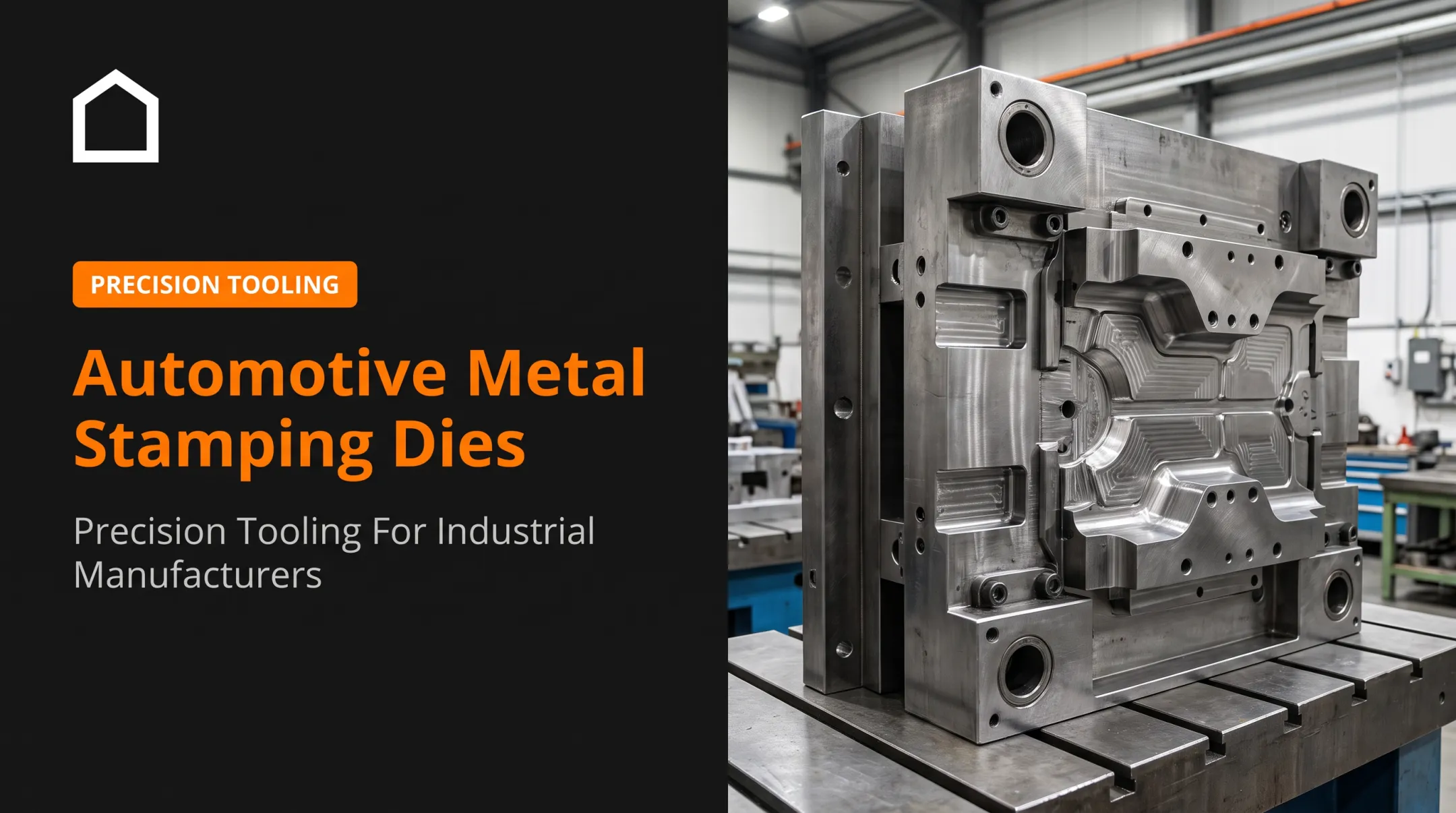
- Punches, die blocks, and strippers
- Pilots and guide components
- Wear inserts at high-contact surfaces
Tool steel choice—commonly M2, D2, H13, or S5—plus steady maintenance drives die life and part consistency across the run.
Materials, Applications, and Precision Requirements
There's no single "best" stamping material. The right choice depends on strength, formability, corrosion resistance, conductivity, and final application.
Stamped parts commonly include industrial brackets, structural components, electrical connectors, terminals, and formed housings—each with different material and tolerance demands.
Common Stamping Materials
- Carbon/cold-rolled steel: Durable, cost-effective for industrial brackets and structural parts
- Stainless steel: Corrosion-resistant, but requires higher forming force and shows more tool wear
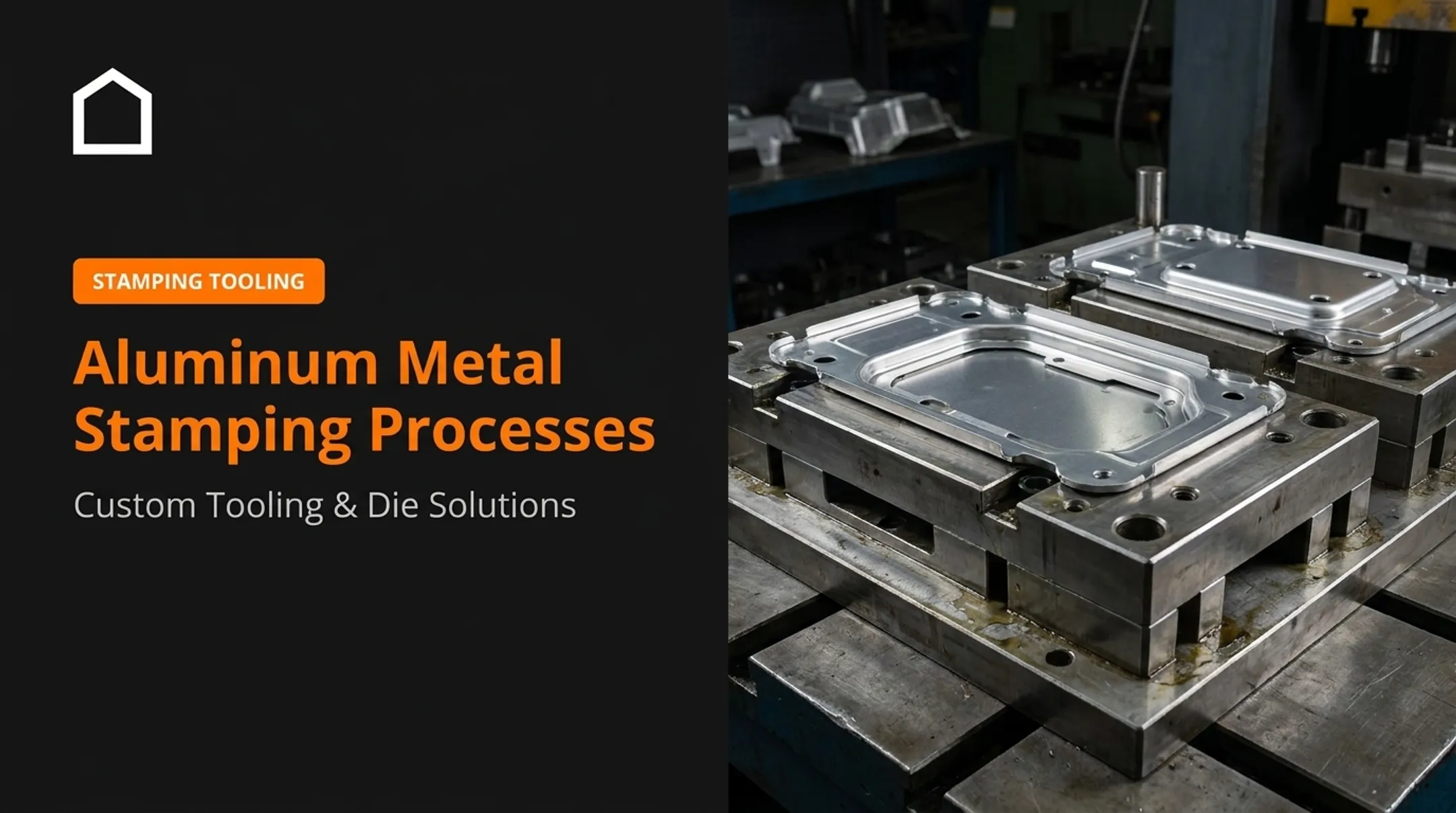
- Aluminum: Lightweight and corrosion-resistant; alloy choice affects forming behavior and galling risk
- Copper: Strong electrical and thermal conductivity for connectors and terminals
- Brass: Corrosion-resistant with generally lower forming force than stainless
What Affects Achievable Tolerance
After you choose a material, thickness, hardness, grain direction, and springback still drive press force, bend design, and cracking risk. Higher-strength steels spring back more after forming, so dies must be designed to land on the final dimension.
Precision metal stamping means tightly controlled tooling, material consistency, press parameters, and inspection. Achievable tolerance depends on the feature, material, geometry, press condition, and inspection method. Anyone promising one blanket tolerance across all materials and part types is oversimplifying.

How to Evaluate Metal Stamping Companies
Once you understand the process, the real work is vetting suppliers against your actual requirements.
Supplier Capability Checklist
Confirm these before sending a print:
- Press type and tonnage capacity
- Maximum part size the press and tooling can handle
- Compatible materials and thickness ranges
- Progressive or transfer tooling availability
- In-house vs. outsourced die design
- Prototype and low-volume support
- Secondary operations (plating, deburring, assembly)
Engineering and DFM Support
A supplier worth working with reviews your design before cutting steel. Ask whether they'll flag:
- Bend radii issues
- Hole placement conflicts
- Strip layout inefficiencies
- Springback risk
- Opportunities to combine operations
This conversation, done early, often saves more money than any per-piece negotiation later.
Quality and Production Controls
Verify directly with the supplier:
- First-article approval process
- Incoming material verification
- In-process and final inspection methods
- Traceability and corrective-action procedures
- Gauge capability and any customer-specific certification requirements
Don't assume certifications. Ask, and confirm in writing.
Tooling Ownership and Custody
Custom dies raise questions buyers often skip:
- Who owns the tool?
- Who stores and maintains it?
- What happens if volumes change, the part is redesigned, or you switch suppliers?
Get these terms in writing before tooling is built, not after.
Where Quality FORM Tools Fits
For buyers needing custom tooling, stamped or forged replacement parts, or machine components for production equipment, Quality FORM Tools operates as a Hammond, Indiana-based specialty tooling and sourcing partner.
Since 2008, the company has connected manufacturers with domestic and overseas suppliers for cold header tooling, metal stampings, and precision machined components. That covers both one-off replacement parts and larger production runs.
RFQ Checklist
A useful quote request includes:
- 2D drawings and 3D models with revision level noted
- Material type and thickness
- Tolerances and surface finish requirements
- Quantity by order and by year
- Inspection and documentation requirements
- Packaging, delivery location, and schedule
- Whether new tooling or existing dies are involved
What Determines Metal Stamping Cost?
Stamping cost isn't one number. It's a stack of variables that shift depending on your part.
Main Cost Categories
- Die design and construction
- Press setup time
- Material cost, scrap, and utilization rate
- Cycle time and labor
- Inspection and secondary operations
- Packaging, shipping, and ongoing maintenance
Why Tooling Gets Expensive
Dies require precision machining, hardened tool steel, and often multiple stations or replaceable inserts. Testing, correction rounds, and maintenance planning all add to the upfront number. Part complexity, size, tolerance demands, and expected tool life all push that investment up or down.
Volume Changes the Math
Fixed tooling and setup costs get spread across your total run — the more parts, the lower the per-piece tooling burden.
A U.S. Department of Energy comparison lays out three approaches:
- Laser or waterjet-cut blanks formed with standard brake tools
- Soft stage tooling
- Full hard tooling for the complete part
The case shows tooling expense rising as recurring per-part cost drops, as detailed in this DOE tooling cost comparison.
There's no universal break-even quantity where stamping suddenly beats machining or laser cutting. It depends on your specific part, deadline, and design maturity.

Comparing Quotes Fairly
When comparing supplier quotes, confirm whether each one includes:
- Tooling and sample costs
- Setup charges
- Material surcharges
- Inspection documentation
- Finishing and freight
- Expedited delivery fees
A lower line-item price with hidden exclusions often costs more once everything's tallied.
Controlling Cost Before Tooling Is Built
- Simplify part geometry where possible
- Set practical tolerances instead of defaulting to tight specs
- Improve strip nesting to cut material waste
- Choose the material that fits the application, not just the cheapest option
- Bring your manufacturer in before the design is finalized
Frequently Asked Questions
How much does metal stamping cost?
Cost depends on tooling complexity, material, part geometry, tolerances, quantity, secondary operations, and logistics. Request an itemized quote rather than relying on a flat rate.
What are the different types of metal stamping techniques?
Common techniques include blanking, punching, piercing, bending, flanging, embossing, coining, drawing, trimming, and shearing. Most parts require several of these operations combined.
What are the different types of stamping tools?
Stamping tools include punches, die blocks, compound dies, progressive dies, transfer dies, and single-operation dies. Supporting components often include pilots, strippers, and guide inserts.
What are the three main types of metal stamping dies?
The three main types are single-operation (line) dies, progressive dies, and transfer dies. Line dies handle individual operations, progressive dies move a strip through sequenced stations, and transfer dies relocate separated parts between stations.
What is precision metal stamping?
Precision stamping uses tightly controlled tooling, material consistency, press setup, and inspection to produce repeatable parts meeting demanding specifications. Achievable tolerance varies by feature and material.
What is the best material for metal stamping?
There's no single best material. Steel, stainless steel, aluminum, brass, and copper each suit different needs based on strength, formability, corrosion resistance, conductivity, and application.