
While those concepts are accurate, their real-world value is much more practical. The benefits of a well-executed cold forging process show up on the factory floor and in the final application through reduced waste, repeatable quality, efficient production, and dependable part performance. This article breaks down the primary advantages of cold forged fasteners, compares the process to alternatives like machining, and clarifies when another method might be a better fit.
Key Takeaways
- Cold forging forms fasteners from wire or bar at room temperature without removing material.
- Suitable designs gain strength, dimensional consistency, material utilization, and production efficiency.
- Best for repeatable small-to-medium fasteners when volume justifies dedicated tooling.
- Not a universal solution; evaluate part size, alloy, geometry, and production quantity together.
- Benefits depend on expert tooling design, proper wire preparation, and rigorous process control.
What Is Cold Forging of Fasteners?
Cold forging, also known as cold heading or cold forming, is a manufacturing process that starts with a measured section of wire or bar stock. At or near room temperature, a series of powerful dies and punches force this metal blank to flow into a new shape, creating a fastener’s head, shank, recess, or other features.
This method is commonly used to produce parts such as:
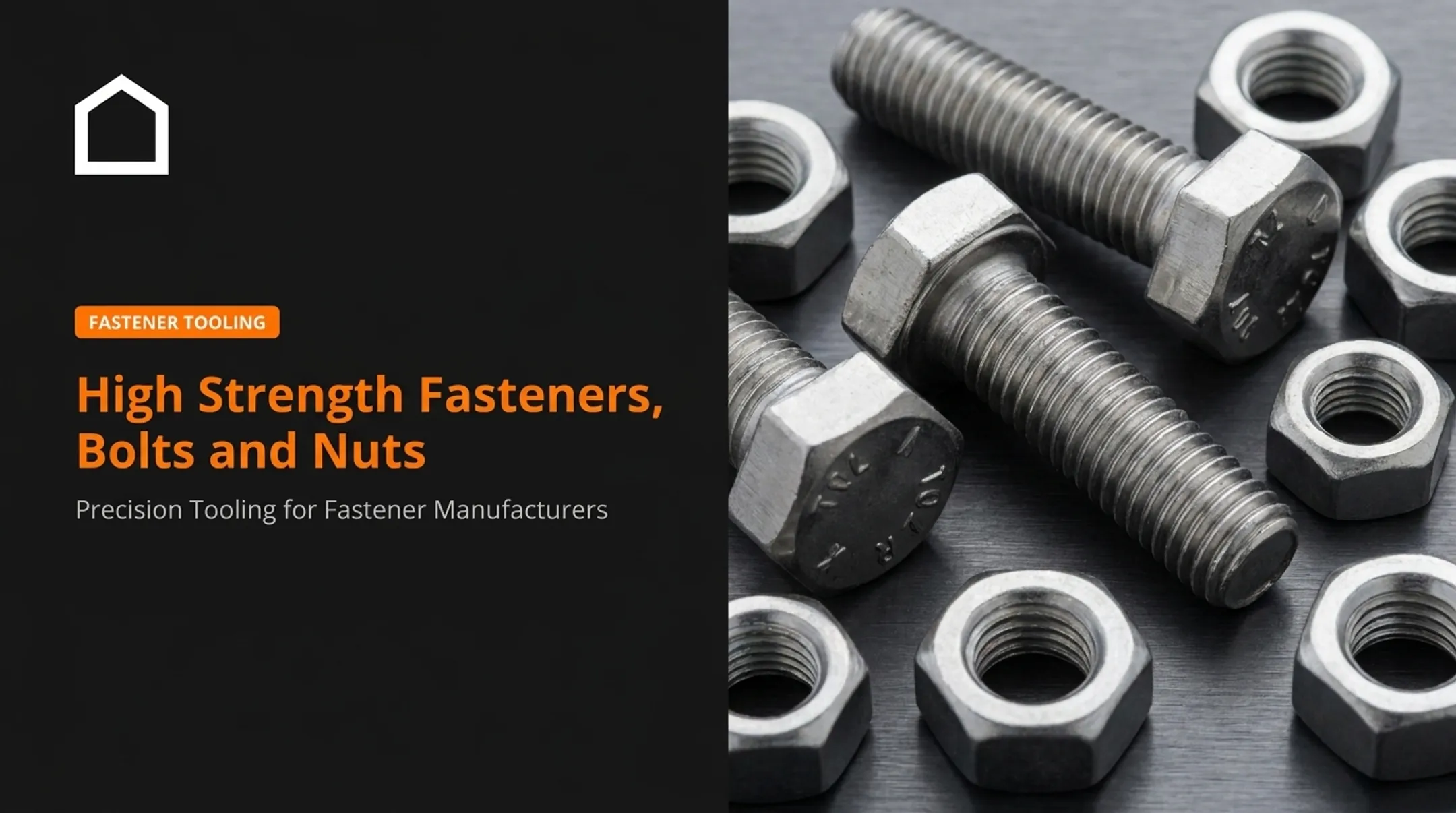
- Bolts and screws
- Studs and rivets
- Specialty fasteners
- Precision components for automotive, agricultural, and industrial equipment
The key distinction between cold forging and machining is how they handle material. Cold forging displaces metal, moving it into the desired geometry. Machining removes metal from a larger starting piece, creating chips and scrap.

That displacement yields consistent geometry with minimal material loss. Results depend on the material's ductility, the part's dimensions, required tolerances, and production volume.
Key Advantages of Cold Forged Fasteners
The benefits of cold forging should always be evaluated through measurable outcomes, not assumed just because a part is labeled "cold forged." When the process, material, and part design are correctly aligned, the advantages are significant and verifiable.
Increased Strength and Favorable Grain Flow
When a fastener is machined from bar stock, the cutting tools slice directly through the material's natural grain structure. Cold forging, however, forces the grain to flow along the contours of the part. This uninterrupted grain flow, especially around the critical head-to-shank fillet area, creates a stronger, more durable component.
Simultaneously, the intense pressure of forming the metal at room temperature causes work hardening, which can increase the material's tensile strength and surface hardness.
These metallurgical effects show up in real performance:
- Better resistance to deformation under load
- Higher fatigue strength in cyclic service
- Greater durability where joint integrity matters
That edge is especially valuable under vibration or repeated loading. Research on thread manufacturing (a process often paired with cold heading) found that rolled threads had a fatigue strength of 113.8 MPa, while machined (cut) threads failed at just 45.1 MPa. The test isolated the threads, but it still shows how forming can raise fatigue performance.

Lower Material Waste and Potentially Lower Part Cost
Because cold forging is a near-net-shape process, it uses material with extreme efficiency. A precise blank is cut from wire, and nearly all of it becomes part of the finished product. Machining, by contrast, can generate a significant amount of scrap, especially when creating a large head from a smaller-diameter shank.
This efficiency translates directly to cost savings. One case study involving the conversion of a screw-machined component to a cold-headed design saw the part's gross weight drop from 112 grams to just 44 grams. This 60% material reduction led to significant savings in raw material and weight-based plating costs.
Reduced scrap means lower costs for:
- Raw material purchasing
- Waste handling and disposal
- Machining time and tool wear
However, cold forging requires a significant upfront investment in custom tooling. This makes it less cost-effective for prototypes or very short production runs. The true economic advantage becomes clear when you compare the total cost per part across the entire expected production life.
High Throughput, Dimensional Consistency, and Surface Quality
Modern multi-station cold headers are built for speed and repeatability. They can transform wire into finished fastener blanks at rates of hundreds or even thousands of parts per hour. A recent study on an automotive pin-bolt successfully integrated a knurling feature into the cold-forging die, achieving production rates of 25 to 55 units per minute.
This automated process delivers tight dimensional consistency from one part to the next. In the same study, the die-formed knurls had a standard deviation of just 0.011 mm across 125 measurements. This level of repeatability is critical for automated assembly lines, high-volume OEM production, and any application where part interchangeability is essential.
Finally, because the process is done at room temperature, it avoids the surface scale and oxidation associated with hot forging, often resulting in a superior surface finish. While secondary operations like thread rolling, heat treatment, or coating are still common, the initial formed part is clean and consistent.
What Happens When Cold Forging Is Mismanaged?
Simply choosing cold forging isn't a guarantee of success. A poorly managed process or an ill-suited application can create more problems than it solves. Cold forging only pays off when the process is engineered and controlled with rigor.
- Ignoring a suitable application: Sticking with machining for a high-volume part that could be cold forged can lead to unnecessary material waste, longer cycle times, and higher total part costs over the product's lifetime.
- Poor process control: Inadequate lubrication, incorrect tooling setup, or unsuitable wire chemistry causes incomplete die fill, surface cracks, premature die wear, scrap, and downtime. A 2016 study linked bolt-head shear cracks to punch deviation during forming.
- Forcing an unsuitable application: Choosing cold forging for a very low-volume job, extreme geometry, or a non-ductile alloy can leave tooling costs unrecovered. Machining or another process is often the more economical choice.
The correct approach is a thorough engineering review and process validation, not assuming one manufacturing method is universally better than another.
How to Get the Most Value from Cold Forged Fasteners
Cold forging delivers its best results when the component, material, tooling, and production plan are developed in concert. For manufacturers, this means moving from a simple component drawing to a comprehensive production strategy.
- Confirm the Application Requirements: Define the loading conditions (tensile, shear), fatigue or vibration exposure, corrosion environment, and required strength class. These factors dictate material selection and design priorities.
- Review for Manufacturability (DFM): Analyze the part design for formability before tooling steel is cut. A peer-reviewed study on automotive pin bolts showed that forming knurls in the die eliminated a separate burnishing step, cutting the process from six stages to five. Collaborative DFM review prevents defects and reduces secondary operations.
- Calculate Total Cost of Ownership: Compare the expected production volume with the initial investment in dies, punches, setup, and maintenance. A total-cost-per-part view over the program's life will reveal the true economy of the process, factoring in both tooling amortization and material savings.
- Establish Quality Controls: Implement checkpoints for incoming wire chemistry, lubrication, die and punch condition, and dimensional inspection. Traceability, heat treatment verification, and thread quality are all essential parts of a reliable production system.

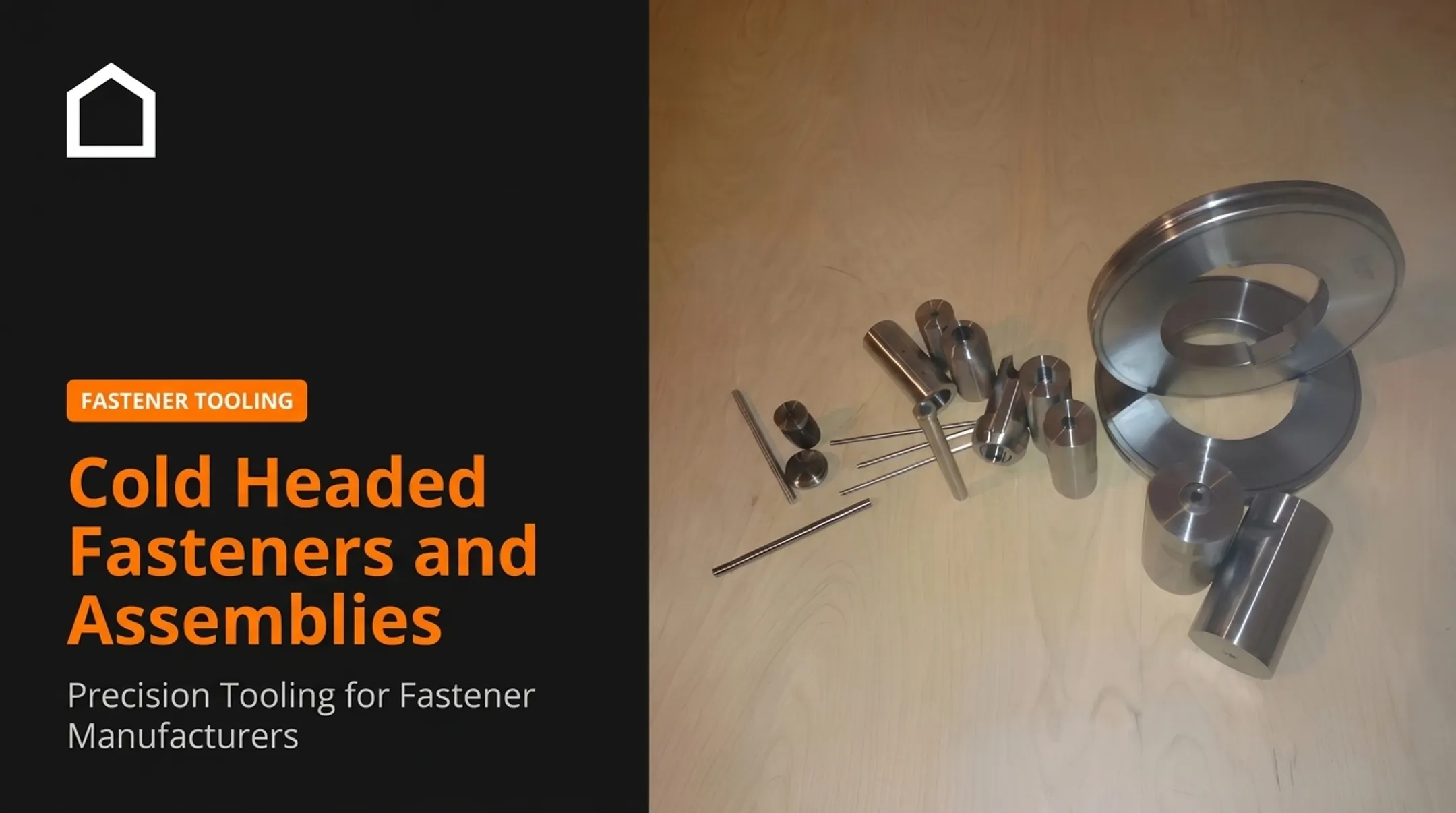
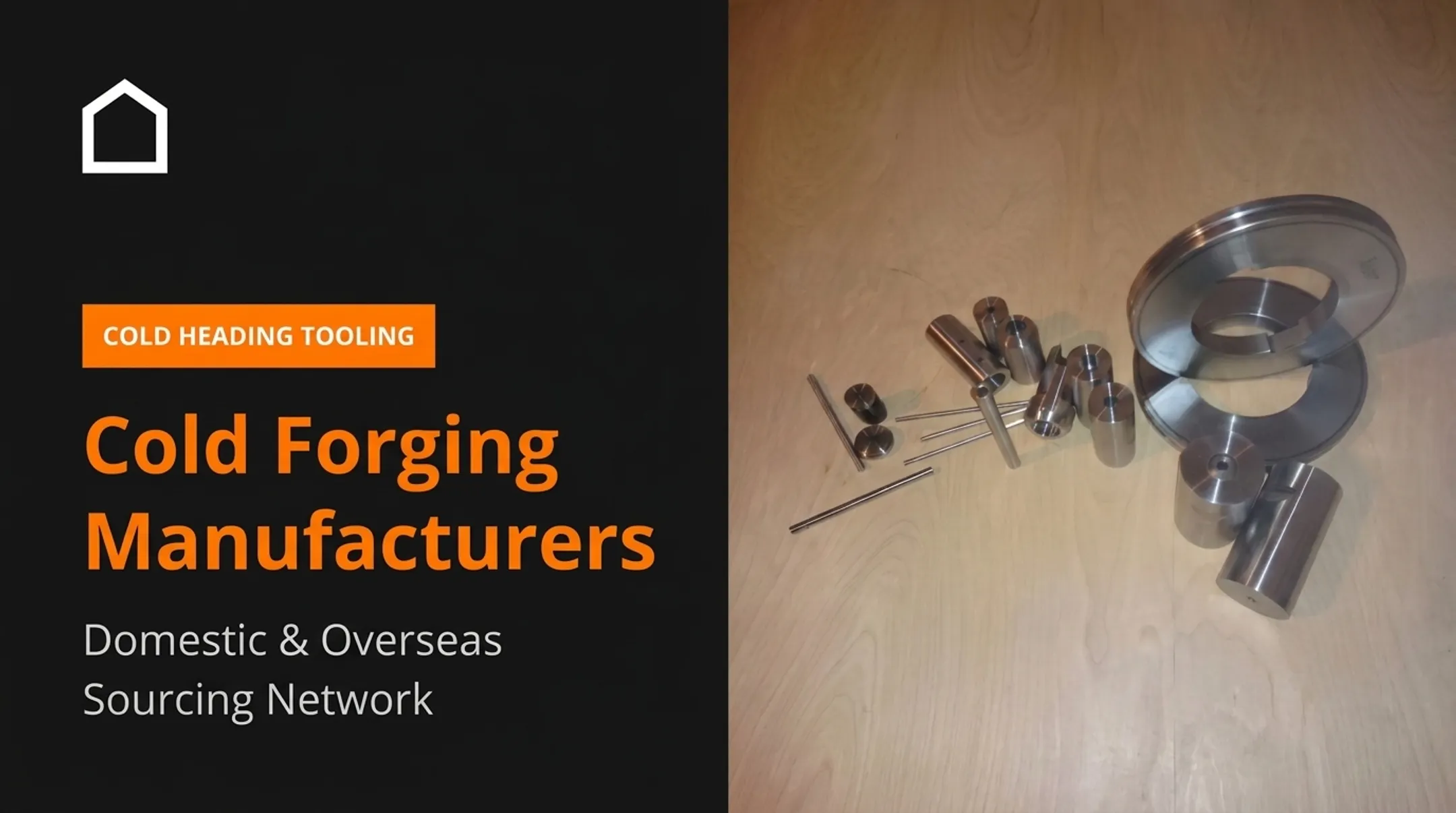
For manufacturers, this process often involves partnering with a tooling specialist. At Quality FORM Tools, we supply complete cold header tooling packages—from recess punches and dies to cut-off tools—built to your exact print.
Share your specifications, material, quantity, and machine details so the tooling design can be validated before production. Many customers with in-house tool rooms still outsource production-volume tooling to us, freeing their teams to focus on prototyping and new job development.
Conclusion
When executed correctly, cold forging delivers clear benefits for fastener production. Improved grain flow and work hardening enhance strength and durability. Near-net-shape forming improves material efficiency and can lower costs. The process also supports high-speed, repeatable production with tight dimensional consistency.
These advantages are not automatic. The right manufacturing choice depends on the full picture:
- Fastener geometry
- Material properties
- Performance requirements
- Annual volume
- Tooling economics
Treat cold forging as an engineered strategy. Validate it with the right tooling, materials, and process controls to capture its full potential.
Frequently Asked Questions
What is cold forging of fasteners?
Cold forging shapes metal wire into fasteners at room temperature using high-pressure dies and punches. It is commonly used for bolts, screws, and other precision components without heating the material.
What is the difference between cold and hot forging?
Cold forging is done at room temperature and gives tighter dimensional control and a better surface finish. Hot forging heats metal above its recrystallization point so larger or more complex shapes form with less force, but it creates surface scale that must be removed.
Is cold forging the strongest?
No single process is universally "strongest." Cold forging can raise strength through work hardening and favorable grain flow, but final fastener performance still depends on alloy, part design, heat treatment, and how the threads are made.
What are the main advantages of cold forged fasteners?
Key benefits include efficient material use (less scrap), high repeatability, rapid production rates, and improved strength from work hardening and grain flow. That mix often lowers total part cost in high-volume production.
When should cold forging not be used for fasteners?
Machining or hot forging is often the better choice when volumes are very low and tooling cost dominates, parts are unusually large, geometries are hard to form, or the alloy has poor ductility at room temperature.